Choosing the China Best Welding Wire Layer Rewinding Machine Supplier requires more than comparing prices. The real test appears on the production floor, beside the pay-off stand, tension controller, and finished spool.
A reliable Welding Wire Layer Rewinding Machine should create tight, even layers without damaging copper-coated wire. It must control tension during acceleration, deceleration, and spool changes. Traverse accuracy matters, too. Poor alignment can create edge buildup, crossed turns, or loose sections that unwind badly.
Michael Chen, an experienced wire-processing engineer, offers a practical reminder: “A beautiful coil is not proof of a stable layer.”
That warning deserves attention. A machine may look impressive during a short demonstration. Continuous operation can reveal vibration, heating, unstable tension, or inconsistent wire placement. Ask for long-run test data. Inspect actual coils, not only brochures.
China has many capable manufacturers. Their quality, engineering depth, and after-sales support can vary widely. A serious supplier should explain motor selection, traversing control, spool compatibility, wire diameter range, and maintenance access. Clear answers matter.
The strongest supplier also understands your process. Welding wire used in robotic cells may demand different winding control from workshop-grade products. Material coating, line speed, and packaging requirements influence the final design.
Some buyers focus too narrowly on purchase cost. That can become an expensive mistake. Energy use, scrap, downtime, and service response deserve equal attention.
No machine is perfect. Even a well-designed system needs correct setup, regular inspection, and trained operators. A thoughtful supplier will admit these limitations and help reduce them. That honesty is often more valuable than a polished sales promise.
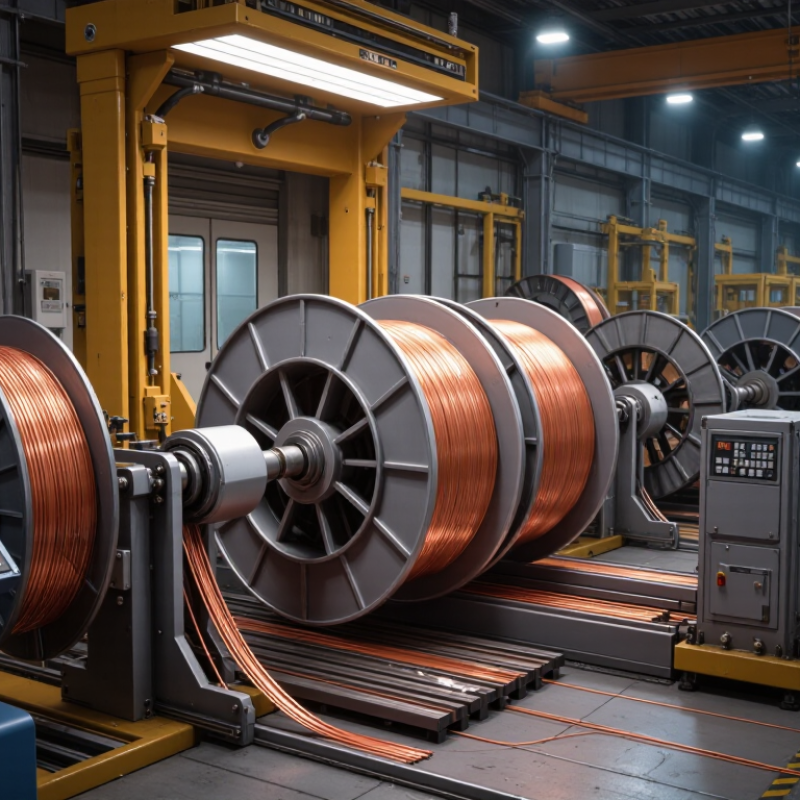
A welding wire layer rewinding machine transfers wire from a large supply coil onto smaller spools. It arranges each turn in neat, even layers. Unlike basic winding equipment, it controls wire tension, traverse movement, and spool rotation together. This coordination helps reduce overlaps, loose loops, and damaged edges. The machine usually includes a pay-off unit, tension controller, guiding system, winding shaft, and programmable control panel. Operators can adjust speed and wire placement for different wire diameters.
In practical production, stable tension is critical. Excessive tension may stretch or deform the wire. Low tension can create loose layers and uneven spool surfaces. A properly adjusted traverse system keeps the wire aligned from flange to flange. However, a perfect layer is not always realistic. Wire surface variation, spool tolerance, and operator settings can affect the result. Trial winding remains useful, even with experienced technicians. Inspection should check spool weight, winding density, wire appearance, and flange clearance. These details support consistent feeding during later welding operations.
Tips: Clean the guide rollers before each shift. Check the spool core for damage. Start at a slower speed during setup. Watch the first few layers closely. Record successful tension and speed settings. Do not rely only on automatic parameters; actual wire behavior can differ.
A welding wire layer rewinding machine transfers welding wire onto a spool in evenly arranged layers. The following chart shows common solid welding wire diameters that rewinding equipment may be designed to handle.
The diameters shown are representative sizes commonly specified for solid welding wire in AWS A5.18 and EN ISO 14341 product ranges. Actual machine compatibility depends on the wire material, spool dimensions, rewinding speed, tension control, and required layer precision.
A layer rewinding machine transfers welding wire from a large payoff reel to a smaller, accurately formed spool. The operator mounts the payoff reel and checks that the wire surface is clean. The wire then passes through guide rollers, a tension device, and a level-wind mechanism. Keep it steady. These components control the wire path and prevent loose layers during winding.
The motor rotates the receiving spool at a controlled speed. At the same time, the traversing guide moves from side to side across the spool width. This movement places each turn beside the previous one, creating compact and even layers. A tension sensor helps maintain stable pressure as the reel diameter changes. Too much tension can deform the wire. Too little tension may create gaps or tangled sections.
In practical production, setup accuracy matters as much as machine speed. Operators usually adjust tension, traverse timing, and spool alignment after observing the first few layers. Small errors matter. A slight guide offset can produce uneven edges after several minutes. Even experienced technicians may need a second trial, especially with different wire diameters or surface finishes. Regular inspection of rollers, sensors, and bearings supports consistent rewinding and reduces unexpected stoppages.
China Best Welding Wire Layer Rewinding Machine Supplier?
A high-quality welding wire layer rewinding machine controls tension, traverse movement, and winding speed precisely. Stable tension prevents loose edges, crossed layers, and damaged wire surfaces. A servo-driven traverse system should follow the selected wire diameter accurately. The control panel also needs clear recipes, real-time alarms, and production records. The 2024 World Robotics report recorded 541,302 industrial robot installations worldwide in 2023. This figure shows growing automation demand, but automation alone does not guarantee quality.
Machine construction matters during daily production. Rigid frame reduces vibration around the spool. Properly aligned shafts protect bearings and improve winding consistency. Operators should check compatibility with different wire materials, diameters, and spool sizes. Safety circuits should follow recognized requirements, including ISO 13849-1 and IEC 60204-1. Remote diagnostics can reduce downtime, although poor network settings may create new risks. I have seen impressive interfaces hide weak tension control. Appearance is not performance.
Tips: Request a trial using your actual welding wire. Measure tension variation across the full spool. Check layer density near both flanges. Ask for calibration records and maintenance intervals. Review the supplier’s quality system, such as ISO 9001 certification. Do not rely only on a factory video. A short acceptance test reveals more. Capture noise, vibration, wire slippage, and stopping accuracy. Leave room for doubt; even a well-designed machine needs trained operators and regular inspection.
Choosing a China-based welding wire layer rewinding machine supplier requires more than comparing quotations. Start with application evidence. Ask for the wire diameter range, spool dimensions, rewinding speed, tension accuracy, and traverse method. A supplier with real experience should explain how copper-coated steel wire behaves differently from stainless wire. Request factory acceptance testing with your material, not generic footage. A short test video is useful, but it is not proof.
Supplier capability also deserves measurable checks. The International Federation of Robotics reported 276,288 industrial robot installations in China during 2023, representing 51% of global installations. This indicates strong manufacturing capacity, but automation alone does not guarantee a reliable rewinding machine. Review process records, calibration certificates, electrical schematics, and spare-parts lists. Check whether the machine follows relevant requirements, such as ISO 12100 for machinery risk assessment and IEC 60204-1 for electrical equipment. Ask for serial-number traceability.
Visit the factory remotely or in person. Observe the assembly area, wire tension testing, control cabinet wiring, and final inspection. Speak with two or three comparable users, preferably those running similar wire sizes and production shifts. Clarify response times, installation support, training, and warranty exclusions. Put performance values into the contract. One uncomfortable lesson: the lowest price often hides commissioning effort. I would also question impressive claims without raw test data. Supplier evaluation is never perfect; even careful buyers can underestimate after-sales delays, language gaps, or difficult replacement parts.
| Evaluation Dimension | Suggested Weight | What to Verify | Practical Benchmark or Evidence | Evaluation Result |
|---|---|---|---|---|
| Application Compatibility | 15% | Confirm compatibility with welding wire type, wire diameter, spool size, winding direction, and required layer pattern. | The supplier should provide a written parameter sheet matching the buyer’s actual wire and spool specifications. | Required |
| Wire Diameter Range | 10% | Check the supported diameter range and whether the machine maintains stable tension across the full range. | The stated range should cover the target production sizes with test results for the smallest and largest diameters. | Required |
| Winding Accuracy and Layer Quality | 15% | Assess traverse control, pitch consistency, edge alignment, crossover control, and the appearance of the finished spool. | Request sample spools, close-up photographs, winding video, and measurable acceptance criteria before purchase. | Critical |
| Production Capacity | 10% | Compare line speed, loading time, spool changeover time, and actual output under the buyer’s operating conditions. | Capacity should be stated in measurable units such as kilograms per hour or completed spools per shift, not only maximum speed. | Required |
| Tension Control | 10% | Verify the tension-control method, adjustment range, sensor arrangement, and response during acceleration and deceleration. | Ask for a demonstration showing stable winding without loose loops, wire deformation, or excessive tension marks. | Critical |
| Automation and Usability | 8% | Review control-panel language, recipe storage, alarm messages, parameter access, automatic stopping, and operator safety functions. | The interface should support repeatable recipes and provide clear fault information for routine operators. | Important |
| Mechanical and Electrical Configuration | 10% | Inspect the machine frame, spindle, traverse mechanism, drive system, electrical enclosure, guards, and safety switches. | Request a component specification, electrical diagram, preventive-maintenance schedule, and safety-device list. | Important |
| Quality Control and Testing | 8% | Evaluate incoming inspection, assembly checks, factory acceptance testing, calibration records, and final inspection procedures. | A reliable supplier should provide a documented factory test report linked to the machine’s serial or project reference. | Required |
| Technical Support and Documentation | 6% | Check availability of manuals, installation instructions, troubleshooting guides, spare-parts lists, and remote support. | Documentation should be supplied in clear English and include wiring diagrams, operating procedures, and maintenance intervals. | Important |
| Spare Parts and Serviceability | 5% | Verify availability of wear parts, sensors, belts, bearings, rollers, electrical components, and recommended spare kits. | The quotation should identify part numbers, expected lead times, storage recommendations, and replacement procedures. | Important |
| Delivery and Installation Plan | 5% | Review manufacturing lead time, packing method, shipping documentation, commissioning scope, and operator training. | The supplier should provide a milestone schedule covering design confirmation, production, testing, shipment, installation, and acceptance. | Required |
| Warranty and Commercial Terms | 4% | Compare warranty duration, response time, exclusions, payment milestones, acceptance conditions, and after-sales responsibilities. | Terms should define what is covered, how defects are handled, and which performance criteria determine final acceptance. | Required |
| Supplier Verification | 4% | Check company registration details, production capability, engineering resources, export experience, and references for comparable equipment. | Use video inspection, factory audit, independent verification, and customer references rather than relying only on website claims. | Critical |
Choosing a supplier requires more than comparing machine prices. A reliable layer rewinding machine should maintain stable tension, precise traverse movement, and consistent wire placement. Check supported wire diameters, spool dimensions, line speed, and winding direction before discussing payment. These details affect welding performance and downstream packaging.
The International Federation of Robotics reported 276,288 industrial robots installed in China during 2023, representing about 51% of global installations. This shows strong automation capacity, but it does not guarantee every machine supplier offers dependable service. Ask for factory acceptance testing records, calibration methods, electrical diagrams, and sample coils made with your wire. A good supplier should explain tension control, sensor accuracy, PLC access, and fault recovery in clear technical language. ISO 9001 certification can support process reliability, but certification alone is not proof of machine quality. That point is easy to overlook.
Tips: Request a video test using your actual wire and spool. Confirm replacement-part availability, remote diagnostics, operator training, warranty coverage, and service response times in writing. Ask whether the supplier can provide a documented acceptance standard for layer alignment, coil weight, and rewinding speed. Avoid vague promises. They become expensive later.
The best buying decision may not be the cheapest quotation. A lower-cost machine can create uneven layers, wire tangling, or repeated stoppages. I would also leave room for honest uncertainty: production conditions differ, and a successful sample test cannot predict every long-term maintenance issue. A site visit or independent inspection remains valuable.
It transfers wire from a large supply coil to a smaller spool. The guide places each turn in neat, even layers. It helps reduce overlaps, loose loops, and damaged edges.
Common parts include a pay-off unit, tension controller, guide rollers, winding shaft, and control panel. The traverse guide moves across the spool width. Together, these parts control wire movement and spool rotation.
The receiving spool rotates at a controlled speed. Meanwhile, the traverse guide moves from flange to flange. Each turn sits beside the previous turn. Small alignment errors still matter.
Excessive tension may stretch or deform the wire. Low tension can create gaps, loose loops, or uneven surfaces. A tension sensor helps compensate as the spool diameter changes. Actual wire behavior may differ from settings.
Mount the payoff reel securely and check the wire surface. Clean the guide rollers before each shift. Start at a slower speed during setup. Watch the first few layers closely.
Check spool weight, winding density, wire appearance, and flange clearance. Inspect the spool core for cracks or damage. Also examine rollers, sensors, and bearings. These checks can reveal problems early.
No. Spool tolerance, wire surface variation, and operator adjustments affect the result. Automatic settings provide a starting point, not a final answer. Trial winding remains useful, even for experienced technicians.
Uneven edges may appear when the guide is slightly offset. Tangled sections can result from low tension or poor alignment. Deformed wire may indicate excessive tension. A second trial is sometimes necessary.
Record successful tension, speed, and traverse settings for each wire diameter. Keep the wire path clean and the spool properly aligned. Do not chase maximum speed too early. Stable results matter more.
A Welding Wire Layer Rewinding Machine is designed to transfer welding wire from large supply coils to smaller spools while arranging each layer evenly, securely, and consistently. The rewinding process typically includes controlled unwinding, tension adjustment, precise guiding, layer placement, and automatic or manual spool handling. A high-quality machine should provide stable wire tension, accurate winding alignment, adjustable speed, reliable operation, low wire damage, and compatibility with different wire diameters and spool sizes. Safety protection, clear controls, and easy maintenance are also important for efficient daily production.
When evaluating a China-based machine supplier, buyers should review manufacturing experience, technical specifications, quality-control procedures, customization capabilities, and testing standards. It is also essential to confirm delivery schedules, installation support, spare-parts availability, warranty terms, operator training, and after-sales communication. Comparing total operating value rather than only the initial price can help buyers select a dependable Welding Wire Layer Rewinding Machine that improves productivity, reduces material waste, and supports stable long-term production.

Orient PengSheng