Choosing a Flux Cored Welding Wire Layer Rewinder is a production decision, not a simple equipment purchase. The machine must protect wire geometry, surface quality, and winding consistency. MarketsandMarkets valued the global welding equipment market at approximately USD 16.7 billion in 2023. Its forecast also indicates continued growth through 2028. Meanwhile, Grand View Research identifies automation, manufacturing efficiency, and improved process control as major market drivers. These trends affect even compact rewinding lines.
A capable Flux Cored Welding Wire Layer Rewinder should control traverse movement, tension, spool alignment, and rewinding speed. Look closely at the wire path. Sharp guides can damage copper-coated surfaces. Uneven tension can create loose layers, crossed turns, or unstable payout during welding. The ideal system should also support quick changeovers, digital monitoring, and traceable settings. Small details matter.
As welding technology author John C. Villafuerte states, “Process control begins with consistent consumable delivery.” That principle deserves careful reflection. However, published market reports rarely isolate layer rewinders as a separate category. Therefore, buyers should avoid accepting broad welding-equipment statistics as direct proof of rewinder performance. Factory trials remain essential. Test the actual flux cored wire, spool dimensions, line speed, and packaging requirements. Record tension variation and layer density. Inspect the finished coil by hand.
The best choice may not be the fastest machine. It should be the most repeatable one. Reliability often hides in ordinary details.
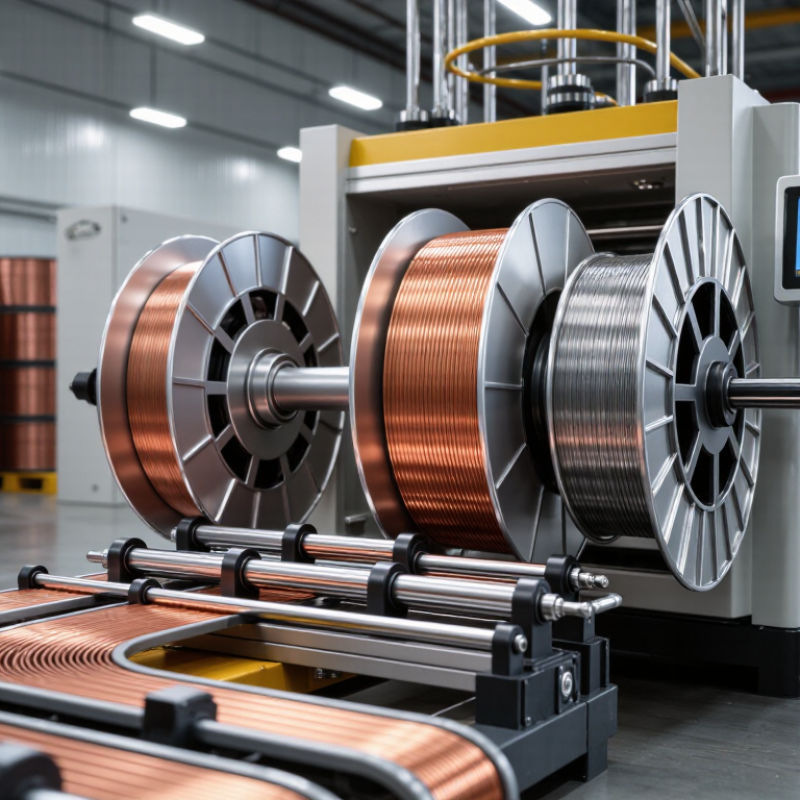
A flux cored wire layer rewinder is not merely a spool-filling machine. Its role is to place welding wire in tight, even layers without crushing the flux core. Poor winding can cause tangles, unstable feeding, and rejected spools. The rewinder should match wire diameter, spool width, flange size, and target weight. It also needs adjustable winding tension, synchronized traverse movement, and reliable edge control. AWS A5.20 and AWS A5.29 classifications remind engineers that wire chemistry and diameter affect welding performance. The machine must protect those properties during rewinding.
Production demand makes this choice more important. The American Welding Society’s 2023 workforce report projected a shortage of about 330,000 welding professionals in the United States by 2028. Consistent spool quality can reduce operator intervention. MarketsandMarkets estimated the welding equipment market could grow from about USD 7.6 billion in 2023 to USD 10.5 billion by 2028. This growth encourages automation, but automation alone is not enough. In my experience, a fast rewinder with poor tension control creates expensive rework. I would test actual wire, not only rely on catalog specifications. One overlooked detail can matter.
Tips: Check layer density at the spool edges. Measure tension during acceleration and stopping. Request sample rewinding with your own wire and spool. Inspect the first and final layers manually. Perfect alignment may still fail if the payoff machine has weak braking.
Choosing a flux cored welding wire layer rewinder starts with the wire, not the machine’s advertised speed. Measure wire diameter, surface condition, and layer width before comparing equipment. A 0.8 mm wire behaves differently from a 1.6 mm wire during tension changes. Small wires show defects quickly. In production checks, I have seen neat outer layers hide loose inner turns after poor tension calibration. The rewinder should provide controlled tension, stable traverse movement, and an adjustable winding pitch.
Spool type determines the winding path, core support, and package stability. Plastic and metal spools may require different mandrels, clamping pressure, and flange protection. Check the core diameter and flange width against the rewinder’s working range. A loose fit can create side movement. That small error becomes costly during customer unwinding. For long or sensitive wires, closed-loop tension control helps because resistance changes as the spool fills. Manual adjustment may work for samples, but it becomes inconsistent across shifts.
Production volume should shape the machine’s automation level. Low-volume operations may prefer quick changeovers and simple controls. High-volume lines need repeatable recipes, automatic stop functions, and dependable cycle records. Ask how often operators will change spool sizes. It exposes hidden labor. Inspect the traversing mechanism, braking response, and safety functions before purchase. A test run with the actual wire and spool is more reliable than a catalog specification. No machine fits every process perfectly. Expect to refine settings after real production begins.
| Wire Diameter | Typical Welding Wire Application | Common Spool Type | Typical Spool Weight | Recommended Production Volume | Recommended Rewinder Design | Layering and Traverse Control | Important Tension Requirements | Selection Considerations |
|---|---|---|---|---|---|---|---|---|
| 0.8–0.9 mm | Light-gauge fabrication, automotive components, thin structural parts | Small plastic or steel spool; compact industrial spool | 1–5 kg | Low to medium | Compact precision rewinder with low-inertia payoff, fine wire guide, and responsive servo drive | Servo-synchronized traverse with small pitch adjustment; controlled wire alignment is essential | Low and stable tension to prevent wire stretching, flattening, or deformation of the flux-filled core | Use a smooth guide path and avoid sharp-radius rollers that can damage the wire surface |
| 1.0–1.2 mm | General fabrication, machinery parts, medium-duty steel structures | Standard plastic, composite, or steel spool | 5–15 kg | Medium | Servo-driven layer rewinder with adjustable winding width and closed-loop tension control | Automatic traverse synchronization should compensate for changing winding diameter | Moderate, continuously controlled tension with minimal fluctuation during acceleration and braking | Suitable for the widest range of flux cored wire production; prioritize repeatable layer density |
| 1.2–1.6 mm | Heavy fabrication, construction equipment, pressure vessels, structural steel | Large plastic, composite, or steel spool | 10–25 kg | Medium to high | Heavy-duty servo rewinder with rigid mandrel, powered payoff, and automatic spool clamping | Wide traverse mechanism with programmable pitch and controlled reversing at the spool flanges | Higher torque capacity is required, but tension must remain smooth to avoid core compaction | Check mandrel stiffness, braking capacity, spool runout tolerance, and accessibility for spool changes |
| 1.6–2.0 mm | High-deposition structural welding and demanding industrial applications | Heavy steel or reinforced industrial spool | 15–30 kg | High | Industrial high-torque rewinder with powered payoff, robust traverse carriage, and automatic tension regulation | Closed-loop traverse control with recipe storage for different spool widths and winding patterns | Stable medium-to-high tension with overload protection and rapid response to speed changes | Allow adequate motor reserve for full-spool inertia; verify emergency stopping and wire-end control |
| 2.0–2.4 mm | Specialized high-deposition welding and large structural components | Large steel spool or custom industrial spool | 20–30 kg or more | High-volume or specialized | Heavy-duty automatic rewinder with high-capacity drive, reinforced frame, and automatic spool handling | Programmable traverse with accurate edge detection and controlled layer transition | High-capacity tension system with load monitoring; avoid sudden tension peaks during stop-start cycles | Confirm wire straightness, spool flange strength, maximum winding width, and required changeover method |
| All sizes | Multiple wire diameters and mixed spool formats | Mixed plastic, composite, steel, or customer-specific spools | Variable | Flexible production | Recipe-based universal rewinder with interchangeable mandrels, adjustable guides, and quick-change tooling | Digital diameter, pitch, traverse-width, and spool-profile settings for each product specification | Automatic tension recipes should be adjustable by wire diameter, spool material, and winding speed | Best choice when product changeovers are frequent; evaluate setup time, tooling cost, and operator access |
| All sizes | Continuous mass production with limited product variation | One or two standardized spool formats | Typically 10–30 kg | Very high | Dedicated automatic production line with powered payoff, synchronized rewinder, automatic weighing, and spool discharge | Fully automatic traverse and layer monitoring with production recipes and fault alarms | Closed-loop tension, speed feedback, and automatic compensation for increasing spool diameter | Focus on uptime, cycle time, automatic changeover, remote diagnostics, and integration with upstream filling equipment |
How to Choose a Flux Cored Welding Wire Layer Rewinder?
A reliable rewinder begins with tension control. Flux cored wire can flatten, stretch, or telescope when tension changes suddenly. Choose a system with a load cell, dancer arm, and closed-loop servo control. The American Welding Society highlights process consistency as a major factor in weld quality. That principle also applies during rewinding. Stable tension protects the wire’s shape. It also reduces loose coils and feeding problems.
Layer accuracy deserves equal attention. Check the traverse mechanism, pitch adjustment, and edge control. A small pitch error can create a visible ridge after several layers. Look for repeatability data, not only maximum spool width. Fortune Business Insights valued the global welding equipment market at about USD 16 billion in 2023, showing strong demand for dependable production equipment. However, market growth does not guarantee precision. Ask for measured winding samples.
Tips: Test the wire at production speed. Record tension, pitch, and coil diameter. Then inspect both spool edges. A rewinder rated at 300 meters per minute may not maintain accuracy during acceleration. Choose a practical speed, such as 150–250 meters per minute, if quality improves. This may feel conservative. It is often cheaper than correcting tangled wire, rejected spools, and unstable feeding. Review data from at least three trial runs before purchase. One perfect sample proves very little.
How to Choose a Flux Cored Welding Wire Layer Rewinder?
A suitable rewinder must match the wire diameter, spool width, and winding direction. Check the rated torque before comparing production speed. A machine that handles 1.2 mm wire may struggle with heavier 2.4 mm wire. Confirm motor power, shaft size, tension range, and control signals with your existing line. ISO 12100 recommends risk reduction through design, not operator caution alone. I would also test uneven wire layers, because smooth samples can hide real setup problems.
Safety needs practical inspection. Choose guards around rotating shafts, an emergency stop, overload protection, and a clearly visible access switch. IEC 60204-1 provides useful guidance for electrical equipment on machinery. OSHA’s welding safety guidance warns that welding operations can create metal fumes, ultraviolet radiation, and fire hazards. The U.S. Bureau of Labor Statistics reported 5,070 fatal work injuries across all industries in 2023, reminding managers that routine tasks still deserve serious controls. Good ventilation is not optional.
Tips: Measure the empty spool and full spool. Record vibration and temperature during a trial run. Clean tension rollers daily, inspect bearings weekly, and check electrical terminals monthly. Keep spare fuses and sensors available. Maintenance intervals are estimates, not promises. Dust, wire coating, and operator habits can change them. If the layer pattern becomes loose, stop early and investigate tension calibration, alignment, and reel condition.
Selection priorities based on machine compatibility, operator safety, and long-term maintenance requirements.
The planning model assigns the highest priority to machine compatibility because the rewinder must match the wire diameter range, spool dimensions, drive system, line speed, and tension control requirements. Safety features such as guarding, emergency stops, overload protection, and stable spool handling are the next priority. Maintenance needs include access to wear parts, cleaning points, lubrication requirements, sensor inspection, and replacement-part availability.
A rewinder should match your wire diameter, spool size, and required production speed. In production trials, I have seen impressive speed claims fail because tension control was unstable. Uneven layers can cause wire snags, damaged edges, and inconsistent feeding during welding. Ask suppliers for sample rewinding using your actual flux cored wire. Check layer density, flange alignment, noise, and changeover time. Supplier experience matters, but documented test results matter more.
Compare the total cost, not only the purchase price. Include installation, operator training, spare parts, electricity, maintenance, and expected downtime. A cheaper machine may need frequent manual adjustments. That cost becomes visible after several months. My first comparison was too narrow; I ignored rejected spools and lost production hours. Request a clear warranty, service response time, and parts availability. Also ask whether the control system records tension errors and production data. Reliable records support better decisions.
Tips: Build a three-year cost sheet for every supplier. Test at your normal speed and at peak speed. Ask for two customer references with similar wire sizes. Inspect the rewinder after a long trial, not only during a short demonstration. Leave room for uncertainty. Metal dust, humidity, and operator habits can change real performance. A practical supplier should discuss these risks openly, rather than promise perfect results.
It places welding wire into tight, even layers on a spool. The process must protect the flux core from crushing. Poor winding causes tangles and unstable feeding. Small defects matter.
Check wire diameter, spool width, flange size, and target weight. The machine should also match the required production speed. A mismatch can create loose edges or damaged flanges. Measure carefully.
Tension keeps each layer firm without deforming the wire. It must remain stable during acceleration and stopping. Excess tension may damage the flux core. Low tension creates loose loops.
Synchronized traverse movement distributes wire evenly across the spool width. Reliable edge control prevents wire from climbing or falling over the flange. Inspect both spool edges. They reveal problems quickly.
Yes. Request sample rewinding with your own wire and spool. Check the first layer, middle layers, and final layer manually. Review density, alignment, noise, and changeover time. Catalog claims can mislead.
Test normal speed and peak speed. Measure tension while starting and stopping. Inspect wire feeding after rewinding. Check for snags, loose loops, and damaged edges. A short demonstration is not enough.
Include installation, training, spare parts, electricity, maintenance, and downtime. Also count rejected spools and manual adjustments. Build a three-year cost sheet for each option. The cheapest machine may cost more later.
Request warranty terms, service response times, and parts availability. Ask for customer references using similar wire sizes. Check whether the control system records tension errors and production data. I once ignored rejected spools. That comparison was incomplete.
Yes. A weak payoff brake can disturb feeding after rewinding. Check the complete wire path, not only the rewinder. Humidity, metal dust, and operator habits can also change results. Perfect alignment is not everything.
Choosing the right Flux Cored Welding Wire Layer Rewinder begins with a clear understanding of your production goals, wire specifications, and rewinding requirements. Consider the wire diameter, spool dimensions, winding pattern, and expected production volume to ensure the machine design matches your operation. A suitable rewinder should provide stable tension control, accurate layer placement, consistent winding quality, and adjustable speed without damaging the wire or creating uneven coils.
It is also important to review machine compatibility, operator safety features, maintenance accessibility, and control-system flexibility. Check whether the equipment can integrate with your existing production line and whether routine adjustments can be completed efficiently. When comparing suppliers, look beyond the initial purchase price and evaluate reliability, technical support, spare-part availability, energy use, and expected service life. The best choice is the one that delivers consistent performance, reduces material waste, supports safe operation, and provides strong long-term operating value.

Orient PengSheng