Choosing a rewinder for hardfacing wire is not a minor purchasing decision. It affects deposition consistency, operator safety, material waste, and production downtime.
The American Welding Society’s Welding Handbook emphasizes stable wire delivery as a foundation for reliable arc performance. That principle becomes critical when the wire contains carbide, nickel, chromium, or other wear-resistant alloys. These materials can be less forgiving than standard solid welding wire. Poor tension may create overlaps, telescoping coils, or damaged edges. Small defects can interrupt an automated hardfacing line.
Market research also reflects rising industrial demand. Grand View Research’s Welding Equipment Market Size, Share & Trends Analysis Report, 2024–2030, identifies automation and process efficiency as major market drivers. Meanwhile, the International Energy Agency’s Energy Efficiency 2023 report highlights industry’s continuing need to reduce energy and operational losses. A suitable layer rewinder supports both goals, but only when its design matches the wire and production conditions.
This guide presents seven practical tips for choosing a Hard Facing Welding Wire Layer Rewiinder. It examines winding tension, spool dimensions, speed control, traverse accuracy, compatibility, maintenance, and supplier support. Details matter. A smooth guide roller, a responsive tension sensor, and a clean winding surface can influence the final coil.
No machine is perfect.
Real workshops are messier than brochures suggest. Dust, temperature changes, operator habits, and inconsistent wire batches can expose weaknesses. For that reason, selection should combine technical specifications with hands-on trials, documented service experience, and measurable quality checks. A lower purchase price may look attractive, yet unstable winding can cost more through scrap, stoppages, and rework.
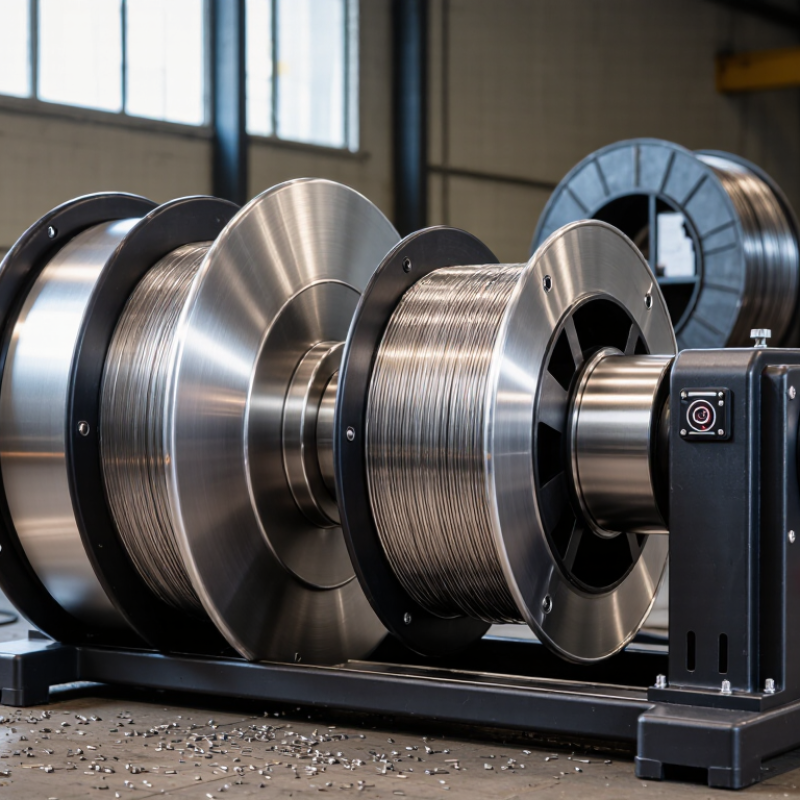
Before comparing a layer rewinder, define the job it must perform. Will it transfer hardfacing wire from a bulk package onto smaller spools, or rebuild uneven layers on a used spool? Record the wire’s diameter, package type, target spool dimensions, and required finished weight. Check the wire supplier’s handling guidance, too. Some flux-cored wires can kink or deform under excessive tension. Details matter.
Tip: Measure the spool core and flange, then confirm the rewinder can match them. Specify winding direction, traverse pitch, line speed, and tension range. A neat-looking spool is not enough if the wire is crushed near the flanges.
Also note how operators will load and secure each package. A larger spool may need a suitable shaft or adapter, while a narrow core can demand closer traverse control. Ask for a trial using the actual wire and spool. Watch the first and last layers, not just the finished package. A small test may reveal uneven winding or wire drag. I would not assume the machine’s standard settings will suit every wire; that is an easy detail to overlook.
A hardfacing wire layer rewinder must suit both the wire and the spool. Check the wire diameter range before comparing machine capacity. A unit designed for thin wire may not guide thicker hardfacing wire evenly. Measure the spool’s flange diameter, width, and hub opening, then compare them with the rewinder’s stated limits.
Fit matters more. An oversized spool can rub against the frame, while a narrow one may sit poorly on the shaft. Confirm the maximum loaded spool weight, not just the empty spool weight. Pay attention to winding tension and traverse adjustment; both affect whether the wire lays in neat, stable layers. Check the edges.
It is easy to focus too much on motor power. A powerful drive cannot compensate for an incompatible spool or a guide that misses the wire’s width. Ask the supplier for the supported dimensions and verify them against the spools used in your shop. Leave some allowance for small measurement differences. The specification sheet may not answer every question, and checking a sample spool before purchase can prevent a frustrating mismatch.
| Tip | Wire or spool data | Capacity and machine selection | Practical verification |
|---|---|---|---|
| 1 | Confirm the wire diameter range. Hardfacing wires are available in diameters such as 1.2, 1.6, 2.0, 2.4, 2.8, and 3.2 mm, depending on the wire type and application. | Choose a rewinder whose guides, drive rolls, and wire path accommodate the actual diameter range. Wire diameter alone does not determine spool mass capacity. | Check the wire supplier’s data sheet and the rewinder’s specified minimum and maximum wire diameters before ordering. |
| 2 | Measure the source and target spool flange outside diameter and usable width. For preliminary layout checks, sample spool envelopes might be about 200 mm diameter × 100 mm wide or 300 mm diameter × 100 mm wide; these are examples, not universal sizes. | The frame, guards, and spool supports must clear the largest spool diameter and width that will be used, including any winding build. | Measure the actual spool, including flange thickness and any projecting hub. Confirm clearance with the machine enclosure and guards in place. |
| 3 | Record the spool bore, hub length, and mounting style. Spools may use different center-hole and adapter arrangements. | Select an arbor or adapter that supports the spool securely without exceeding the rewinder’s shaft or bearing limits. | Check that the spool seats concentrically and cannot shift axially. Verify adapter fit with both the empty and loaded spool. |
| 4 | Use the gross mass of a fully loaded spool, not just the net wire mass. Include the spool, hub, and any adapter carried by the rotating assembly. | The rewinder’s rated load should meet or exceed the heaviest complete spool in the planned range. Keep operating margin for starting, stopping, and handling loads. | Weigh a representative full spool or obtain its gross-mass specification. Confirm that the manufacturer’s rating applies to the intended shaft and operating conditions. |
| 5 | Consider how wire diameter affects winding build. Thicker wire generally needs more space per turn, while actual capacity also depends on spool core diameter, usable width, and winding pattern. | Match traverse width and level-wind settings to the target spool and wire diameter so the wire lays evenly without climbing the flanges. | Ask for a trial winding or setup range using the intended wire diameter and spool. Inspect for crossed turns, edge build-up, and wire damage. |
| 6 | Account for changing spool diameter as wire transfers. The source spool becomes lighter while the receiving spool grows in diameter and mass. | Check the rewinder’s torque, speed-control, and braking capability across the full transfer range, rather than selecting by maximum spool mass alone. | Confirm that speed can be controlled without excessive tension or slack, especially during start-up, stopping, and near the end of a transfer. |
| 7 | Define the full operating envelope: wire diameter, source and target spool dimensions, maximum gross mass, required transfer speed, and duty cycle. | Choose a rewinder rated for the most demanding combination of spool size, load, and operating speed—not simply the largest value in each specification considered separately. | Provide the measured spool drawings and wire data to the equipment supplier, then confirm the proposed configuration against the machine’s written load and dimensional limits. |
Note: Spool dimensions, bore sizes, wire availability, and rewinder ratings vary by product and application. Treat the example spool envelopes as preliminary reference values and verify all dimensions and load limits against the actual spool and machine specifications.
Evaluate Layer Control, Tension Stability, and Wire Protection
Judge a hardfacing wire layer rewinder by the coil it delivers, not its advertised speed.
Watch the traverse as wire builds across the spool: turns should sit evenly, without crossing or loose edges.
Set the traverse pitch using the wire diameter and required coil width.
ISO 544:2017 covers dimensions and tolerances for welding consumables, so use the specified wire dimensions when setting up the machine.
Tension should stay steady as the spool fills and its changing mass affects winding behavior.
Check the tension display during a full-spool test, not only at startup.
Small fluctuations matter.
Look for crushed wire, gaps, or a loose inner layer after winding.
A neat outer layer can hide poor control underneath, so inspect more than the visible face.
Protect the wire with smooth guides, clean contact surfaces, and spool flanges that prevent edge damage.
Keep grinding dust and moisture away from exposed wire.
The American Welding Society’s 2023 workforce report projected demand for 330,000 new welding professionals in the United States by 2028.
That projection is not a rewinder-performance measure, but repeatable settings can make production less dependent on individual operator adjustments.
Still, a single successful coil is not enough evidence; repeat the test with different spool sizes and wire batches.
Tip 1: Check drive performance under load.
A hardfacing wire layer rewinder should maintain steady tension as the spool fills. Watch for wire snatching, uneven layers, or a motor that runs hot during a full-shift trial. The U.S. Department of Energy’s Improving Motor and Drive System Performance sourcebook estimates motor systems use about 70% of manufacturing electricity. That figure is not a rewinder benchmark, but it shows why drive efficiency and correct sizing deserve attention.
Tip 2: Test controls at the operator’s position.
Speed adjustment should be clear, and emergency stopping should be reachable without leaning across moving wire. Try the controls while wearing normal work gloves. Keep the display readable under shop lighting. Small controls can look fine in a showroom. They may be awkward beside a noisy welding cell.
Tip 3: Inspect safety and maintenance access.
Look for guards around rotating parts, stable spool supports, and a clear route for threading wire. Ask how technicians reach bearings, belts, and tension adjustments. OSHA’s machine-guarding guidance stresses protection from rotating parts and pinch points. A practical check: trace the wire path with the machine stopped, then confirm routine service does not require removing safety guards. Still, even a well-designed machine can be poorly placed. Allow room for cleaning and inspection.
A rewinder can look compatible on paper yet feed poorly with a particular hardfacing wire spool. Check the spool’s core diameter, width, weight, and mounting method against the machine specifications. Then run a trial using the wire you expect to use in production. Watch for uneven winding, wire crossover, excess tension, and changes in feed stability during a longer run. Test it under load.
Ask the supplier what setup guidance and service support are included. A useful response should address your wire dimensions and operating conditions, not rely on a generic compatibility statement. Confirm how quickly replacement parts are available and whether troubleshooting help is offered remotely or on site. Small details matter. Keep a record of trial settings and defects; even a short test may not reveal problems that appear after repeated spool changes.
Compare total cost, not just the purchase price. Include installation, operator training, maintenance, spare parts, downtime, and any required changes to your existing setup. Estimate costs over a realistic service period, using your actual production volume where possible. The figures will be imperfect, especially if output varies by job. That is worth noting. A slightly cheaper rewinder may cost more if it causes frequent wire tangles or requires hard-to-source parts. Check the assumptions with the people who will operate and maintain it.
Decide whether you will transfer wire or rebuild uneven layers. Record wire diameter, package type, spool dimensions, and target weight. Note winding direction, speed, traverse pitch, and tension range. Details matter.
Measure the flange diameter, spool width, and hub opening. Compare all three with the machine’s limits. Check maximum loaded weight, too. Empty weight can mislead.
An oversized spool may rub against the frame. A narrow spool may sit poorly on its shaft. Fit can be fussy. Leave room for measurement differences.
Watch the wire move across the spool. Turns should sit evenly without crossing or loose edges. Set traverse pitch using wire diameter and coil width. Check the edges.
As the spool fills, its changing mass can affect winding behavior. Watch the tension display throughout the test, not only at startup. Small fluctuations matter.
Use smooth guides, clean contact surfaces, and flanges that prevent edge damage. Keep grinding dust and moisture away from exposed wire. Easy to miss.
No. Use the actual wire and spool. Inspect the first and last layers for drag, crushing, or uneven winding. Repeat with different spool sizes and wire batches. One coil proves little.
Not by itself. A powerful drive cannot fix an incompatible spool or a guide that misses the wire’s width. I might focus too much on power. Verify the fit with a sample spool.
Choosing a Hard Facing Welding Wire Layer Rewiinder starts with defining the rewinding task and the wire’s requirements, including its material, diameter, condition, and intended use. Confirm that the machine can handle the wire size and spool dimensions you need, with suitable capacity for both the supply and take-up spools. These checks help ensure the rewinder fits your workflow rather than forcing compromises in handling or output.
Next, assess how well the machine controls layer placement and maintains steady tension while protecting the wire from damage. Review drive performance, operating controls, safety features, and access for routine maintenance. Before making a decision, test the rewinder with your actual wire and spool setup when possible, and ask about technical support and servicing. Compare the total cost of ownership—not just the purchase price—including setup, maintenance, and expected operating needs. Together, these steps can help you select a reliable, practical solution for consistent rewinding.

Orient PengSheng