Choosing a Welding Wire Drawing Machine in 2026 requires more than comparing motor power or purchase price. The machine must match wire material, diameter range, reduction schedule, cooling method, and expected production volume. A copper-coated steel wire line behaves differently from a stainless-steel line. That difference appears in die wear, surface finish, tension stability, and energy consumption.
Industry reports provide useful market direction. Fortune Business Insights valued the global welding equipment market at approximately USD 16.6 billion in 2023 and projects continued growth through 2032. Grand View Research also identifies automation, energy efficiency, and higher production consistency as major equipment trends. However, these reports usually group drawing equipment within broader welding or wire-processing categories. Their figures should guide investment thinking, not replace factory-level testing.
As welding metallurgy expert Dr. John C. Lippold has stated, “Weld quality depends on controlling the process variables.” That principle applies directly to wire drawing. A reliable machine should maintain stable tension while reducing a 2.0-millimeter rod through several dies. It should also limit scratches, temperature spikes, and uneven lubrication. Small defects become expensive when they reach high-speed welding lines.
The best choice is rarely the machine with the longest specification sheet. Ask for trial-drawing results, energy data, maintenance records, and references from similar plants. Inspect the wire under real production conditions. Some suppliers may present ideal figures. Real factories are less forgiving. A careful evaluation can expose gaps before they become costly downtime.
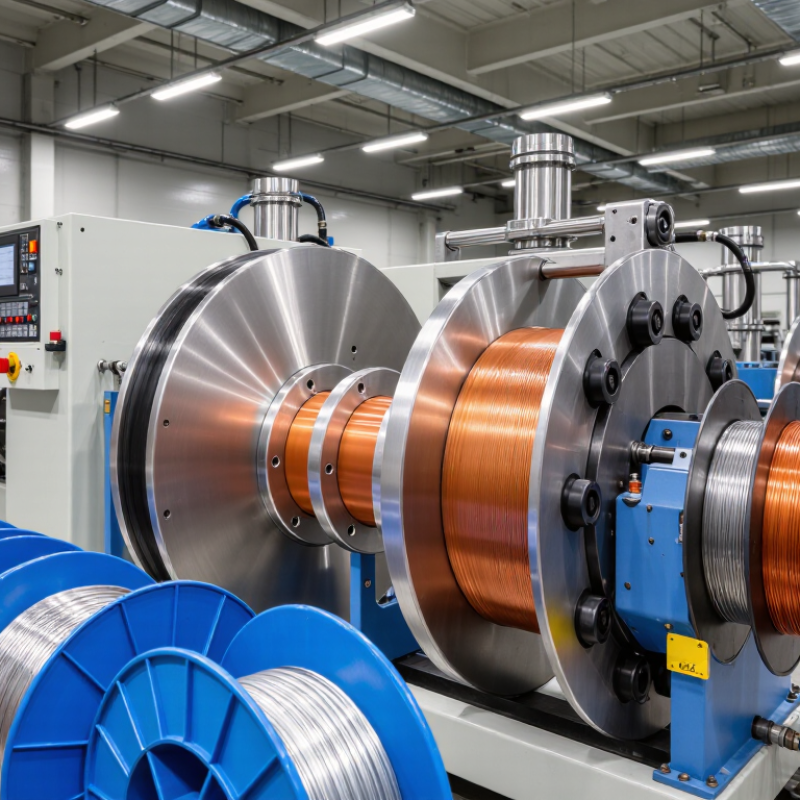
Choosing a welding wire drawing machine starts with a production definition, not a catalogue.
Record steel grade, incoming rod diameter, finished-wire range, monthly tonnage, and required tolerances. Add wire type, surface finish, spool size, and testing requirements. World Steel Association’s World Steel in Figures 2024 reports 1,888.2 million tonnes of crude steel produced in 2023. That figure signals a large industrial base, but it does not predict your wire demand. Your real number is the shift-by-shift target. Separate confirmed orders from optimistic forecasts. A neat spreadsheet can still lie.
For carbon or stainless welding wire, drawing force, die sequence, lubrication, and heat control need different attention.
Specify tensile strength, elongation, diameter variation, and allowable surface defects. ISO 14341 defines requirements for solid wire electrodes used in gas-shielded metal arc welding. The machine should match those measurable outputs. Check capstan capacity, die-box layout, annealing options, take-up accuracy, line speed, and energy use. The IEA’s Energy Efficiency 2023 report identifies industry as responsible for about 37% of global final energy consumption. Calculate energy per tonne, not only motor horsepower. Ask for trial coils. Inspect the results. Then revise the specification. The first plan is rarely perfect.
How to Choose a Welding Wire Drawing Machine in 2026?
Choosing a welding wire drawing machine starts with comparing machine types, not advertised speed. The World Steel Association reported 1.89 billion tonnes of crude steel production in 2023. That scale keeps wire consistency important. Dry drawing machines suit standard carbon-steel wire and simpler maintenance. Wet drawing machines remove heat more effectively during repeated passes. They often suit finer wire, stainless steel, or demanding surface requirements. Straight-line machines provide stable tension and accurate reduction. Multi-pass machines save floor space, but setup becomes less forgiving.
Configuration should match the incoming rod, final diameter, material hardness, and required output. Check die count, capstan size, motor control, lubrication circulation, and take-up capacity. For 0.8–1.2 mm welding wire, unstable tension can create visible diameter variation. A laser gauge and automatic tension control can reduce operator adjustment. The U.S. Department of Energy identifies motor-driven systems as major industrial electricity users, so efficient motors and regenerative braking deserve attention. Energy savings are real, though installation costs may be underestimated.
Tips: Ask for a documented trial using your own rod. Measure diameter variation, surface scratches, temperature, energy use, and coil weight. Do not judge performance from maximum line speed alone. Grand View Research’s 2024 metal wire market analysis highlights ongoing demand for higher-quality wire products, but its market forecasts should be treated as planning references, not guarantees. I would also inspect die-changing time. A machine can be technically excellent yet commercially inconvenient when changeovers consume half a shift.
| Machine Type | Typical Process | Typical Finished Wire Range | Typical Number of Passes | Typical Line Speed | Main Cooling Method | Best Suited For | Key Advantages | Main Limitations |
|---|---|---|---|---|---|---|---|---|
| Single-Block Drawing Machine | One drawing die reduces the wire diameter in a single operation. | Usually suitable for moderate reductions and intermediate wire sizes, commonly above approximately 1.5 mm. | 1 pass | Approximately 20–100 m/min, depending on material, diameter, die design, and reduction. | Die-box or localized lubricant cooling; some designs use air cooling. | Small production volumes, laboratory work, maintenance operations, and intermediate drawing. | Simple layout, lower initial investment, easy die changes, and straightforward operation. | Lower productivity and less total reduction than multi-pass equipment; not ideal for fine welding wire. |
| Multi-Block Dry Drawing Machine | The wire passes through several dies arranged in tandem, generally using dry drawing lubricant. | Commonly used for medium to fine wire, approximately 0.8–3.0 mm, depending on the line configuration. | 4–12 passes | Approximately 200–800 m/min for many carbon-steel applications. | Water-cooled blocks, capstans, bearings, and die boxes. | High-volume production of solid steel welding wire and general-purpose wire products. | Good throughput, efficient continuous operation, and stable control of multiple reductions. | Requires accurate speed synchronization, careful lubrication control, and more floor space. |
| Multi-Block Wet Drawing Machine | Multiple drawing dies operate while the wire and dies are immersed or flooded with liquid lubricant. | Commonly selected for fine and surface-sensitive wire, often below approximately 1.5 mm. | 6–14 passes | Approximately 300–1,200 m/min, depending on wire grade and final diameter. | Recirculating liquid lubricant with filtration and heat exchange. | Fine welding wire, stainless steel wire, and applications requiring strong surface quality. | Excellent cooling and lubrication, reduced die wear, and improved surface finish at high speeds. | Higher system complexity; requires lubricant filtration, temperature control, and wastewater or fluid management. |
| Straight-Line Drawing Machine | Each block draws the wire without repeated accumulation on intermediate rotating blocks. | Typically used for medium and fine wire sizes, approximately 0.8–3.0 mm. | 5–12 passes | Approximately 300–1,000 m/min. | Water-cooled drawing blocks and die holders; dry or wet lubrication may be used. | Stable, high-volume production where consistent wire tension and diameter are important. | Low wire twisting, consistent mechanical properties, good dimensional stability, and high automation potential. | Longer line length and higher installation cost; threading and setup require trained operators. |
| Slip-Type Multi-Pass Drawing Machine | The wire can slide slightly on intermediate blocks to compensate for differences in reduction and speed. | Suitable for a broad range, commonly approximately 1.0–4.0 mm depending on the number of blocks. | 4–10 passes | Approximately 150–700 m/min. | Water-cooled blocks with dry or liquid lubricant application. | Flexible production involving different steel grades and multiple product diameters. | Good adaptability, easier pass-ratio adjustment, and suitability for varied product schedules. | Wire slip can generate heat and surface marks if tension, lubrication, or block speed is poorly adjusted. |
| Fine-Wire Drawing Machine with Inline Annealing | Multi-pass drawing is combined with continuous electrical resistance annealing after or between drawing stages. | Often used for fine welding wire, approximately 0.6–1.6 mm, subject to material and annealing requirements. | 6–14 drawing passes plus annealing section | Approximately 200–800 m/min, depending on wire diameter and annealing power. | Water-cooled drawing blocks, conductive contacts, and controlled cooling after annealing. | Products requiring controlled ductility, stable feeding behavior, or reduced residual stress. | Combines drawing and heat treatment in one line, reducing handling and improving process continuity. | Higher capital cost, electrical power demand, and process-control requirements. |
| Stainless-Steel Welding Wire Drawing Machine | Controlled multi-pass drawing with lubrication and cooling selected for stainless grades such as austenitic or ferritic wire. | Commonly approximately 0.8–3.0 mm, with finer sizes possible using additional passes. | 5–14 passes | Approximately 100–600 m/min. | Usually liquid lubricant or carefully controlled wet cooling to manage heat and work hardening. | Stainless steel solid welding wire and corrosion-resistant wire products. | Supports demanding surface-quality and dimensional requirements when correctly configured. | Stainless steel work-hardening, higher drawing force, and stricter lubrication requirements can reduce speed. |
| Combined Drawing and Layer-Winding Line | Drawing is followed by precision winding onto spools or into drums, with tension and traverse control. | Commonly approximately 0.8–3.2 mm for solid welding wire, depending on spool format. | Drawing section typically 4–12 passes | Approximately 200–800 m/min drawing speed; winding speed is matched to line output. | Drawing-block cooling plus controlled cooling for bearings, dies, and winding components. | Finished welding wire supplied on spools, drums, or other controlled packages. | Reduces handling, protects the finished surface, and improves package consistency and feeding performance. | More components to maintain; winding tension and traverse alignment must be controlled accurately. |
Choosing a welding wire drawing machine starts with the wire, not the advertised speed. Confirm the inlet and finished diameters, material grade, die count, capstan dimensions, and allowable reduction per pass. A higher line speed is not automatically better. Excessive speed can increase die wear, surface scratches, heat, and wire breaks. Specify speed under production load, not under empty-machine conditions. Check motor power, torque control, cooling capacity, lubricant delivery, and take-up tension.
The International Energy Agency reported that global energy intensity improved by 2.2% in 2022, below its 4% annual efficiency target. Therefore, measure energy consumption per tonne, not only motor kilowatts.
Performance data should include diameter tolerance, ovality, tensile consistency, surface finish, break frequency, and changeover time. Ask for a monitored trial using your actual welding wire. Record results at startup, steady production, and reel change. Controls should display tension, temperature, speed, alarms, and maintenance intervals.
The International Federation of Robotics recorded 541,302 new industrial robot installations in 2023, showing how quickly factories are adopting connected automation.
Still, automation cannot repair poor mechanical alignment. Inspect capstan runout, die-box stability, guarding, and access for cleaning. No specification sheet tells the whole story. My first choice might favor maximum speed, but production records may prove that steadier tension delivers better wire quality and fewer rejects. Look for service documentation, spare-part availability, and verifiable test results. Reliable evidence matters more than impressive numbers.
How to Choose a Welding Wire Drawing Machine in 2026?
Material compatibility should guide the purchase, not catalog speed. Confirm whether the machine handles carbon steel, stainless steel, aluminum, or copper-coated wire. Each material reacts differently to die pressure, lubrication, and drawing temperature. Check the required wire diameter range and tensile strength carefully. ISO 14341 and AWS A5.18 provide useful classifications for welding wire quality. A practical trial should measure surface finish, diameter tolerance, and lubricant residue. Small residue matters.
Automation is now a production decision. The International Federation of Robotics reported 541,302 industrial robots were installed worldwide in 2023. That growth signals stronger demand for connected manufacturing equipment. Select a machine with closed-loop tension control, automatic die cooling, and recipe storage. These functions reduce manual adjustment between batches. Deloitte’s 2024 smart manufacturing survey found that 86% of manufacturers expect smart operations to improve competitiveness within five years. However, automation without skilled supervision can create expensive mistakes.
Quality control needs more than a final inspection. Look for inline laser diameter measurement, load monitoring, and alarms for abnormal tension. Data should be exportable for traceability and process review. Test the system with your actual wire, dies, and lubricant. I would not trust a perfect demonstration using unfamiliar materials. Operators should also inspect calibration records and sensor response times. One weakness remains: software cannot correct poor die alignment. A careful mechanical inspection still matters.
Check material compatibility, automation, and quality control before selecting a production line.
This engineering screening model uses a 0–100 score to compare the relative importance of three practical selection factors across common welding-wire materials. Carbon steel requires reliable die wear control, stainless steel benefits from precise tension and surface inspection, while aluminum generally needs stronger automation and lubrication control. The scores are planning benchmarks rather than manufacturer claims.
How to Choose a Welding Wire Drawing Machine in 2026?
Supplier support should carry equal weight with machine speed. The 2024 MarketsandMarkets report projects steady growth in the global welding equipment market, increasing pressure to protect uptime and output quality. Ask for commissioning records, operator training, response times, and spare-part availability. A supplier who answers quickly during a broken die matters more than impressive showroom videos.
Maintenance details reveal long-term value. Inspect capstan surfaces, die boxes, cooling paths, lubrication points, and tension controls. Request real maintenance intervals and replacement costs, not vague promises. McKinsey’s maintenance research reports that predictive maintenance can reduce downtime by 30–50% and lower maintenance costs by 10–40%. Those figures are not guaranteed for every drawing line. Real factories are less tidy.
Compare total cost over five years. Include electricity, dies, lubricants, labor, rejected wire, software updates, and planned shutdowns. Measure wire diameter consistency from trial coils. Check whether the control system records tension, temperature, and motor load. A lower purchase price can become expensive after one year. Also, ask for references from plants using similar wire materials and production volumes. Then call them, if possible. Supplier claims deserve testing.
Record the steel grade, incoming rod diameter, finished-wire range, monthly tonnage, and tolerance requirements. Separate confirmed orders from forecasts. Forecasts can deceive.
Dry drawing often suits standard carbon-steel wire and simpler maintenance. Choose wet drawing when heat control, finer wire, or surface quality matters more. The material decides.
Wet drawing removes heat more effectively during repeated passes. It can suit stainless steel, finer diameters, and demanding surface finishes. Check lubrication needs carefully.
Not automatically. Excessive speed can increase die wear, scratches, heat, and wire breaks. Compare speed under real production load, not empty-machine conditions.
Check die count, capstan dimensions, motor control, cooling capacity, lubrication delivery, and take-up tension. Also review allowable reduction per pass. Small details matter.
Request a documented trial using your own steel rod. Measure diameter variation, ovality, tensile consistency, scratches, temperature, coil weight, and break frequency. Inspect startup and steady production.
Stable tension is essential because small changes can create visible diameter variation. A laser gauge and automatic tension control may reduce operator adjustments. They cannot fix poor alignment.
Measure energy per tonne, not only motor power. Review efficient motors, regenerative braking, cooling demand, and lubrication circulation. Installation costs may be underestimated.
No. Automation can display tension, temperature, speed, alarms, and maintenance intervals. It cannot repair unstable capstans, poor alignment, or weak die-box support.
Examine die-changing time, cleaning access, guarding, spare-part availability, and service documents. A technically strong machine may lose half a shift during changeovers. My first choice could still be wrong.
Choosing the right Welding Wire Drawing Machine in 2026 starts with clearly defining your production requirements, including wire materials, diameter ranges, output targets, product varieties, and available workspace. Once these needs are established, compare suitable machine types and configurations, such as single- or multi-pass systems, based on drawing efficiency, flexibility, and expected production volume. Key specifications should include drawing speed, motor capacity, die arrangement, tension control, dimensional accuracy, energy efficiency, and overall operating stability.
It is also important to confirm compatibility with the materials and coatings used in your welding wire products. Automation features, monitoring systems, lubrication control, and inline quality inspection can improve consistency and reduce waste. Finally, evaluate supplier support, installation guidance, spare-part availability, maintenance requirements, operating costs, and service responsiveness. A machine with a higher initial price may provide better long-term value if it delivers reliable performance, easier maintenance, lower energy consumption, and consistent wire quality throughout its service life.

Orient PengSheng