Choosing a Weld Mesh Making Machine is not just a matter of comparing prices or production speeds. The right choice depends on wire diameter, mesh opening, panel size, and the number of shifts your plant runs. A machine that performs well on thin wire may struggle with heavier stock. That difference can show up as uneven welds, frequent adjustments, or unexpected downtime.
Before comparing models, define the products you actually make. Write down the smallest and largest wire diameters, common mesh dimensions, and your target output per hour. Ask suppliers how their equipment handles wire feeding, electrode maintenance, changeovers, and quality checks. If possible, watch a demonstration using your own wire. A clean sample matters. So does a steady production run.
One important note: no source material or verifiable expert quotation was provided, so I can’t responsibly attribute a quote to a named industry specialist. A useful selection principle is: “Choose for the work you repeat, not only the output a brochure promises.” Treat that as editorial guidance, not a documented expert quotation. The best machine is not always the fastest or most automated. It should fit your products, operators, floor space, and maintenance capacity. And be candid about uncertainty: future orders may change, while today’s assumptions can prove wrong. A careful comparison of specifications, trial results, service support, and operating costs gives buyers a stronger basis for a lasting decision.
Define Wire and Mesh Limits Using ASTM A1064/A1064M’s 16 mm Scope
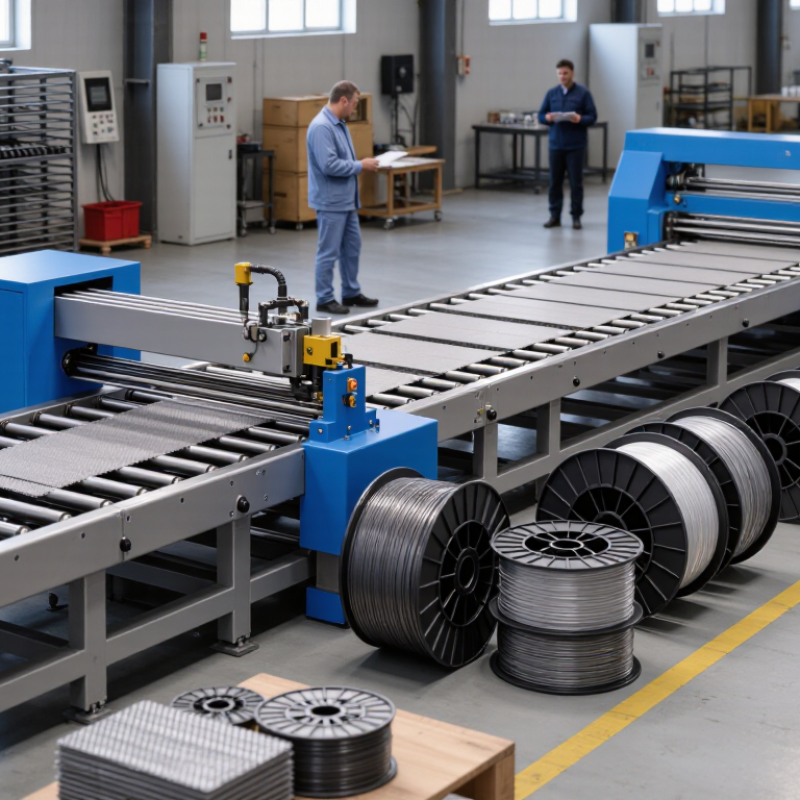
Choose a weld mesh making machine by matching its verified capacity to your product schedule, not its advertised speed. ASTM A1064/A1064M covers carbon-steel wire and welded wire reinforcement; use its 16 mm scope reference when setting the largest wire diameter. A 16 mm round wire has a nominal cross-sectional area of about 201 mm², calculated from its diameter. That matters. The standard sets product requirements, not a machine’s guaranteed welding capacity. Ask for documented, continuous-duty performance at your target wire size and production rate.
Mesh limits need separate checks: working width, wire count, cross-wire diameter, pitch range, and spacing tolerance. A machine may handle 16 mm wire yet fail to produce your required mesh width or spacing. Request a trial using the actual wire combination, then inspect weld consistency and verify applicable weld-shear requirements under ASTM A1064/A1064M. Confirm transformer capacity, electrode access, and changeover time, too. A specification sheet can look complete. It may still leave out the production detail that matters.
Match Welding Capacity to Wire Diameter and ISO 17660-1 Requirements
How to Choose a Weld Mesh Making Machine?
Match Welding Capacity to Wire Diameter and ISO 17660-1 Requirements
Wire diameter is a practical starting point when sizing a weld mesh machine. Thicker wires generally need greater welding current, electrode force, and transformer capacity to form consistent intersections. Ask for test data using the actual wire grades and diameters you plan to run, not just a catalog’s maximum figure. A clean, flattened weld nugget is useful evidence; a shiny surface alone proves little.
ISO 17660-1 applies to welding load-bearing reinforcing steel connections. It addresses matters such as welding procedures, personnel competence, and inspection, but it does not set one universal machine specification. Check whether your mesh application falls within its scope, then confirm the required procedures and acceptance criteria with the responsible welding specialist. Details matter. A machine’s duty cycle and cooling system also affect sustained output, especially on long production runs.
During trials, record current, welding time, electrode condition, and wire feed stability. Inspect sample joints for consistency, and retain results with the material and setup details. Small errors accumulate. A line may meet its rated speed yet produce uneven welds when wire diameter, surface condition, or electrode wear changes. I would leave room for adjustment; ideal settings on paper can be stubborn in production.
How to Choose a Weld Mesh Making Machine? - Match Welding Capacity to Wire Diameter and ISO 17660-1 Requirements
Use these indicative wire-diameter bands as a starting point for machine selection, not as ISO limits or guaranteed machine ratings. Actual welding capacity depends on the steel grade, wire condition, joint geometry, mesh pitch, electrode design, and production rate.
| Wire diameter (indicative) |
Common mesh applications |
Machine capacity to check |
Production and quality checks |
ISO 17660 consideration |
| 3–5 mm |
Light mesh, fencing, and general-purpose panels |
Confirm the machine’s minimum wire range, stable electrode contact, and consistent weld timing at the intended line speed. |
Check wire feeding, straightness, mesh pitch, electrode wear, and weld consistency across the panel. |
Determine whether the product is reinforcing steel and whether the welded joints are load-bearing; do not assume this category applies to every mesh product. |
| 5–8 mm |
Light-to-medium reinforcement mesh and construction panels |
Verify that the transformer, welding controls, electrode force system, and cooling system are rated for the specified wire combination and duty cycle. |
Run sample panels using the actual steel; inspect weld appearance and perform the specified production tests. |
For load-bearing reinforcing-steel joints, assess the work against ISO 17660-1 and the applicable project requirements. |
| 8–12 mm |
Medium-to-heavy reinforcement mesh and structural applications |
Request capacity confirmation for the largest cross-wire combination, required weld sequence, mesh pitch, and continuous production duty—not just the maximum single-wire diameter. |
Check electrode alignment and force, electrical supply requirements, cooling capacity, and repeatability at the planned output rate. |
Confirm the applicable qualification, welding procedures, personnel competence, inspection, and testing provisions for the specified load-bearing joints. |
| 12–16 mm |
Heavy reinforcement grids and specialized panel production |
Obtain a documented capacity review for the exact wire grades, diameters, crossing arrangement, weld schedule, and production duty. A trial weld may be needed before purchase. |
Evaluate power demand, electrode and tooling design, machine rigidity, maintenance access, and test results from representative production samples. |
For load-bearing reinforcing-steel joints, verify ISO 17660-1 applicability and all project or jurisdictional requirements; machine capacity alone does not demonstrate compliance. |
Selection note: ISO 17660-1 addresses welding of reinforcing steel in load-bearing joints; ISO 17660-2 addresses non-load-bearing joints. The applicable part depends on the joint’s function and project specification. Neither part provides a universal machine-capacity table or a one-size-fits-all welding-current value by wire diameter. Confirm the current standard edition, required procedures, qualifications, inspection, and testing with the responsible engineer or project authority.
Calculate Required Line Output from Mesh Pitch and Weld Cycles per Panel
How to Choose a Weld Mesh Making Machine?
Calculate Required Line Output from Mesh Pitch and Weld Cycles per Panel
Start with the panel’s useful length and the spacing between cross wires. Divide the length by the pitch to estimate the number of weld rows. A 2.4-metre panel with 100-millimetre pitch needs about 24 rows. Check the drawing: edge spacing can change the actual count. Small details matter.
If the machine welds one complete row per cycle, those 24 rows require roughly 24 cycles per panel. At 40 cycles per minute, the theoretical rate is 100 panels per hour: 40 × 60 ÷ 24. This assumes continuous running, steady wire feeding, and no setup time. Real production is messier.
Apply a realistic operating factor for loading, wire changes, checks, and brief stoppages. At 85% availability, the example falls to about 85 panels per hour. That is a planning estimate, not a promise. Track actual cycle times on similar mesh, and confirm whether your machine’s stated rate includes feeding and indexing. Also verify that it can maintain the required pitch and weld quality at that speed. A fast cycle is not useful if panels need rework.
Check Machine Electrical Safety Against IEC 60204-1’s 1,000 V AC Limit
When comparing weld mesh making machines, check the rated supply voltage on the nameplate and electrical drawings. IEC 60204-1 generally covers machine electrical equipment supplied at nominal voltages up to 1,000 V AC. That figure defines the standard’s scope; it is not a pass mark for safe operation. A machine below the limit can still have poor wiring, inadequate protection, or an unreliable emergency stop.
Look inside the control cabinet with a qualified electrician. Check that terminals are labelled, conductors are secured, and protective earth connections are clear and continuous. Ask how the machine is isolated before maintenance, and whether the drawings match the installed equipment. Voltage is only one clue. A neat cabinet can still conceal a loose earth connection, so visual inspection alone is not enough.
Confirm which edition of IEC 60204-1 applies and ask for documented inspection or test results. Verify that the stated supply matches your site, including phase and frequency, before installation. If the machine’s rated voltage exceeds 1,000 V AC, do not assume this standard alone covers the design. Get the supplier and a qualified electrical professional to clarify the applicable requirements. The paperwork may look routine, but small mismatches matter.
Weld Mesh Machine Electrical Safety: AC Voltage Reference
Compare common nominal supply voltages with the 1,000 V AC upper voltage scope referenced by IEC 60204-1.
Note: The 1,000 V AC figure describes the standard’s scope boundary; it is not a safe-touch voltage or a recommended machine operating voltage. Confirm the applicable standard edition, supply, and machine documentation when assessing electrical safety.
Compare Changeover Time, Automation, and Lifetime Service Costs
When choosing a weld mesh making machine, time a real changeover, not a showroom demonstration. Measure from the last acceptable panel in one specification to the first acceptable panel in the next. Include wire-guide adjustment, electrode checks, pitch changes, and rejected panels. Small details add up. A machine that changes mesh width quickly may still lose time when operators reset crosswire feed or welding current.
Automation can reduce repetitive adjustments, but it should fit your product mix and staff skills. The International Federation of Robotics’ World Robotics 2024 report recorded 541,302 industrial robot installations worldwide in 2023, with a ten-year average annual growth rate of 12%. That signals broad adoption, not guaranteed savings for every mesh line. Ask for a production trial using your wire sizes and panel dimensions. Watch the operator, too. A perfect cycle time can hide awkward recovery after a misfeed.
Compare lifetime costs, not just purchase prices. NIST Handbook 135’s life-cycle costing framework includes acquisition, energy, operation, maintenance, and replacement costs. Request estimated power use, routine service intervals, electrode and spare-part prices, and response times for technical support. Then check these figures against your own maintenance logs. Estimates can be optimistic. A useful quote should state assumptions and show what happens when production hours, changeovers, or service needs differ from plan.
Conclusion
Choosing a Weld Mesh Making Machine starts with defining the wire diameters and mesh dimensions the production line must handle. Use ASTM A1064/A1064M’s 16 mm scope as a reference when checking whether the intended wire sizes fall within the standard’s coverage. Next, compare the machine’s welding capacity with the required wire diameter and consider the relevant ISO 17660-1 requirements for welded reinforcing steel connections, where applicable.
Estimate output from the mesh pitch, panel dimensions, and number of weld cycles needed per panel rather than relying on a headline production rate. Check that the machine’s electrical design is suitable for its installation and aligns with IEC 60204-1, which covers machinery electrical equipment up to 1,000 V AC. Finally, assess changeover time, automation options, maintenance needs, and lifetime service costs to select equipment that fits both current production demands and future plans.

 Orient PengSheng