Executive Abstract: As modern heavy industrial demands escalate across construction, automotive, shipbuilding, and energy infrastructures, the quality of consumables like welding wires dictates structural safety. This industrial whitepaper explores the global landscape of welding machine fabrication, focusing on the critical nature of CE Certification for Flux-Cored Wire (FCW) and solid welding wire production equipment. We evaluate the core technical integrations, Chinese efficiency pathways, localized site adaptations, and procurement checklists crucial for industrial procurement directors.
Modern industrial welding is no longer a localized trade; it is a highly integrated, automated engineering sector. Globally, the reliance on high-strength steels requires precise, defect-free welding consumables. This has driven the industry from traditional manual processes to complex automated production systems. In this ecosystem, Flux-Cored Arc Welding (FCAW) has emerged as a crucial technology, combining the high deposition rates of MIG/MAG welding with the metallurgical flexibility of Shielded Metal Arc Welding (SMAW).
For any global manufacturer or factory looking to transition into high-yield consumable production or scale existing output, safety and quality assurance are non-negotiable. Here, CE Certification (Conformité Européenne) stands as the gold standard of machine safety, electrical efficiency, and mechanical integrity. A CE certified welding wire drawing or rewinding machine guarantees compliance with the Machinery Directive (2006/42/EC), Low Voltage Directive (2014/35/EU), and EMC Directive (2014/30/EU). This certification is not only a regulatory passport into the European Economic Area but a global trust indicator demonstrating that the plant machinery minimizes operational downtime, limits workplace hazards, and optimizes mechanical longevity.
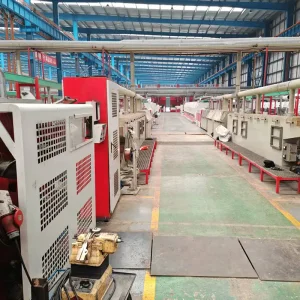
Our CE Certified core machinery optimized for continuous output, raw materials slitting, structural forming, and automatic high-speed packaging.

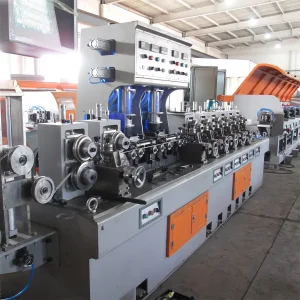
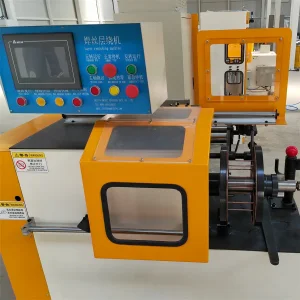
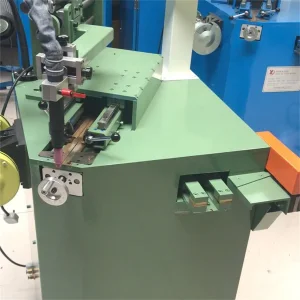
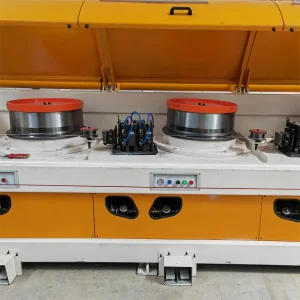
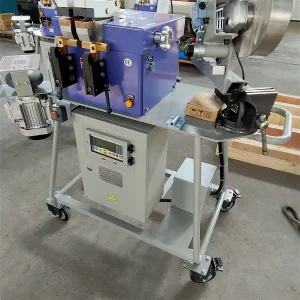
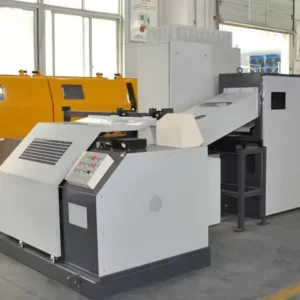
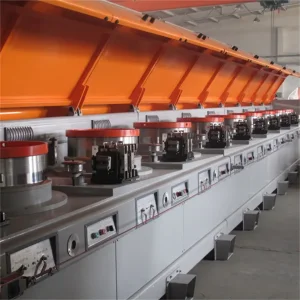
The manufacturing process of high-performance flux-cored welding wire is far more complex than that of solid drawing. It is a multi-stage continuous operation that relies on the chemical configuration of the core material and the dimensional accuracy of the outer steel envelope.
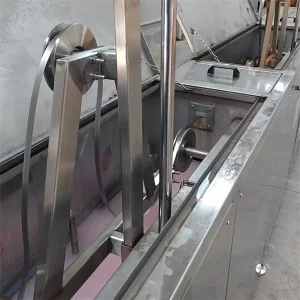
Production begins with high-quality low-carbon steel coils. The low-carbon steel strip slitting machine cuts wide coils into precise, narrow strips. Afterward, the strips are routed through an ultrasonic cleaning machine to remove oils, rust, and surface contaminants, ensuring zero welding porosity.
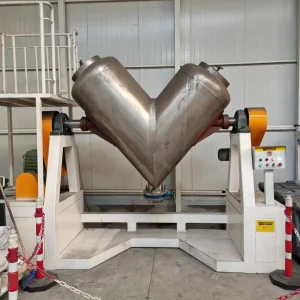
The cleaned strip enters the forming machine. Rollers shape the flat strip into a continuous "U" channel. Simultaneously, the flux powder mixing machine delivers a precise, homogenized chemical mixture of minerals, alloys, and deoxidizers into the trough before the edges are closed.
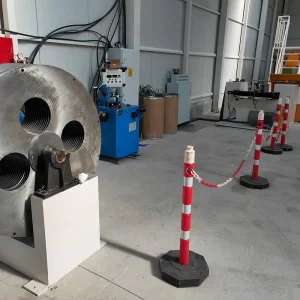
The closed wire is pulled through a straight-line drawing machine using premium rolling cassettes. The wire diameter is gradually reduced, compressing the internal powder core to the correct density. Finally, the finished wire is wound onto spools using a high-precision layer rewinder.
Any structural failure in this workflow, such as an uneven distribution of powder or variation in outer diameter, directly causes slag inclusions and erratic arcs at the construction site. Therefore, integrating high-accuracy components—like automated tension control sensors and synchronized motors—is a critical benchmark for high-performance fabrication factories.
Established in 2011, Beijing Orient Pengsheng Tech Co., Ltd. has developed over 20 years of technical expertise in flux-cored welding wire manufacturing machinery.
Through collaboration with European technical partners and internal R&D, we have established our own technology, manufacturing facilities, and quality management protocols in this specialized field. We focus on supplying FCW machines with modern technical design, durability, and high operational safety.
Our global presence includes machinery and complete production lines installed across Europe, the Americas, and Southeast Asia. We support our machinery with complete pre-sales consultation, custom layout engineering, on-site commissioning, and continuous remote troubleshooting.
Global procurement teams often balance the trade-off between the high engineering costs of European manufacturers and the quality risks of entry-level suppliers. Beijing Orient Pengsheng Tech Co., Ltd. addresses this gap by combining advanced technology with efficient assembly processes.
While mechanical assembly and structure are completed in our factory in China, critical components—including electrical controllers, pneumatic assemblies, and tooling materials—are sourced directly from European suppliers to ensure durability, high precision, and reliability.
Our facility in China leverages localized steel fabrication, component sourcing, and engineering expertise to reduce production costs. These savings are passed directly to our clients without compromising mechanical tolerances.
European suppliers often limit customer choices to standard configurations. In contrast, our team offers tailored design flexibility, adjusting layouts for limited plant heights, custom spool configurations, or specialized chemical formulations.
Welding wire needs and regulations vary by region. Our CE-certified production lines are configured to meet these specific regional requirements:
European factories prioritize strict safety and energy efficiency. Our machines feature integrated sound protection, high-efficiency motors, and dual-channel emergency stop circuits to comply with European work environment directives.
North American heavy fabricators require machines capable of winding heavy, continuous spools (up to 300kg or 450kg drums) for robotic welding. Our heavy-duty drum packers provide precise tension control to prevent tangles during automated payoff.
These regions often require machinery that can withstand high temperatures, variable humidity, and power fluctuations. Our control panels feature tropicalized coatings and integrated voltage regulators to ensure continuous operation in challenging environments.
Partnering with Beijing Orient Pengsheng Tech Co., Ltd. provides access to specialized machinery built to international standards, supported by reliable customer service.
We use modern manufacturing processes and source core operational components directly from European partners to ensure reliable technical standards.
We have manufactured and delivered hundreds of machine configurations and complete production lines to high-volume manufacturing facilities worldwide.
Our technical team provides pre-sales consultations, customized facility layouts, on-site commissioning, operator training, and ongoing technical support.
We continuously gather feedback from operational sites to update our machinery designs. We share industrial best practices to help our clients optimize their manufacturing yield.
The manufacturing of welding consumables is shifting toward greener, more efficient, and connected systems. Here are the core development trends shaping the industry:
Environmental regulations continue to restrict acid chemical pickling. Modern facilities are shifting to mechanical descaling and high-frequency ultrasonic cleaning systems to maintain wire surface quality while reducing environmental impact.
Industrial IoT sensors are becoming standard on drawing and rewinding lines, monitoring parameters like drawing tension, motor temperatures, and wire speed to predict component wear before failure occurs.
Advanced sensors now dynamically monitor the chemical powder filling ratios in flux-cored wires, minimizing wastage and ensuring consistent weld chemistry throughout the entire production spool.
Additional machinery configurations, sub-assembly systems, and consumable drawing components optimized for global factories.
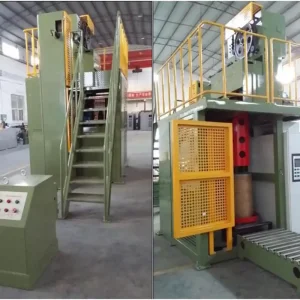
When purchasing complex wire drawing and forming machinery, global engineering teams should review key performance parameters before finalizing contracts. Use this checklist during evaluation:
Ensure the drawing line can operate at target speeds (e.g., up to 20-30 m/s for wire drawing) with a low failure rate. Ask for historical operational logs from existing production lines.
Confirm the powder dosing accuracy. Variations in filling density can affect arc stability. Demand weighing metrics and PLC feed precision data.
Request documentation of the machinery's safety systems. CE compliance requires dual-channel light curtains, interlocked physical guards, and functional safety controllers.
Clear technical and commercial answers regarding specifications, compliance, and logistics.
If you are interested in reviewing specific equipment details or discussing a custom facility layout, please contact our engineering team. We will review your requirements and provide a detailed technical configuration proposal.
 Orient PengSheng