 Orient PengSheng
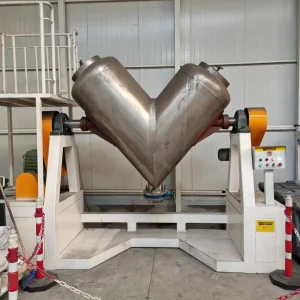
Austrian Grade Flux Powder Mixing Machine
High-homogeneity mechanical mixing system engineered for complex flux formulation processing in welding wire manufacturing plants.
Explore SpecificationsHighly customized auxiliary machines engineered to integrate with high-performance production lines across the Steyr, Kapfenberg, and Linz industrial belts.
High-homogeneity mechanical mixing system engineered for complex flux formulation processing in welding wire manufacturing plants.
Explore Specifications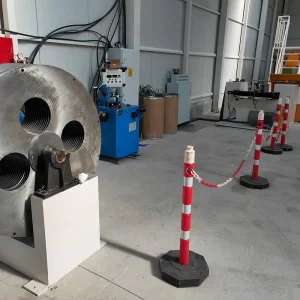
Designed for tight tolerance division of low carbon steel strips, satisfying strict European dimensional standards.
Explore Specifications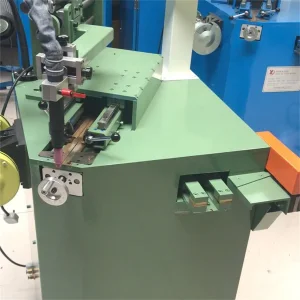
Delivers high structural integrity seam welding to enable uninterrupted forming line runs on high-load cycles.
Explore Specifications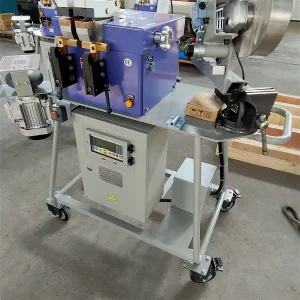
Heavy-duty welding system for joining wire ends, preventing downtime during multi-stage draw processes.
Explore SpecificationsAustria's industrial landscape represents one of the most advanced manufacturing sectors in the European Union. Anchored by world-class steel manufacturers in Styria and Upper Austria, the regional sector demand is characterized by zero-defect requirements, high compliance with European Machinery Directives, and integration with automated production networks. In such an ecosystem, the auxiliary machinery supporting key production lines is no longer merely "secondary" hardware. Instead, machinery such as high-accuracy strip slitters, ultra-stable butt welders, and precise chemical powder blenders are recognized as core components that dictate the yield rate, chemical consistency, and overall operational efficiency of the factory.
For example, when producing high-quality Flux-Cored Welding Wires (FCW) to support Austria's heavy engineering, railway construction, and automotive industries, slight variations in raw materials can disrupt structural welding performance. A defect-free weld wire production line requires auxiliary machinery that operates with strict repeatability. Advanced powder mixing systems must prevent segregation, and cold-rolling cassettes must handle high forming speeds without causing micro-cracking in the steel envelope.
"Operational optimization in Central European metallurgy requires auxiliary systems to achieve digital integration. Process parameters, such as strip butt welder hydraulic clamping pressure and drawing machine cooling temperature, must feed directly into manufacturing execution systems (MES)."
The processing of low-carbon steel strips and complex alloy consumables requires close attention to structural parameters. Slitting machinery must operate with minimal burr formation to prevent stress concentrations during tube forming. In butt welding, pneumatic or hydraulic clamping controls must guarantee precise horizontal alignment to avoid thick joints that can catch inside the drawing dies. As factories in Graz and Linz update their production floors, they require suppliers who understand how to configure and deploy these auxiliary technologies within highly regulated environments.
Operating in Austria involves compliance with EN standards, environmental regulations, and safety directives. High utility costs and strict labor protection laws mean that unplanned downtimes or manual interventions are costly. Thus, manufacturing operations demand auxiliary machinery with:
With the Austrian metallurgical sector moving towards green steel production, auxiliary equipment must also demonstrate energy efficiency. Variable frequency drives (VFDs) on drawing units, regenerative braking on heavy spoolers, and optimized thermal profiles in powder preheating systems are key variables. By reducing localized power requirements and cutting down raw material waste, modern auxiliary units help processors lower their total scope-2 emissions.
Established in 2011, Beijing Orient Pengsheng Tech. Co., Ltd. has developed over 20 years of experience in the design, engineering, and manufacture of flux-cored welding wire production equipment. Supported by European technical cooperation, we have built a comprehensive portfolio of proprietary technology, manufacturing facilities, and project management processes.
Our core mission is to supply flux-cored welding wire (FCW) machinery that balances international standards with robust performance. We focus on continuous optimization, integrating modern feedback loops into our product lines to address the demands of customers operating in demanding regulatory markets.
Watch: Automated Flux-Cored Welding Wire Production Line in Action
Exploring the mechanical, electrical, and control systems designed to maintain manufacturing continuity.
Before steel strips undergo forming, residual oil, rust, and surface contaminants must be removed. Our ultrasonic cleaning systems utilize high-frequency cavitation to strip contaminants without altering the material's mechanical properties. This process prevents hydrogen contamination in the final wire, reducing weld porosity.
Flux-cored wire performance depends on chemical distribution inside the core. Our flux powder mixing machines feature high-efficiency impeller designs and temperature-controlled heating ovens to maintain moisture levels below critical thresholds, preventing hydration reactions and ensuring a consistent fill ratio.
Both steel strip butt welders and wire butt welders are engineered to minimize downstream drawing disruptions. Employing automated upset forces and controlled tempering cycles, our butt welders yield joint tensile strengths that closely match parent metal properties, reducing wire breaks under tension.
Our manufacturing equipment is built to handle low-carbon steel strips and wires of varying grades. Below is an overview of the technical boundaries under which our auxiliary machinery operates:
| Equipment Category | Key Parameters | Operational Ranges | Primary Material Compatibility |
|---|---|---|---|
| Strip Slitting Machine | Max Slits, Speed, Width | Up to 15 cuts, 0-120 m/min, 200-600 mm raw width | Low-carbon, SPCC, SAE 1006/1008 steel strips |
| Strip Butt Welder | Strip Thickness, Width, Cycle | 0.8 - 3.5 mm thickness, 10 - 60 mm width | Carbon steel, alloy steel, stainless steel strips |
| Powder Mixing Unit | Mixing Volume, Cycle Time, Heat Temp | 100 - 500 kg/batch, 15 - 30 mins, up to 250°C | Rutile, silicate, ferroalloys, metallic deoxidizers |
| Straight Line Drawing | Block Diameter, Draw Speed, Cooling | Ø 400 - 900 mm, up to 18 m/s, water/air cooled | Solid & flux-cored welding wire, carbon steel |
Engineered systems designed to meet demanding production standards globally.
European Core Tech
Core tooling and structural engineering technologies are co-developed with European partners to ensure compliance with modern standards.
Global Install Base
Hundreds of lines and individual machines are active globally, demonstrating operational stability in diverse factory conditions.
Full Life Cycle Service
From pre-sales planning to on-site commissioning and tooling calibrations, our engineering team supports your operations.
Custom Engineering
We customize line layouts, wire diameters, power requirements, and control systems to integrate with your existing equipment.
Explore our full line of wire processing, strip handling, and packaging systems configured for Central European specifications.
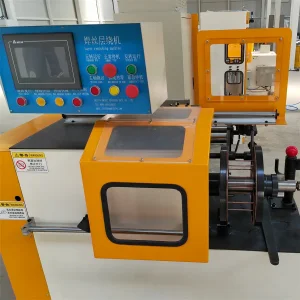
Provides constant-tension layering for steel and alloy wires, preventing overlapping during robotic welding.
View Product Details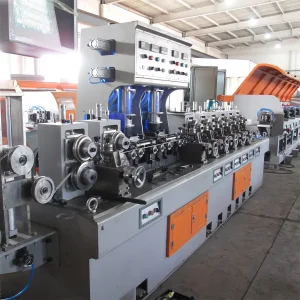
Optimized for butt seam and overlap forming styles, ensuring uniform roundness prior to drawing.
View Product Details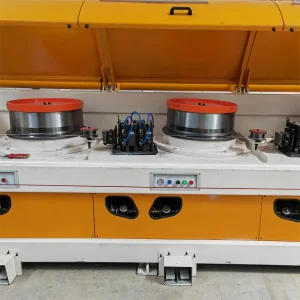
Straight-line drawing machine engineered with PLC-controlled speed adjustments to minimize wire slippage.
View Product Details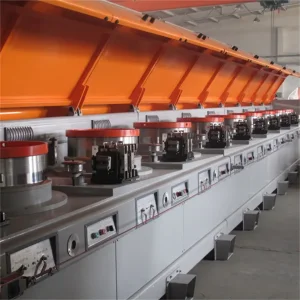
Precision-ground tungsten carbide and diamond rolling cassettes designed to maintain wire roundness tolerances.
View Product Details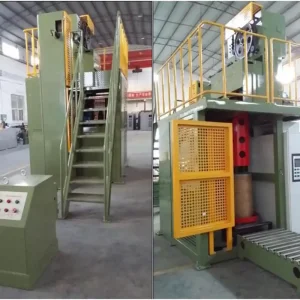
Automated bulk spooling and pail packaging system designed for high-volume solid and flux-cored wire lines.
View Product Details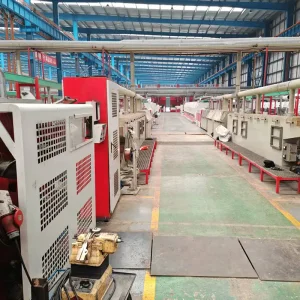
Integrated manufacturing solution from pay-off to spooling, built for processing MIG/TIG welding wires.
View Product Details
Engineered for high-tensile wire joining, optimizing uptime during continuous drawing machine operations.
View Product Details
Splits wide coils into precise, narrow bands with clean edges, optimized for high-speed forming units.
View Product DetailsAs the manufacturing sector shifts towards digitalization, our development focus has evolved. Modern European factories demand more than standard machinery; they require systems equipped with sensors that actively monitor process parameters. For example, our winding systems are designed with dynamic sensor feedback loops that measure tension variations in real time, auto-adjusting torque to prevent wire stretching.
This focus on technology integration extends to diagnostics. By tracking operational parameters—such as the vibration frequencies of mixing impellers and the current draw of drawing motors—our systems can flag maintenance needs before a mechanical failure occurs. This data-driven approach supports high equipment uptime and maintains consistent wire quality.
We provide comprehensive technical support for our systems. Our service capabilities include:
Answers to technical and logistics questions regarding our equipment and support services.
Our pricing is based on the specific requirements, automation levels, and customization of the equipment. Because each machine is tailored to integrate with particular production line capacities and local safety regulations, we provide detailed technical proposals and formal commercial offers once we receive your project parameters.
Yes, we provide full technical documentation package, including CE Certificates of Conformity, operation manuals in English (or German upon request), electrical schematics, foundation drawings, and material certificates (including EN 10204 3.1 certification for critical components).
Our standard payment terms are a 30% deposit in advance by Telegraphic Transfer (T/T), with the remaining 70% balance payable by irrevocable Letter of Credit (L/C) at sight or via T/T against presentation of the copy of the Bill of Lading (B/L) and factory test reports.
We provide a standard 12-month warranty from the date of machine start-up or commissioning at the customer's facility. The warranty covers manufacturing defects and material failures under normal operating conditions. It does not cover defects caused by incorrect installation, operator error, or normal wear on consumables (such as drawing dies, slitter knives, and welding contact blocks).
We use heavy-duty export packaging designed for sea and land transport. Machinery components are treated with rust preventative, wrapped in moisture-barrier film, and securely anchored to reinforced steel or wooden bases inside containers. Sensitive electronic cabinets are vacuum-packed with desiccant to prevent corrosion during transit.
Manufacturing lead time generally ranges between 2 and 3 months, depending on the complexity of the machine, current production schedules, and the degree of custom engineering required. Exact delivery timelines are confirmed in our formal technical proposals.