Engineered to deliver unmatched core density, layer-spooling precision, and high-performance throughput for modern manufacturing facilities.
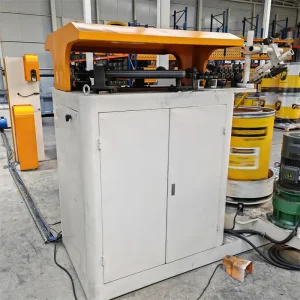
Our heavy-duty packaging system maximizes spooling stability, featuring automatic drum-feed controls and precise dynamic tensioning tailored for Uzbekistan's local industrial requirements.
Explore Specifications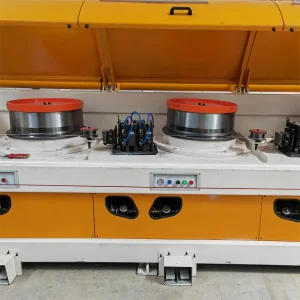
A multi-stage continuous straight-line drawing line utilizing variable frequency drives and advanced cooling to process flux-cored wire down to high-strength tolerances.
Explore Specifications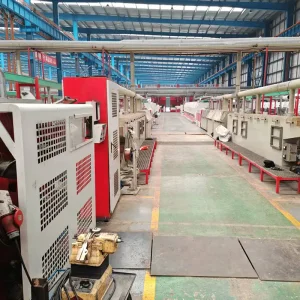
Integrated manufacturing suite covering strip preparation, mechanical reduction, chemical cleaning, and copper coating lines optimized for continuous manufacturing operations.
Explore Specifications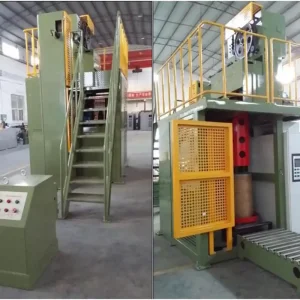
Engineered for high-volume dispatching setups, integrating pneumatic compression, accurate moisture sealing, and automated labeling configurations for logistics safety.
Explore SpecificationsUzbekistan is undergoing a rapid macro-economic restructuring under its localized industrial modernization mandates. Key infrastructure developments, such as the expansion of the Almalyk Mining and Metallurgical Complex (AMMC), the construction of modern petrochemical and gas processing plants in Karakalpakstan, and municipal infrastructure projects in Tashkent City, have dramatically accelerated demand for premium structural steel fabrication. Underpinning this steel fabrications boom is the vital need for high-performance welding consumables.
Traditionally, standard solid MIG/MAG wires and MMA stick electrodes dominated the regional welding landscape. However, modern construction tolerances and efficiency metrics require a transition to Flux Cored Arc Welding (FCAW). Flux-cored wire delivers up to three times the deposition rate of stick electrodes and provides much deeper joint penetration than conventional solid wire. This structural shift is driving heavy industrial manufacturers within Uzbekistan to localize production of high-grade flux-cored welding wires. By manufacturing flux-cored wires locally rather than importing them from neighboring regions, domestic factories can avoid substantial logistical costs, eliminate import tariffs, and guarantee constant supply chains.
Uzbekistan's infrastructure investment is projected to grow by over 8% annually. Localized production of flux-cored welding wire addresses the national import substitution policy, giving manufacturers a competitive pricing advantage across the wider CIS region.
While typical SMAW (stick) welding yields a deposition efficiency of around 60-65%, modern Flux Cored Arc Welding lines yield up to 86-90% efficiency. This massive reduction in material loss translates directly into significant operational cost savings for manufacturing plants.
Manufacturing high-performance flux-cored welding wire requires precise mechanical controls, accurate powder dosing, and uniform reduction processes. Unlike solid wires, flux-cored wires feature a complex hollow tube filled with micro-alloyed fluxes, deoxidizers, and slag-forming agents. Achieving mechanical consistency along several kilometers of wire requires robust and reliable machinery.
The production cycle begins with hot-rolled or cold-rolled low-carbon steel strip coils (typically SPCC or structural equivalents). These wider sheets are slit down to precise, narrow strips matching the final target diameter. The strip then passes through an ultrasonic cleaning line to remove surface rust, residual oils, and contaminants. Even minute amounts of carbonaceous residues or oils left on the strip will cause hydrogen cracking and excessive spatter during structural welding.
The cleaned steel strip is fed through a multi-stage roll-forming assembly that shapes the flat strip into a continuous "U" channel. Simultaneously, the blended flux powder is introduced into the channel. The precision of the dosing mechanism determines the final quality of the welding consumable. Our advanced gravimetric dosing systems maintain powder fill consistency within tolerances of ±0.5%, preventing dry zones or overfilled segments that lead to weld path discontinuities.
Once filled, the U-channel passes through closing rolls to form a tight butt-joint or overlapping seam. This tubular preform is then drawn through specialized reduction cassettes. Unlike traditional drawing dies, which generate high heat and high friction, our rolling cassettes apply balanced radial compression. This step locks the powder inside, prevents leakage, and reduces the outer diameter of the wire without compromising the core configuration.
| Production Line Phase | Primary Equipment Used | Critical Control Metric | Impact on Final Weld Quality |
|---|---|---|---|
| Steel Strip Slitting | Low Carbon Strip Slitting Line | Edge burr thickness < 0.05 mm | Prevents localized stress fractures in the forming tube |
| Ultrasonic Cleaning | Multi-Chamber Ultrasonic Cleaner | Surface oil residue < 10 mg/m² | Eliminates hydrogen porosity and arc instability |
| Powder Feeding & Closing | Roll Forming & Dosing Unit | Filling coefficient tolerance ±0.5% | Ensures uniform mechanical properties in weld metal |
| Wire Drawing | Straight-Type Drawing Machine | Constant cooling water temp < 28°C | Avoids hardening of the steel sheath, preventing breakage |
| Precision Layer Winding | Precision Layer Rewinder | Tension variation < 3% | Guarantees tangle-free wire feeding in automatic robotic welders |
After the preliminary reduction stage, the wire passes through a series of straight-line capstans. Direct water cooling within the drawing drums prevents thermal hardening of the steel casing. Additionally, intermediate induction annealing may be used depending on the alloy composition. This step relieves internal drawing stresses, restoring the ductility of the sheath to prevent micro-fracturing as the wire is drawn to its final diameter (typically 1.2 mm, 1.4 mm, or 1.6 mm).
In the final stage, the finished wire is wound onto plastic or wire spools using precision layer winding machines. The winding layout must be highly consistent to prevent wire tangles during automated robotic welding. Once spooled, the wire is vacuum-sealed with desiccants to protect the hygroscopic flux core from moisture during transport and storage in Uzbekistan's varied continental climate.
Providing data-driven reliability, energy-efficient production lines, and high-capacity manufacturing setups for international markets.
Our manufacturing technologies utilize advanced mechanical designs and control systems developed in collaboration with leading European engineers. Over the last decade, our machinery has produced hundreds of thousands of tons of high-grade flux-cored wires (including E71T-1, E71T-11, and hardfacing alloys). This equipment meets strict international quality benchmarks such as CE certifications, AWS specifications, and ISO standards.
Beijing Orient Pengsheng Tech. Co., Ltd. was established in 2011. However, we have more than 20 years of experience with flux-cored welding wire manufacturing machines. Supported by our European technical partners and driven by continuous innovation, we have developed our own proprietary technologies, state-of-the-art manufacturing facilities, and robust management systems. We are dedicated to supplying flux-cored wire (FCW) machinery equipped with the latest technological developments and built to the highest quality standards.
Thanks to this technical foundation, we have supplied more than 150 complete flux-cored welding wire production lines to over 10 countries worldwide. Our client portfolio includes demanding manufacturing plants in Western Europe, South America, Central Asia, and the United States.
Watch our manufacturing setup in action: High-precision flux-cored wire drawing and packaging operations.
Tailoring industrial machinery to withstand challenging environmental conditions and variable power grids.
Uzbekistan's continental climate experiences high temperature fluctuations and seasonal humidity shifts. To prevent moisture absorption in hygroscopic flux powders, our systems feature automated, closed-loop thermal drying units. These keep the powder dry up to the moment it is sealed inside the steel sheath.
To handle potential voltage fluctuations in regional industrial zones, our electrical cabinets are built with heavy-duty Siemens and ABB control components. They also feature active surge suppression and localized power stabilizers to prevent micro-stoppages during continuous drawing runs.
We offer remote diagnostics and send field engineers directly to facilities in Tashkent, Samarkand, and Navoiy. This ensures fast on-site installation, calibration, and training for local operators, helping your plant reach target output capacity quickly.
Complete your production setup with auxiliary systems designed to maximize drawing speeds, improve strip preparation, and increase packaging efficiency.
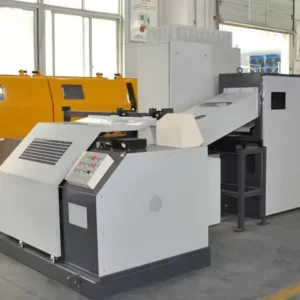
High-speed, automated layer-winding system designed to spool solid and flux-cored wires onto plastic or steel carriers without surface scratching.
Technical Details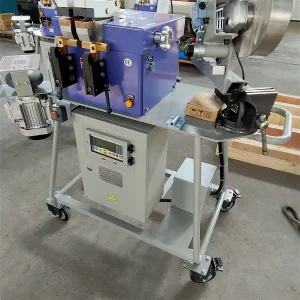
Enables smooth coil transitions by butt-welding wire ends, reducing downtime and protecting downstream drawing dies from impact damage.
Technical Details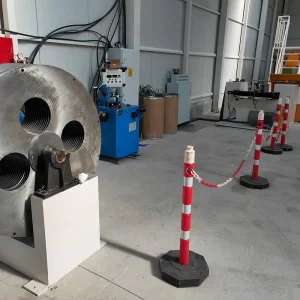
Designed to cut raw steel coils down to the precise widths required for the forming and filling stages of flux-cored wire production.
Technical Details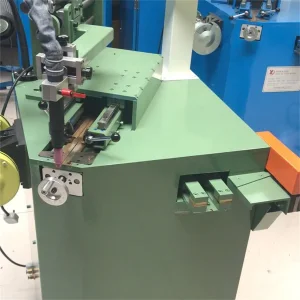
Ensures continuous feed capability by joining strip ends with strong, clean welds that pass smoothly through roll-forming assemblies.
Technical Details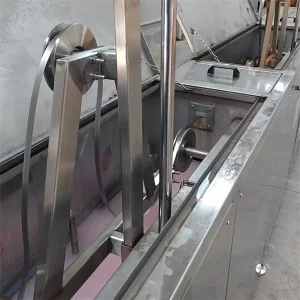
Removes lubricating oils, rust, and particulate contaminants to ensure the steel strip meets strict weld-chemistry standards.
Technical Details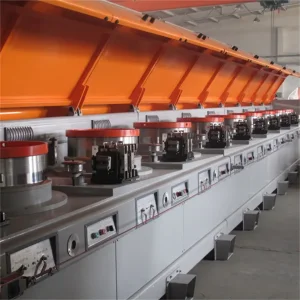
Precision-ground tungsten carbide dies and cassettes designed for uniform compression, low wire friction, and long tool life.
Technical Details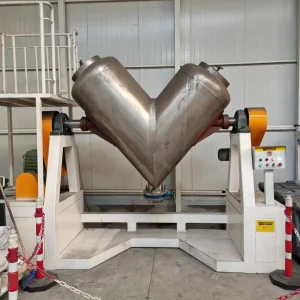
Utilizes specialized paddle systems to blend dry powders into a homogeneous mixture, preventing separation prior to the strip filling stage.
Technical Details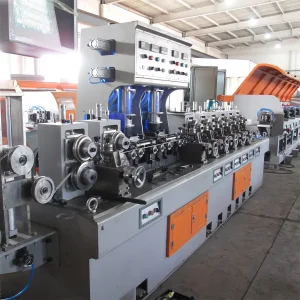
Precision roll-forming line configured to shape, fill, and close steel sheaths for a wide range of flux-cored wire sizes.
Technical DetailsGet answers to common technical, logistics, and operational questions about localizing welding wire production.
Our pricing is based on the specific requirements of the product, line configuration, capacity, and current market conditions. After discussing your production goals (e.g., target tons per month and wire diameters), we provide a detailed technical recommendation and project quote. Contact us directly to begin consultations.
We supply complete documentation packages to simplify import clearance. This includes CE certificates, product certificates of conformance, marine cargo insurance, detailed pack lists, bills of lading, and official certificates of origin to qualify for regional trade agreements.
Our standard payment structure requires a 30% deposit in advance via Telegraphic Transfer (T/T). The remaining 70% balance is payable either through an irrevocable Letter of Credit (L/C) at sight or via T/T prior to shipment and upon completion of factory acceptance testing.
We provide a 12-month mechanical warranty from the date of system startup. This warranty covers defect-free function of structural and electronic assemblies under normal use, excluding wear items like forming rollers, drawing dies, and typical consumables.
Yes, our after-sales service includes sending experienced engineers to your plant to supervise assembly, wire the control systems, program the drives, and calibrate the dosing units. We also train your team on daily operation, maintenance cycles, and safety practices.
Manufacturing complete, customized production lines generally takes 2 to 3 months. This duration allows for structural assembly, electronic integration, and thorough factory testing before shipment. We specify delivery timelines in our official proposals.
Contact our technical team today to discuss your project requirements, coordinate factory layouts, and receive a customized technical proposal.
Send Inquiry Now Orient PengSheng