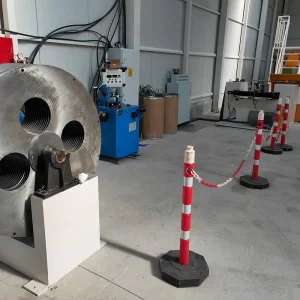
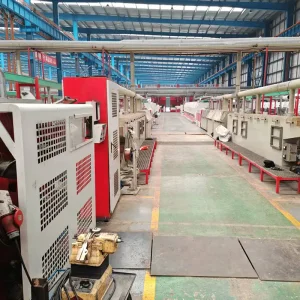
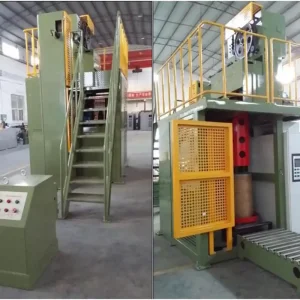
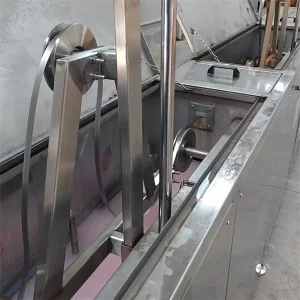
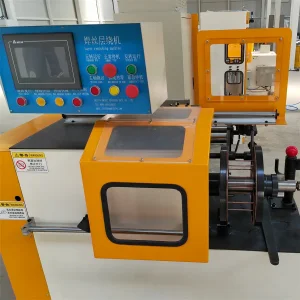
Pioneering precision-engineered machines designed to assemble high-efficiency production lines for flux-cored and solid hardfacing wires.
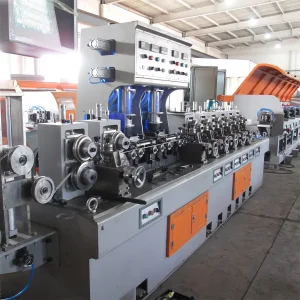
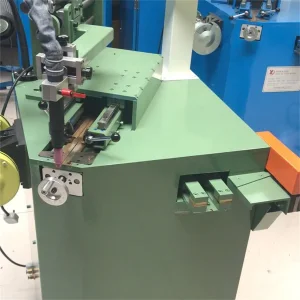
Hardfacing, also referred to as hardsurfacing, is an essential metallurgical process where alloys are deposited onto the surfaces of metal components via thermal spraying, cladding, or welding. This operation is designed to shield host materials from intense mechanical abrasion, erosive friction, high-impact forces, and heat-induced corrosion. Modern heavy industries—such as surface mining, cement clinker processing, high-tonnage dredging, continuous steel casting, and thermal power generation—rely extensively on hardfacing alloys to prolong the duty cycles of critical components.
Establishing an efficient production structure requires high-precision machinery. The fabrication of high-alloy flux-cored wires (FCW) presents distinct challenges: precise powder formulation control, structural uniformity of the outer steel envelope, and consistent wire drawability. As leading developers of hardfacing wire machinery, our operations are focused on facilitating these complex industrial procedures with state-of-the-art automated equipment.
Established in 2011, Beijing Orient Pengsheng Tech. Co., Ltd. has developed over two decades of industry expertise in the engineering and optimization of flux-cored welding wire manufacturing machines. Backed by solid European technical cooperation and a commitment to R&D, we have engineered proprietary processes and manufactured highly integrated systems for flux-cored wire production.
We supply advanced, heavy-duty production machinery conforming to rigorous international standards. From the preparation of complex core powders to final high-speed packaging, our machinery guarantees mechanical precision, minimal material waste, and prolonged wear life for target surface cladding products.
How localized supply chains, deep manufacturing expertise, and European technological standards combine to offer unmatched value.
We combine localized raw-material channels with core precision manufacturing tools sourced from European design offices, ensuring tight tolerance control on all forming and drawing modules.
Hundreds of our production lines are active globally, providing continuous output under challenging operating conditions in various climates.
Our dedicated support division consists of trained metallurgical and mechanical engineers. We assist customers from preliminary facility design through to installation, trial runs, and operator training.
We work closely with clients to continuously update machine parameters based on real-world feedback, adapting wire-forming profiles to accommodate specific core formulations.
Producing reliable wear-resistant flux-cored wire requires a multi-stage production sequence. At Orient Pengsheng, we design and supply fully integrated production lines, matching each stage with specialized machinery:
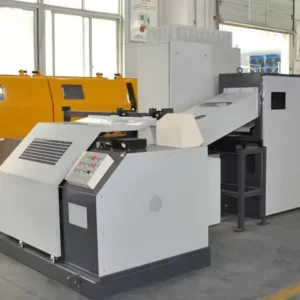
The manufacturing process begins with low-carbon steel coils. Our Steel Strip Slitting Line slits wide master coils into narrow bands of precise widths. This step requires clean edge cuts without burrs, which is essential to prevent micro-cracks during the subsequent forming stage.
Any residual oil, rust, or oxidation on the steel strip can introduce hydrogen, leading to porosity or cracking in the final weld deposit. Our Ultrasonic Cleaning Machine uses high-frequency acoustic waves to thoroughly clean the strip prior to powder filling.
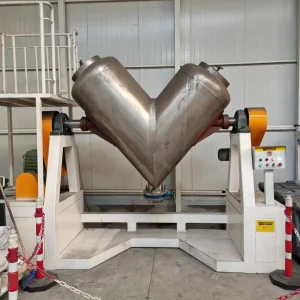
Custom wear resistance relies on the chemical composition of the flux. High concentrations of chromium, carbon, niobium, tungsten, and boron must be mixed uniformly. Our industrial-grade Flux Powder Mixing Machine and associated heating ovens dry and homogenize these alloys. The powder is then fed at a controlled rate into the forming steel strip.
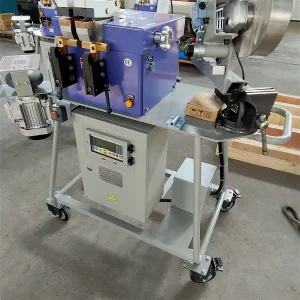
The strip is formed into a U-shape, filled with the alloy powder mixture, and closed using either a butt seam or overlap joint profile. Our Steel Strip Forming Machine ensures the seam is tightly sealed, preventing powder leakage during subsequent drawing steps.
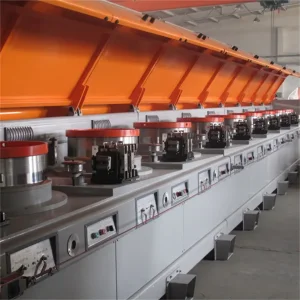
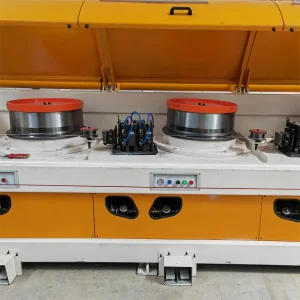
The filled wire is drawn through progressively smaller dies. Using our Welding Wire Straight-Type Drawing Machines along with Drawing Dies and Rolling Cassettes, the wire diameter is reduced while compacting the inner alloy powder to the target density. This process maintains consistent electrical conductivity and feedability during welding.
For automated welding and cladding cells, consistent feeding is essential. Our CE-Certified High-Precision Layer Rewinding Machines wind the wire evenly onto spools. Alternatively, our Drum/Pail Packaging Machines pack the finished hardfacing wire into drums for high-volume automated welding operations.
Hardfacing technology is deployed across several heavy industries, with alloy compositions tailored to specific wear mechanisms:
VRM tires and tables experience severe grinding pressure and abrasive wear from limestone and clinker. Periodic in-situ hardfacing using high-chromium iron-carbide alloys helps maintain grinding efficiency and prevents costly shutdowns.
Excavator bucket teeth, draglines, and transport chutes process high-impact rock and abrasive sand. Hardfacing with complex carbides containing niobium and tungsten provides protection against combined impact and abrasion.
Continuous casting rolls operate under high thermal stress, mechanical pressure, and corrosive oxide scale. Submerged arc hardfacing with 12% chromium martensitic alloys helps restore roll profiles and prevent thermal fatigue cracking.
Coal-fired power stations rely on pulverizer components to crush raw coal. Hardfacing these parts extends their service life and maintains consistent fuel fineness, helping to stabilize combustion.
The global hardfacing industry is evolving rapidly, driven by automation, material science, and environmental considerations:
Common questions regarding procurement, machinery installation, operation, and hardfacing production lines.
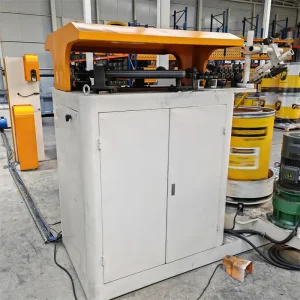
Complementary equipment, winding systems, and auxiliary machinery designed for integrated hardfacing wire manufacturing lines.
Discuss your production capacity target, material formulations, and plant layout options with our engineering team today.
Send Technical Inquiry Orient PengSheng