Explore our premium machinery range for high-efficiency flux-cored and solid welding wire production processes.
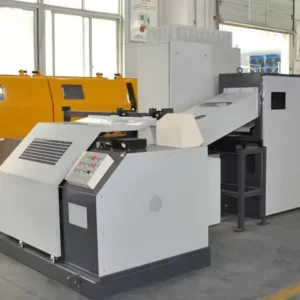
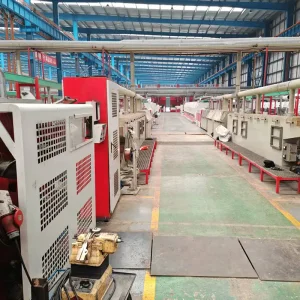
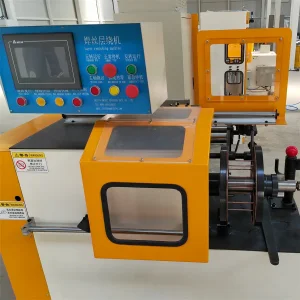
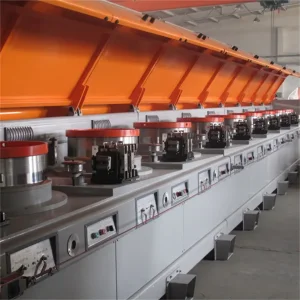
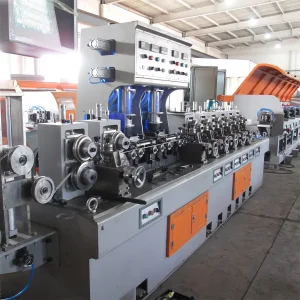
Hardfacing welding wires represent the frontline defense against industrial wear, abrasion, impact, and thermal breakdown. Central to producing these premium consumables is the Overlap Hardfacing Welding Wire Forming Line. Unlike standard butt seam forming methods, overlap forming involves shaping a steel strip into a U-shape, filling it with highly precise wear-resistant alloy powders (chromic carbides, complex borides, tungsten carbides), and then overlapping the edges of the strip. This creates a secure mechanical lock that prevents powder leakage during subsequent drawing steps.
For global manufacturers of high-chromium carbide wear plate consumables, the overlap design ensures maximum core compression. Beijing Orient Pengsheng Tech integrates European micro-forming geometries with Chinese mechanical robust designs. This enables lines to run at high speeds (up to 3.5 m/s at pre-drawing stages) while keeping strip thickness deformation to a minimum.
Operational data representing our technical maturity, engineering accuracy, and market penetration worldwide.
Evaluating standard forming methodologies to guide procurement decisions for heavy machinery wear applications.
| Performance Metric | Overlap Forming Line | Butt Seam Forming Line | Impact on Final Product Quality |
|---|---|---|---|
| Powder Retention Rate | Exceeds 99.8% due to tight mechanical wrap. | Dependent on induction or laser seam welding. | Prevents powder loss in reduction stages. |
| Alloy Powder Versatility | Accommodates large grain, heavy carbides easily. | Limited to ultra-fine flowing powders. | Enables creation of premium complex carbides. |
| Mechanical Properties | High compression layer provides stiff feeding behavior. | Higher flexibility, risk of micro-fractures if un-welded. | Determines performance in automatic cladding. |
| Capital Investment | High ROI with modular upgrade paths. | Requires expensive seam welding tracking modules. | Affects start-up cost structure for new lines. |
Beijing Orient Pengsheng Tech. Co., Ltd. was established in 2011, leveraging more than 20 years of hands-on experience in the flux cored welding wire manufacturing sector. Assisted by European technical cooperators and driven by our commitment to research and development, we have established our own technology, proprietary know-how, manufacturing facilities, and strict quality control processes. Our core mission is to supply FCW machines with state-of-the-art tech and reliable performance.
We take pride in building close relationships with our global customers. By listening closely to operator feedback on the factory floor, we continually refine our structural designs, software UI, and automation algorithms to meet the demanding requirements of modern high-performance wire manufacturing plants.
By combining Western European engineering tolerances with China's agile supply chain and manufacturing scale, we deliver robust production lines at a highly competitive price-to-performance ratio.
Providing custom engineering solutions and robust support networks across several international boundaries.
We utilize advanced production machinery, with core mechanical components and precision gearboxes sourced directly from Europe to ensure high structural stability.
Our solutions have been verified on dozens of plant floors globally. We have supplied hundreds of forming and drawing blocks operating under severe manufacturing loads.
Our in-house technical department consists of highly trained engineers with deep backgrounds in industrial wire manufacturing, setup, and maintenance.
We work closely with clients to upgrade and customize wire forming configurations based on real-world operator experiences and local environmental conditions.
Combining competitive supply chain dynamics with international engineering quality standards.
China's industrial clustering allows us to source raw casting frames, precision bearings, ultrasonic transducers, and electric motors with minimal lead times. This efficiency helps us pass significant cost savings directly on to our global customer base.
Our proximity to local high-grade steel producers ensures that our cassette rolls and slitting blades are forged from the highest quality raw materials, extending the operational life of the line.
Unlike rigid western production structures, our manufacturing facility in Beijing adapts quickly to bespoke customer requests. Whether you require integrated cleaning baths or custom powder-feeding heights, our design team adapts the machinery layouts using 3D modeling programs prior to fabrication.
This agility allows us to customize the layout of our line to fit existing floor space, reducing the need for costly building modifications.
Modern mining, cement production, and recycling equipment rely heavily on hardfacing overlays to withstand severe mechanical wear. Consequently, manufacturers of wear plates require welding consumables with complex alloy chemistries. Our overlap forming machines are designed to manage dense mixtures of carbon, chromium, niobium, and boron powders without segregation.
By employing electronic volumetric feed screws paired with weight-loss sensors, we achieve continuous powder-feeding accuracy. This level of control translates directly into reliable weld metal hardness levels (typically 58-65 HRC) and consistent metallurgy across several kilometers of wire.
A step-by-step overview of the mechanical process used to transform raw steel strip into finished welding wire.
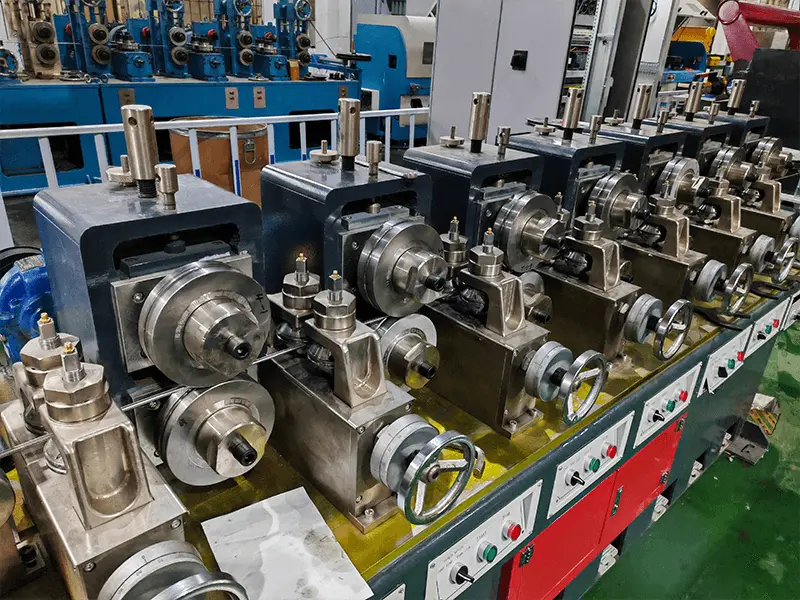
Divides wide carbon steel coils into narrow, precise strips down to +/- 0.05mm tolerances.
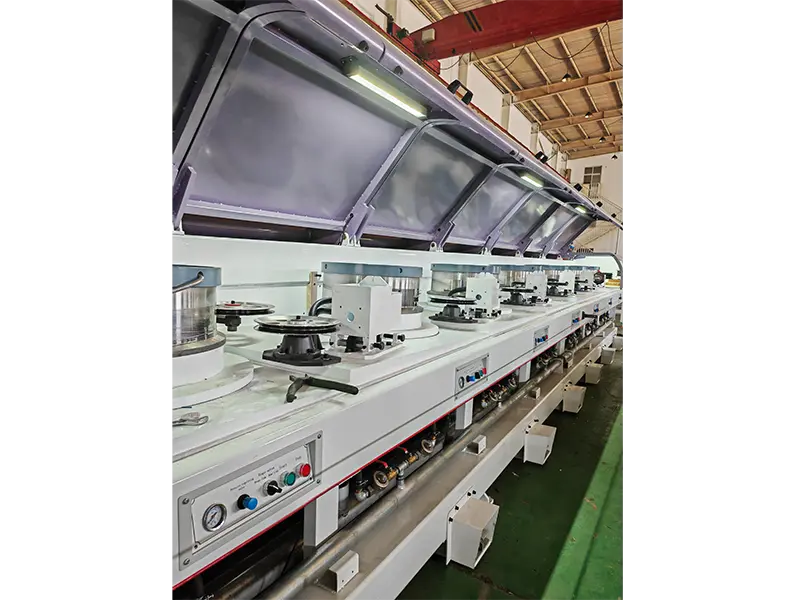
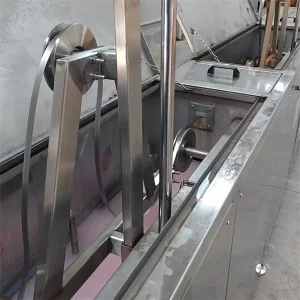
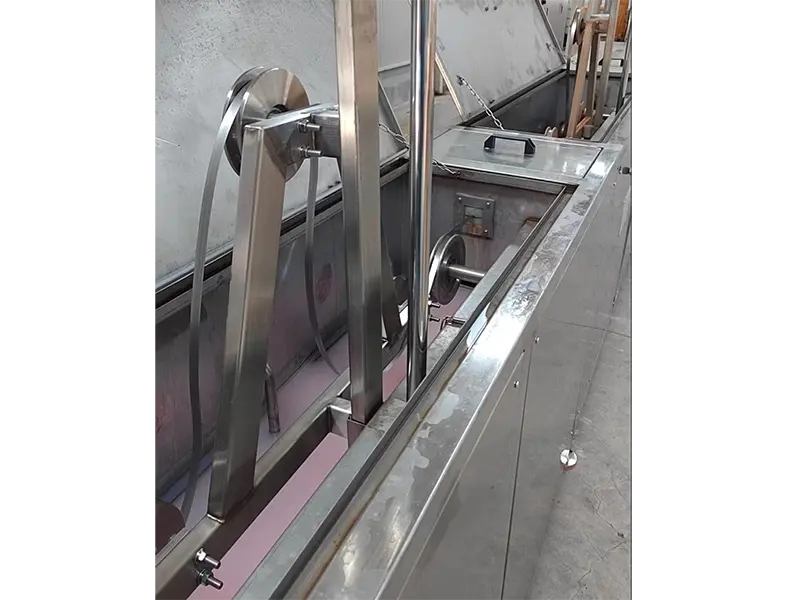
Removes grease, rust, and surface contaminants from the strip, ensuring clean weld performance.
Shapes the strip into a U-profile, deposits alloy powders, and wraps it into an overlap geometry.
Reduces the outer diameter of the wire down to target sizes using straight-line wire drawing blocks.
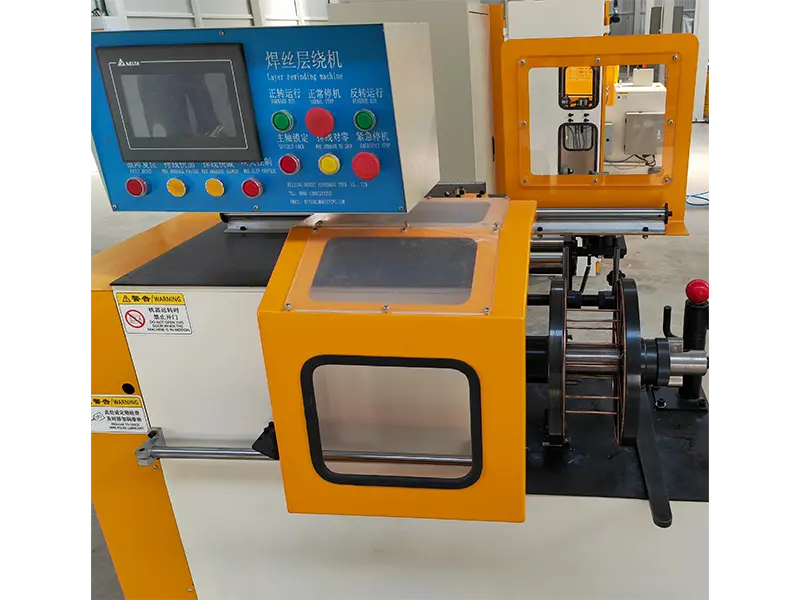
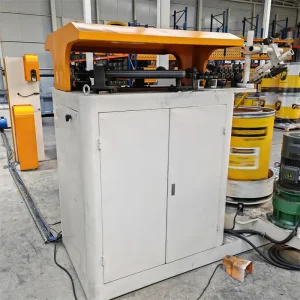
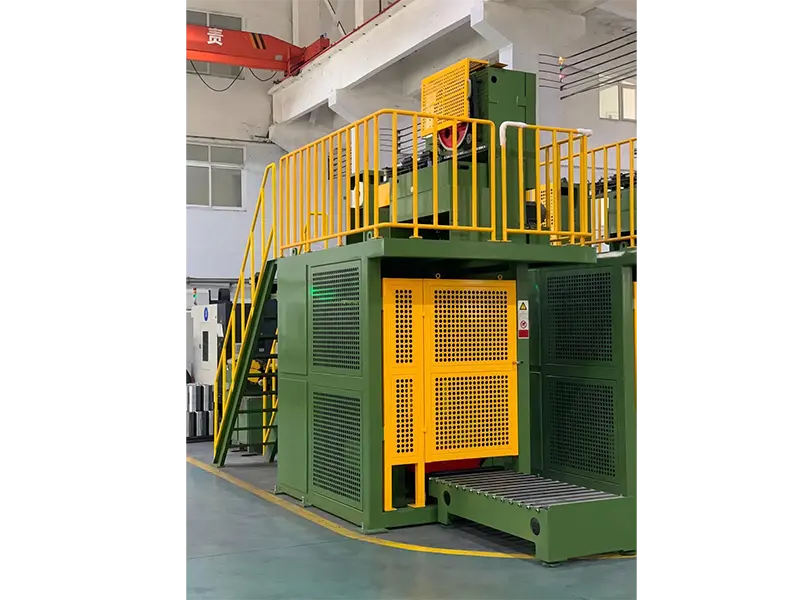
Feeds the finished flux-cored wire into packaging drums for automated cladding lines.
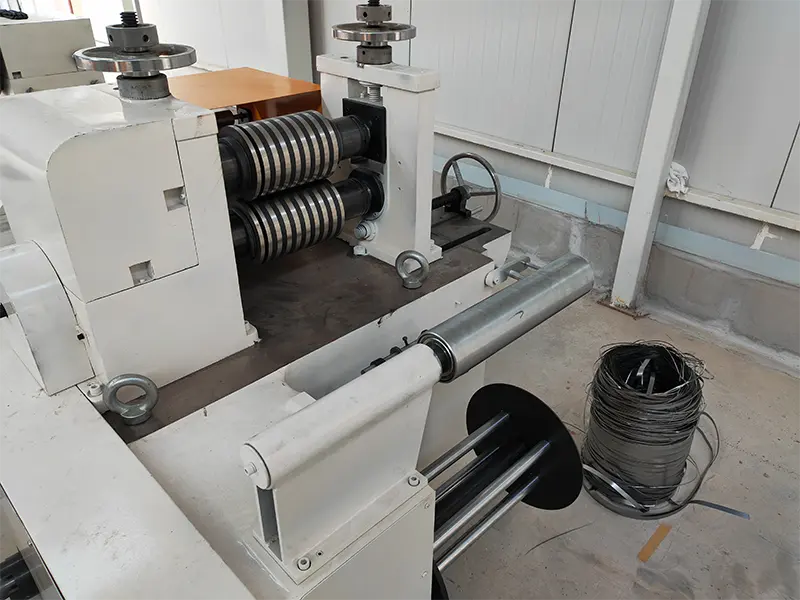
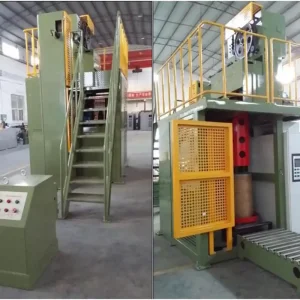
Spools the wire onto plastic or metal spools under precise tension control for manual MIG setups.
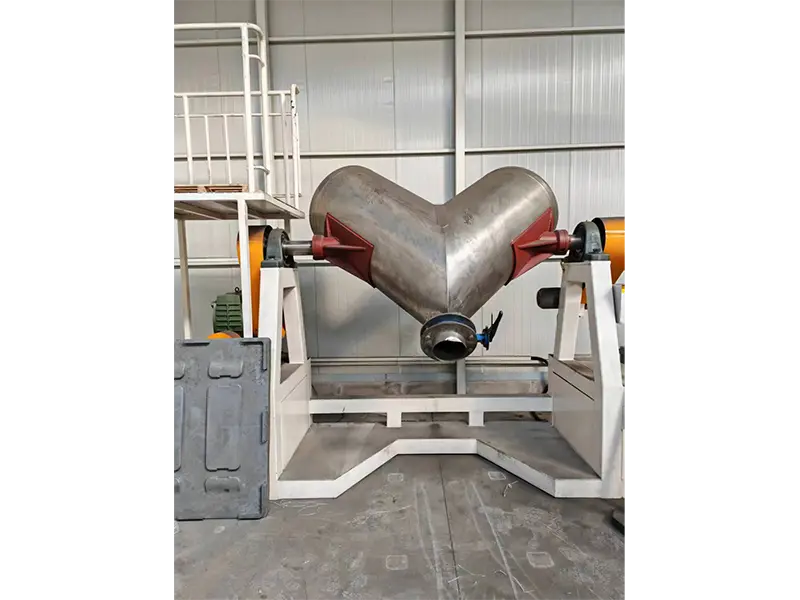
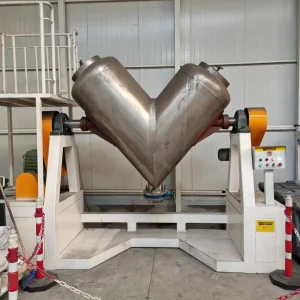
Blends and dry-bakes custom alloy powders to minimize moisture content and reduce welding porosity.
Get answers to common engineering questions regarding layout design, purchase conditions, and shipping policies.
Select components and support systems designed to integrate into your welding wire production line.
 Orient PengSheng