Explore our core engineering components essential for high-performance welding wire production lines.
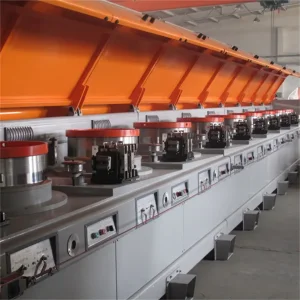
Engineered for high-durability cold drawing applications, ensuring uniform diameter reduction with minimal heat generation.
View Details →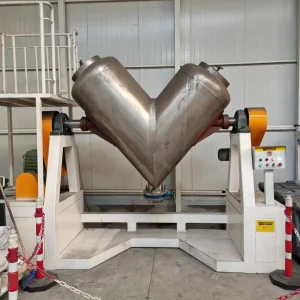
Advanced blending systems engineered to achieve uniform chemical distribution in multi-component flux compounds prior to filling.
View Details →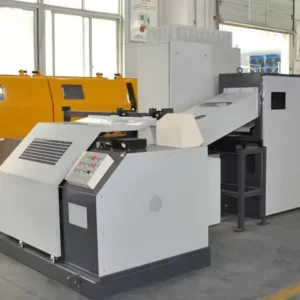
High-speed, precision winding technology offering clean layer-to-layer spooling of solid welding wires with CE standard compliance.
View Details →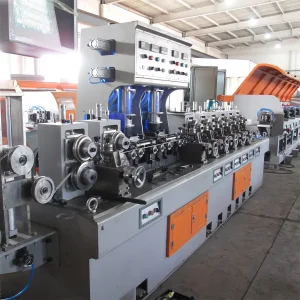
Roll-forming system designed to shape low-carbon steel strip into tubular wire profiles, ready for precise powder filling.
View Details →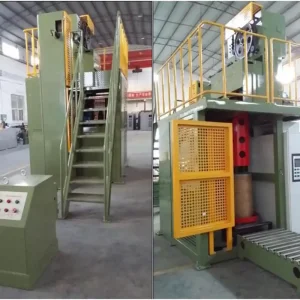
End-of-line packaging automation designed for bulk barrel filling and protective packing of finished welding wires.
View Details →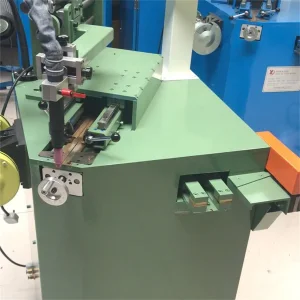
High-accuracy jointing equipment to link steel strip coils continuously, eliminating downtime in forming lines.
View Details →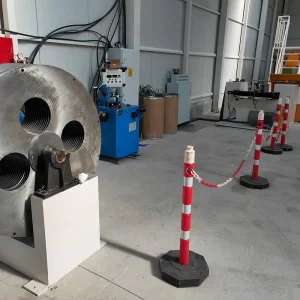
Precise width slitting machinery to partition wide steel coils into narrow, uniform bands with minimal edge deformation.
View Details →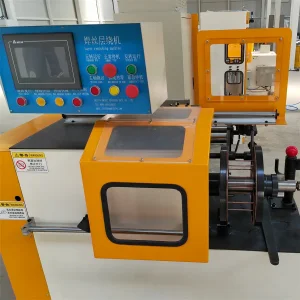
Top-tier wire winding system offering digital tension control and automated traverse mechanics for perfect spooling layouts.
View Details →In the globalized steel fabrication, shipbuilding, and heavy machinery industries, the adoption of Flux-Cored Arc Welding (FCAW) continues to expand due to its high deposition rates and superior metal transfer characteristics. The foundational determinant of FCAW wire quality lies within the internal core formulation: a highly engineered blend of metal powders, deoxidizers, arc stabilizers, and slag-forming agents.
To ensure uniform chemical distribution, prevent voids, and guarantee a stable welding arc, the raw flux components must undergo rigorous sizing. The Flux Powder Mesh / Vibration Machine acts as the primary gatekeeper. It processes blended materials to eliminate oversized agglomerates and fine particulates, establishing a controlled particle size distribution (PSD) that direct filling machinery demands.
As standard-compliant manufacturing becomes mandatory, selecting CE Certified Flux Powder Vibration Machines from established manufacturers is a key technical priority for production managers worldwide.
How modern industries utilize flux vibration systems to elevate product performance and ensure structural safety.
Heavy fabrication plants across Europe, North America, and East Asia operate under strict safety guidelines. CE compliance serves as the baseline validator, guaranteeing that the electrical, structural, and mechanical elements of the sifting machine prevent hazards in explosive powder dust atmospheres.
Inconsistent grain sizing of the flux filler results in irregular powder density during the roll-forming process. If the powder is too coarse, it clogs the feeding nozzle, leading to "empty core segments." Sifting ensures complete powder fluidity and density control.
Unplanned shutdowns due to mesh blinding or mechanical failure cascade downstream. Premium vibratory systems utilize anti-blinding components (like silicone bouncing balls or ultrasonic transducers) to sustain continuous material throughput without manual sieve cleaning.
A closer look at the engineering parameters defining next-generation vibratory separators.
In high-grade flux formulations, the powder mixture must occupy a critical diameter band, typically between 60 mesh and 325 mesh (approx. 250 to 44 microns). Deviation from this PSD yields severe consequences during the subsequent drawing process. Particles too large can tear the thin steel sheath, while overly fine particles absorb atmospheric moisture, resulting in hydrogen-induced cracking in the weld metal.
Modern Flux Powder Vibration Machines use a dual-motor design. These unbalanced electric motors rotate in opposing directions to produce three-dimensional vibratory movements (horizontal, vertical, and inclined). By adjusting the eccentric weight phase angles on the motor shafts, engineers can control the retention time of the powder on the screen, optimizing throughput against separation accuracy.
Under the CE Directives: The Machinery Directive (2006/42/EC) and ATEX Directive (2014/34/EU) dictate structural safety. Because dry chemical powders present a high dust-explosion hazard, the equipment must feature pressurized seals, explosion-proof motors, and complete electrical grounding to eliminate electrostatic discharge hazards.
Understanding the upstream and downstream workflows connected by our processing machinery.
Wide steel coils are cut to precise widths using a Slitting Line and cleaned via Ultrasonic Washers to eliminate surface oils, guaranteeing clean weld deposits.
Raw chemical agents are blended in the Powder Mixing Machine and transferred to the Mesh Vibration Machine to remove impurities and oversized particles.
The cleaned strip passes into the Forming Machine, turning into a U-shape. The sifted flux powder is continuously fed into this channel prior to closing.
The closed wire is processed through a Straight-Line Drawing Machine using high-quality Drawing Dies to reduce the wire diameter to its final target.
The finished wire is rewound using a Precision Layer Winder to assure tangle-free delivery, then packaged via a Pail / Drum Packaging Machine for secure transit to the end user.
The roadmap toward Industry 4.0 digitization and sustainability in raw powder handling.
Traditional vibration machines rely on manual mechanical adjustments to modify amplitude, leading to process downtime. The next-generation design incorporates piezoelectric accelerometers and variable frequency drives (VFD). These sensors measure load parameters on the mesh screen and automatically modulate the vibration profile to compensate for varying feed rates.
Sieve wear is a common failure point in dry powder processing. Micro-abrasion from metallic particles eventually ruptures the screen, leading to larger grains bypassing the sieve. Emerging technologies integrate weak electrical resistance circuits across the stainless mesh. A rupture breaks the circuit, triggering an immediate stop command to prevent compromised flux from reaching the filling station.
Managing airborne dust is crucial for operator health. Next-gen vibration machines feature fully closed environments operating under slight negative pressure. These systems couple with modern dust extractors to recover escaping dust, keeping workshops clean while recycling reusable particulates.
Continuous tracking of motor temperature, bearing vibration, and screen pressure via Bluetooth controllers.
Integration of vibration diagnostics with upstream dosing gates to prevent screen overload automatically.
Highly efficient dust extraction and recycling lines integrated directly with raw material mixing circuits.
Established in 2011, Beijing Orient Pengsheng Tech. Co., Ltd. builds upon more than 20 years of experience in the field of flux-cored welding wire manufacturing machinery. Backed by European technical collaboration and continuous internal research, we have established proprietary technology and advanced manufacturing workflows.
We dedicate ourselves to supplying flux-cored wire production facilities that meet modern engineering and safety standards. Our service model includes pre-sales consultation, custom layout design, on-site commissioning, and comprehensive operator training, helping clients transition to digital production smoothly.
Our core tooling machinery is sourced directly from reliable European manufacturers, ensuring tight machining tolerances.
We have successfully commissioned entire production systems in more than 10 countries across Western Europe, North America, and Asia.
Our service department employs industry-trained engineers ready to support remote diagnostics and on-site engineering challenges.
Essential details covering machine operation, purchasing options, and technical warranties.
Our pricing depends on the required material capacity (tons/hour), screen size classification, grade of stainless steel utilized, and specific ATEX/CE component upgrades. Following an engineering evaluation of your powder parameters, we will provide a detailed commercial offer.
We supply a complete documentation package, including EC Declarations of Conformity (CE), structural blueprints, electrical schematics, component maintenance manuals, and material test certificates.
We accept a 30% advance deposit via Telegraphic Transfer (T/T), with the remaining 70% balance payable prior to shipment, either through an irrevocable Letter of Credit (L/C) or T/T upon presenting the Bill of Lading (B/L) copy.
Our machinery is covered by a 12-month warranty from the date of commissioning or 18 months from shipment, whichever occurs first. The warranty covers manufacturing defects but excludes typical wear components (like sieve meshes and rubber gaskets) and damage resulting from operator error.
We provide remote engineering support and can dispatch specialized technicians to your facility for on-site positioning, calibration, electrical linking, and operator training to ensure safe start-up.
Standard lead times average 2 to 3 months, depending on custom configurations and current order volume. Precise timelines are provided within each formal quotation.
A comprehensive lineup of equipment to support stable wire manufacturing workflows.
Essential machinery for joining strip coils together, ensuring steady material feed and preventing drawing line stoppages.
View Details →
High-torque slitting systems designed to partition bulk carbon steel strip coils into high-precision narrow bands.
View Details →
Engineered to wind finished wires onto spools with uniform tension, preventing wire deformation during dispensing.
View Details →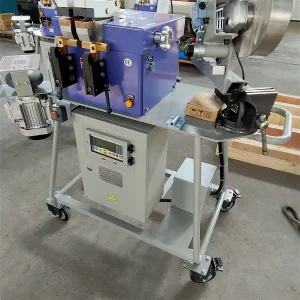
Reliable wire-butt welding machinery designed to weld wire ends, minimizing feed interruptions during cold drawing.
View Details →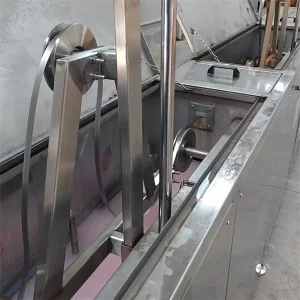
Deep solvent or aqueous cleaning systems that remove grease, metal filings, and rust, preventing weld defects.
View Details →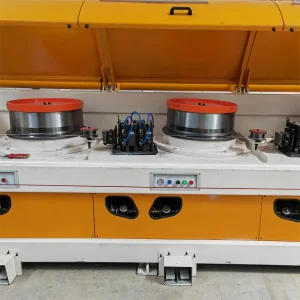
High-efficiency drawing machinery featuring dynamic speed control and low friction, yielding consistent wire diameters.
View Details →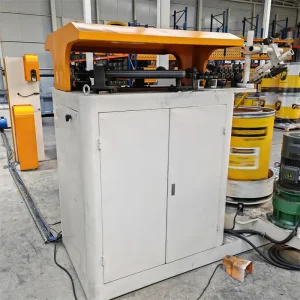
Robust automatic packaging machinery designed to spool finished wire directly into transport drums.
View Details →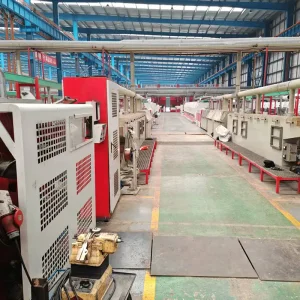
Complete multi-station production system to manufacture solid welding wire from raw rods to packaged spools.
View Details →Our engineers are ready to assist with sizing configurations, custom deck integrations, and CE-compliant plant design.
Request Engineering Quote Orient PengSheng