Select individual components or integrate a full-process turnkey manufacturing line. Engineered for international standards and CE compliance.
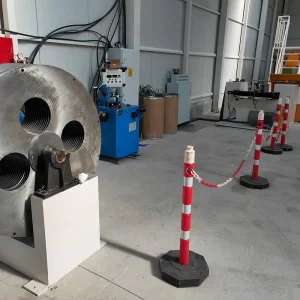
The high-speed slitting line divides bulk steel strips into precise widths suitable for subsequent tube forming processes, ensuring uniform physical tolerances.
Learn More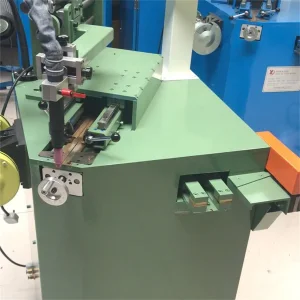
Ensures seamless continuous coil processing. Features high-accuracy automated joining systems to prevent wire snaps during high-speed drawing phases.
Learn More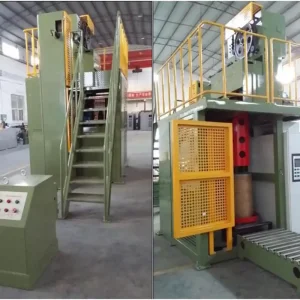
Optimized for robotic high-capacity packaging lines, ensuring uniform distribution of flux cored wires into bulk paper/steel drums without twisting.
Learn More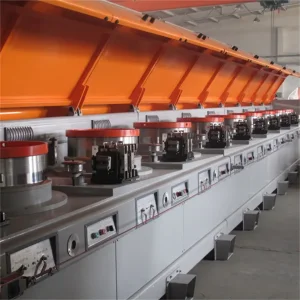
Constructed with premium tungsten carbide and PCD components to minimize wire deformation and prolong service life under high pressure.
Learn More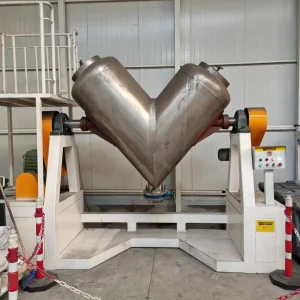
Achieves exceptional homogeneity of hardfacing micro-alloys, preventing powder segregation and stabilizing core-fill consistency.
Learn More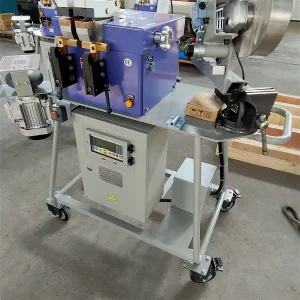
Advanced resistance butt welding technology designed to handle high-tensile carbon steels and wear-resistant alloy wires without weakening joints.
Learn More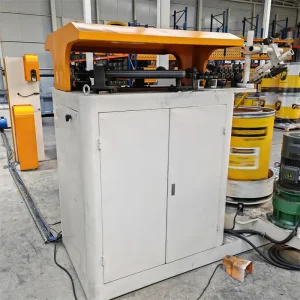
Equipped with computerized weight and tension feedback control loops to guarantee highly precise spooling into heavy shipping containers.
Learn More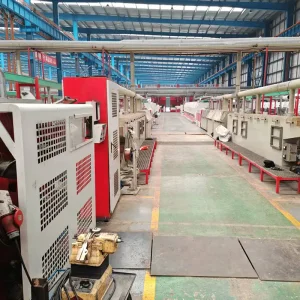
A comprehensive system for continuous drawing, copper plating, and precision winding of high-conductivity solid MIG/TIG welding wires.
Learn MoreHard surface welding—commonly referred to as hardfacing or overlay welding—is a vital metallurgical process in heavy manufacturing. By applying wear-resistant alloy coatings directly to critical contact surfaces, industrial operations extend the service life of core equipment by 300% to 800%. Industries such as mining, cement manufacturing, steel smelting, power generation, and heavy construction rely heavily on these technologies to mitigate high-friction wear, abrasive corrosion, and impact stress.
"As global supply chains demand higher throughput, minimizing mechanical downtime is no longer just a maintenance objective; it is a direct driver of corporate profitability."
Flux Cored Arc Welding (FCAW) technology is standard for hardfacing applications due to its high deposition rate, superior metallurgical adaptability, and operational flexibility in challenging outdoor environments. Producing these complex, powder-filled wire tubes requires specialized production machinery. The machinery must be capable of feeding highly abrasive carbide-rich powders into precise metal envelopes and drawing them to exact outer diameters without casing tears.
Our technological capabilities are proven across various demanding heavy-industry zones globally.
Established in 2011, Beijing Orient Pengsheng Tech Co., Ltd. has developed into a premier manufacturer of flux-cored welding wire manufacturing machines. Our foundational team brings more than 20 years of active engineering and operational experience to this specialized industry.
By combining European technological partnerships with our own internal R&D, we have established proprietary processing models, manufacturing facilities, and strict quality control procedures in Beijing. Rather than offering basic machines, we deliver turnkey solutions with high performance tolerances, including steel strip forming machines, computerized high-speed drawing machines, and custom dry/wet strip cleaning systems.
We are committed to supplying high-speed FCW machines that comply with strict CE directives. These systems enable local operators to produce high-grade hardfacing consumables that meet international AWS, ISO, and DIN certifications.
A look at the specific engineering practices that differentiate our manufacturing systems in the global market.
Key processing assemblies, high-speed gearboxes, and drawing die cooling manifolds are manufactured directly in Europe or built to exact European standards. This reduces friction loss and maintains uniform mechanical wire tension.
Having supplied more than 150 turnkey lines to global markets, our systems are refined to withstand continuous operations under harsh conditions without unexpected downtime.
Our service teams consist of mechanical and metallurgical engineers. We provide comprehensive support across pre-sales consulting, on-site commissioning, operator training, and supply of wear components.
We work closely with customers to customize lines for specific wire formulations (e.g., highly abrasive carbide fillings, heavy core-fill ratios, and complex strip geometries), adjusting forming rolls and parameters to match local raw materials.
A structured overview of how flat steel strip is processed into high-grade alloy welding wire.
The steel strip is slit to width, followed by inline high-frequency ultrasonic cleaning to remove grease, rust, and surface oils.
The clean strip enters the roll forming station where it is shaped into a U-channel, and alloy powders are continuously fed at precise weights.
The U-channel is closed (butt-seam or overlap) and passes through drawing dies or rolling cassettes to reduce diameter while compacting the core powder.
The finished wire is wound onto spools via high-precision layer winding or packaged directly into heavy delivery drums.
Technical review of modern manufacturing, regional advantages, and machinery design developments.
Beijing Orient Pengsheng Tech Co., Ltd. demonstrates how modern Chinese machinery manufacturers leverage regional supply chains to deliver high performance. By sourcing raw structural steels, precision tooling castings, and high-frequency induction motors from nearby industrial hubs, we reduce raw material lead times and control production costs.
This localized supply chain integration allows us to invest more in premium components, such as importing specialized electronic control systems and precision bearings from Europe. Customers benefit from systems that offer high operational speed and reliability, while keeping capital investment requirements low compared to Western-built alternatives.
Different regions present varied operational requirements and regulatory frameworks for wire production machinery:
Modern industrial requirements are driving several key engineering advancements in wire production equipment:
Real-time Quality Monitoring: Advanced lines feature inline electromagnetic fill-rate sensors. These systems continuously measure the ratio of powder to steel strip, marking any under-filled sections in the production log to ensure consistent deposit chemistry.
High-Efficiency Cold Drawing: Rolling cassettes are increasingly used alongside traditional drawing dies. This method reduces mechanical friction, lowers drawing tension requirements, and helps prevent work-hardening of the outer steel sheath.
Detailed technical responses regarding configuration, specifications, commercial terms, and installation requirements.
High-speed drawing, clean ultrasonic processing, and precision spooled winding equipment.
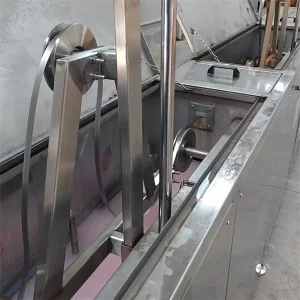
Utilizes multi-frequency ultrasonic transducer arrays to remove residual lubricant oils and oxides, promoting reliable strip-to-flux cohesion.
Learn More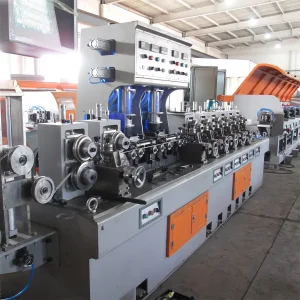
A multi-stand rolling mill designed to produce both overlap and butt-seam configurations, providing consistent dimensional control.
Learn More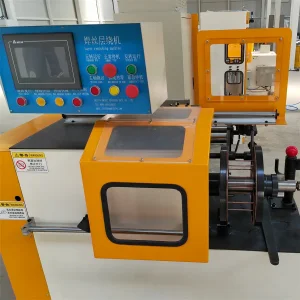
Features electronic wire laying control to wind finished welding wire onto standard plastic or wire spools without crossovers.
Learn More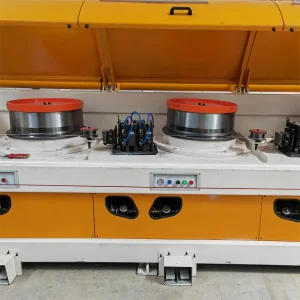
Straight-line drawing machines equipped with frequency-controlled AC drive motors, providing efficient cooling for high-alloy wires.
Learn More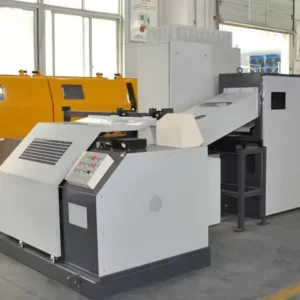
High-speed, CE-compliant spooling system for solid wires, minimizing downtime during reel changes.
Learn More
Heavy-duty rotary slitting assemblies designed to hold tight tolerances across varying strip thicknesses.
Learn More
Automated shear-and-weld systems that join trailing and leading strip ends to enable continuous production.
Learn More
Coils finished wire smoothly into shipping drums, maintaining consistent feed tension for robotic welding cells.
Learn More Orient PengSheng