Explore our foundational machinery designed to optimize every phase of the flux-cored welding wire manufacturing sequence.
The global metal welding fabrication sector is undergoing a major structural evolution. Infrastructure projects, marine shipbuilding, offshore oil and gas developments, and heavy structural engineering installations increasingly demand Flux Cored Arc Welding (FCAW) processes over traditional Solid Gas Metal Arc Welding (GMAW).
Flux-cored wires feature a hollow tubular structure filled with specific chemical powders (mineral fluxes, metal powders, and deoxidizers) that act to stabilize the arc, shape the weld bead, and prevent atmospheric contamination. The production of these advanced consumables requires high-precision manufacturing lines capable of forming, filling, drawing, and spooling complex multi-material wires without seam ruptures or powder distribution variations.
As quality standards rise worldwide, industrial operators are sourcing fully integrated production lines certified to strict European CE safety standards, which guarantee machine safety, environmental protections, and operational reliability.
Why modern global enterprises are partnering with Chinese manufacturers to deploy high-precision welding wire manufacturing infrastructure.
We blend imported European core processing designs with Chinese supply chain integration. The result is a system that matches Western performance and safety regulations at a highly optimized capital cost.
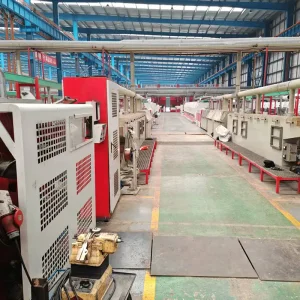
By controlling every step from low-carbon steel strip slitting, ultrasonic strip cleaning, forming, wire drawing, down to high-precision spool layer winding and drum packaging, we reduce lead times and maximize assembly accuracy.
Our engineers provide complete global setup, onsite testing, calibration, and personnel training. This guarantees local compliance, rapid production startup, and continuous operational support.
A side-by-side overview comparing European standards, standard manufacturers, and Beijing Orient Pengsheng's optimized system configurations:
| Feature Parameter | Standard Market Systems | Orient Pengsheng Systems | Operational Benefit |
|---|---|---|---|
| Strip Cleaning | Chemical bath (highly polluting) | Multi-stage Ultrasonic Cleaning | Eco-friendly, superior lubricant removal |
| Powder Filling Accuracy | ± 0.5% fill deviation | High-Precision Micro-Feed (± 0.2%) | Guarantees consistent weld deposit chemistry |
| Drawing Machinery | Standard drum slip drawing | Straight-line non-slip drawing | Reduces wire deformation and breakage rate |
| Safety Compliance | Self-certified claims | Verified CE Certification / TUV standards | Simplifies insurance and regulatory approval |
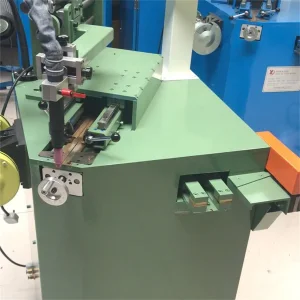
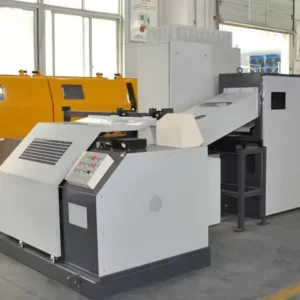
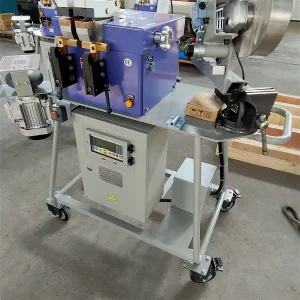
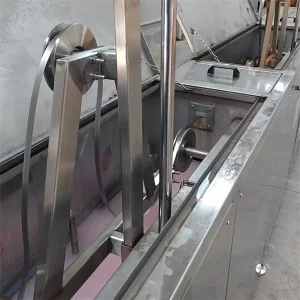
The manufacturing process begins with structural steel coils. The low-carbon steel strip slitting machine cuts master coils into precise, narrow strip widths (often ranging from 12mm to 20mm depending on the target wire diameter). Cleanliness at this stage is critical; any oil, rust, or dust remaining on the steel strip will contaminate the flux core, resulting in weld porosity and cracking. Our ultrasonic cleaning machines utilize high-frequency sound waves in cleaning solutions to strip contaminants at the molecular level, ensuring a pristine raw material for downstream forming.
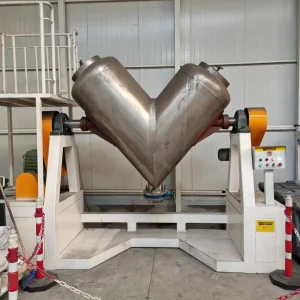
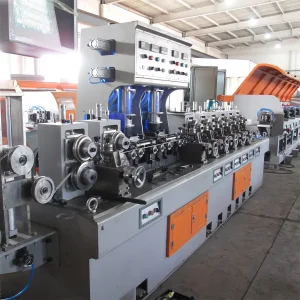
Once clean, the steel strip is fed through a series of precision profiling rollers in the forming machine. The strip is bent into a U-shape channel. During this continuous bending phase, a highly regulated micro-feeder dispenses the mixed powder (consisting of titanium oxide, manganese, silicon, and iron alloys) from the flux powder mixing machine directly into the center of the U-channel. Maintaining the exact fill ratio (typically 15% to 30% of the wire's total weight) is vital. A minor deviation can affect the weld mechanical properties, causing slag removal issues or arc instability.
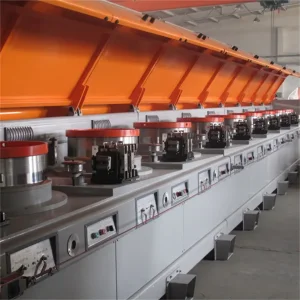
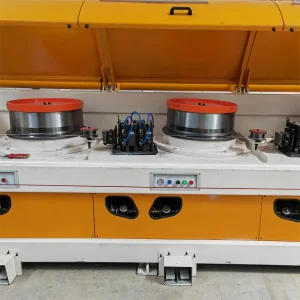
Following powder deposition, the U-channel passes through final shaping rolls to form either an overlap seam or a butt-welded tube. The tube is then fed into a series of straight-line drawing machines equipped with rolling cassettes and high-durability drawing dies. These reduce the wire's outer diameter from around 8.0mm down to final industrial sizes like 1.2mm, 1.4mm, or 1.6mm. The drawing process must be carefully managed to avoid overheating, which can cause powder segregation or break the outer steel sheath.
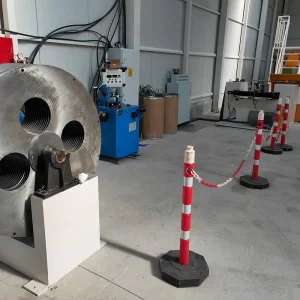
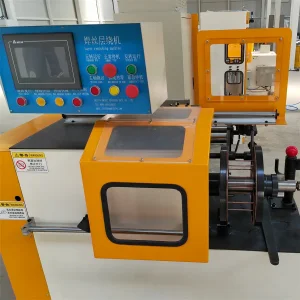
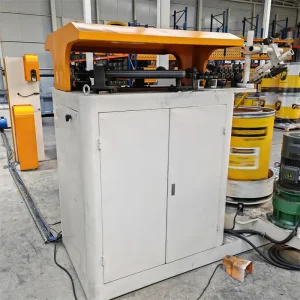
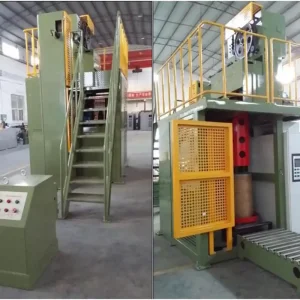
The final step involves packing the finished wire for shipment. Precision layer rewinding machines package the wire onto plastic or wire baskets, ensuring no overlaps that could jam automatic welding feeding systems. For large-scale industrial projects, drum packaging or pail packaging machines spool the wire into heavy-duty drums, allowing for continuous welding operations without frequent spool changes.
Addressing the key technical, financial, and operational questions asked by procurement directors and lead engineers.
Explore our high-speed packaging and precision rewinding machinery, designed to complete the manufacturing loop.
 Orient PengSheng