Engineered to ensure high efficiency, precise geometry, and strict regulatory compliance for global steel wire drawing and forming operations.
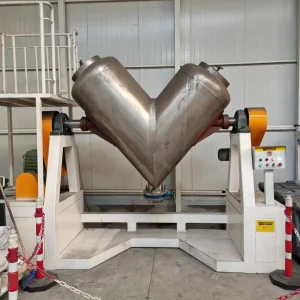
Advanced chemical homogenization plant designed to ensure uniform density and distribution of active elements in flux cored wire cores.
Explore Specifications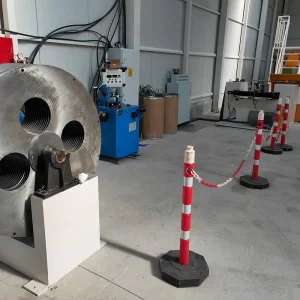
Precision coil slitting systems featuring micro-adjustable knives to slice wide master coils into narrow bands for subsequent forming.
Explore Specifications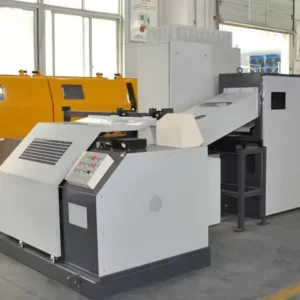
High-speed, tension-controlled spool winding system designed for precise hand-over-hand layering of solid metal welding wires.
Explore Specifications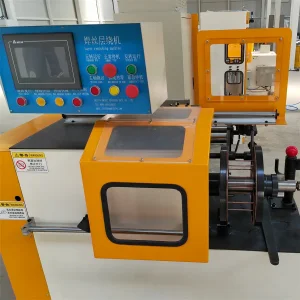
Automatic high-performance rewinding equipment featuring digital loop tension adjustments for dynamic packaging needs.
Explore Specifications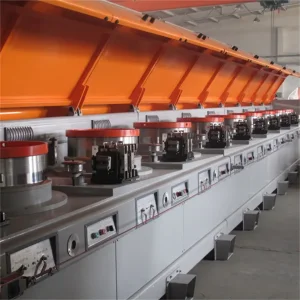
Premium wear-resistant tungsten carbide dies and precision cassette assemblies optimizing diameter control and structural integrity.
Explore Specifications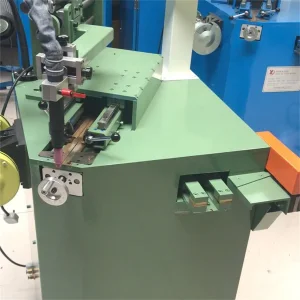
High-accuracy strip end joiners executing clean welds to ensure uninterrupted, continuous metal forming processes.
Explore Specifications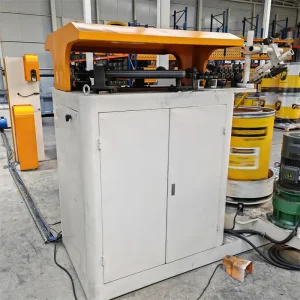
Automated wire-in-drum dispensing and filling machinery engineered for high-volume bulk packaging, ensuring twist-free payoffs.
Explore Specifications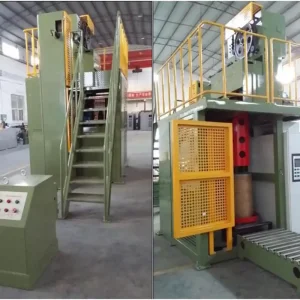
Robust heavy-duty packaging systems designed for heavy metallic wire coils, stabilizing and securing product for transit.
Explore SpecificationsThe international landscape for manufacturing welding consumables is undergoing a structural transition toward automation, high deposition rates, and uncompromising metallurgical quality.
As heavy industry sectors like automotive assembly, oil & gas pipeline development, offshore shipbuilding, and infrastructure fabrication expand globally, the demand for high-grade Flux-Cored Wire (FCW) and Solid Mig/Tig wires has reached unprecedented levels. Modern high-speed welding systems require consumables with highly consistent diameters, zero surface defects, and uniform chemical composition. Meeting these requirements necessitates manufacturing machinery that can process wire at high speeds while maintaining exact dimensional tolerances.
Consequently, the equipment that produces these welding wires must transition from simple mechanical operations to sophisticated, digitally controlled lines. Processes like strip slitting, high-frequency ultrasonic cleaning, tube forming, multi-pass drawing, and precision layer-rewinding must work together seamlessly to produce wire that operates reliably under field conditions.
SEO Information Gain Insight: The shift toward automated flux-cored wire manufacturing is driven by a need for higher deposition rates compared to traditional solid wires. Achieving consistent core fill ratios requires high-precision forming machinery that continuously monitors strip dimensions and powder volume using real-time sensor feedback loops.
Understanding the metallurgical and mechanical steps required to transform raw steel strip and alloying powder into internationally certified welding wire.
Steel strips must be slitted to exact widths with minimal burr formation. Following slitting, the strip undergoes inline ultrasonic cleaning to remove rust, residual rolling oils, and atmospheric carbon. This cleaning step is essential for preventing hydrogen embrittlement and porosity defects during final field welding.
The cleaned strip enters a roll-forming mill where it is shaped into a U-channel. A highly calibrated powder dispensing system deposits the flux mix. The strip is then rolled into an O-shape seam, encapsulating the powder securely without gaps or structural inconsistencies along its length.
Through sequential straight-line drawing blocks equipped with customized tungsten carbide and diamond dies, the wire is reduced to its target gauge. Modern lines use tension control loops and intensive water cooling to prevent thermal degradation of the flux core during reduction.
Optimizing the speed and tension of the drawing blocks is essential. When drawing flux-cored wire, the composite structure of the steel sheath and compacted powder core behaves as a non-homogeneous material. Improper tension can lead to wire breaks or uneven distribution of the core filling, resulting in irregular arc characteristics in the final product. Our machinery uses closed-loop feedback systems to synchronize the draw speeds of each capstan, ensuring consistent quality even at high speeds.
Founded in 2011, Beijing Orient Pengsheng Tech. Co., Ltd. leverages over two decades of technical experience in designing and manufacturing flux-cored welding wire production lines. In partnership with European engineering advisors, we have developed proprietary technologies that improve processing speeds, enhance control over core fill ratios, and lower energy consumption.
We do not simply assemble components; we design integrated systems. From raw material preparation to automated final packaging, each stage is engineered to work reliably in industrial environments. Our manufacturing facilities are equipped with high-precision CNC machining centers, and our quality control engineers inspect every machine base, drawing capstan, and electronic control cabinet to meet strict European standards.
Configuring wire manufacturing systems to match regional requirements and target markets.
Welding wire needs differ significantly by region due to varying industrial codes and raw material availability. In North America and Western Europe, manufacturers require high levels of automation to offset labor costs, along with integrated quality monitoring systems. Conversely, fast-growing industrial regions require robust, high-duty-cycle equipment capable of operating reliably in variable environments.
For structural steel erection, self-shielded flux-cored wires are preferred for outdoor use. Our production lines are optimized to manufacture complex wire formulations that resist moisture absorption and feed smoothly through long torches.
Offshore fabrication demands high-impact toughness at sub-zero temperatures. Our lines provide precise control over core fill ratios, helping weld wire plants produce consumables that meet international classification standards.
Thin-gauge solid wires require precise diameter control and clean surfaces. Our straight-line drawing machines and ultrasonic cleaning baths ensure consistent wire surfaces, reducing spatter and contact tip wear in automated welding cells.
To stay competitive in the welding consumables sector, equipment manufacturers must incorporate advanced monitoring technologies. Beijing Orient Pengsheng Tech Co., Ltd. is focused on developing smart-factory integration. Our vision for the next generation of wire manufacturing equipment includes:
Answering common technical and commercial questions about wire production lines.
Explore auxiliary systems designed to support continuous processing and high wire quality.
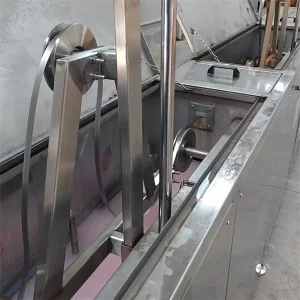
Inline ultrasonic cleaning baths designed to remove chemical residues, drawing lubricants, and surface oxides from steel strips.
Explore Specifications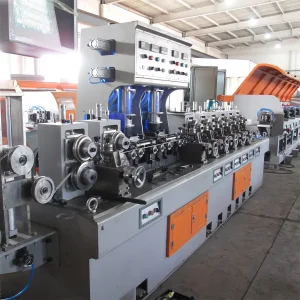
High-precision rolling mill designed for both overlap and butt-seam configurations, adapting to different flux formulations.
Explore Specifications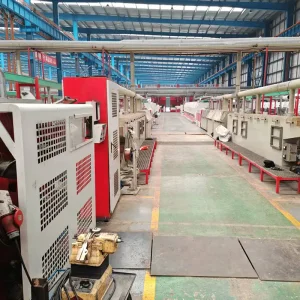
A complete processing solution from wire rod payoff, scale removal, and drawing to inline copper-plating and layer winding.
Explore Specifications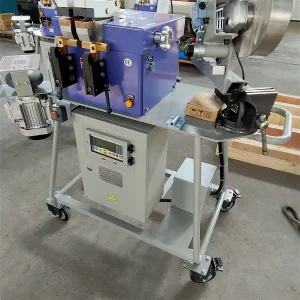
Compact, portable wire butt welders designed to join wire ends quickly, minimizing downtime on high-speed lines.
Explore Specifications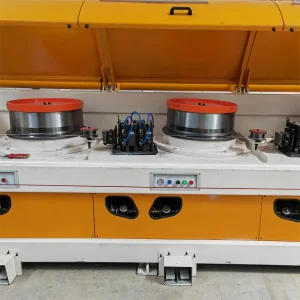
CE-certified linear drawing block systems with individual variable-frequency motor drives and optimized wire paths.
Explore Specifications
Precision spooler utilizing digital tension loops to spool copper-coated and stainless steel wires neatly.
Explore Specifications
High-efficiency winding system designed to spool welding wire tightly and consistently, ensuring reliable payoff in robotic systems.
Explore Specifications
Industrial mixing system designed to blend abrasive mineral and metallic alloying powders uniformly for flux-cored wire.
Explore SpecificationsWhether you plan to set up a new production facility or upgrade your current wire drawing line, our engineering team is here to assist. Contact us today to discuss your project specifications.
Request Technical Consultation Orient PengSheng