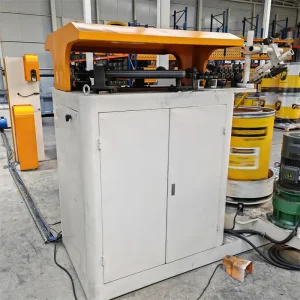
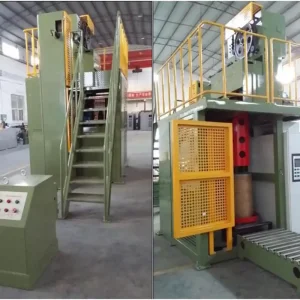
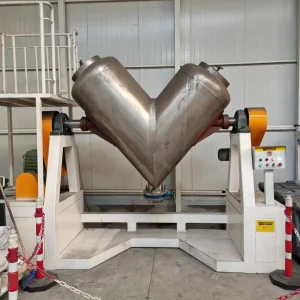
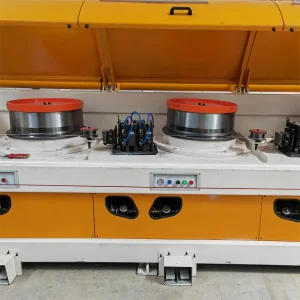
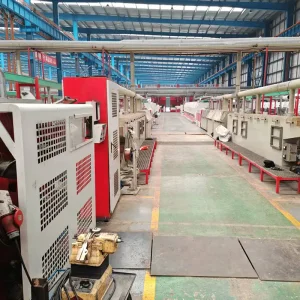
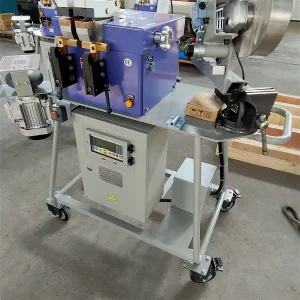
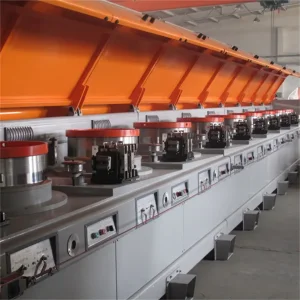
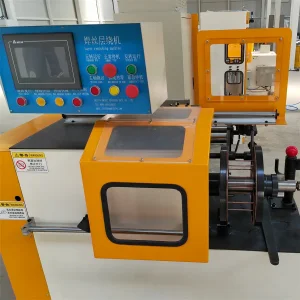
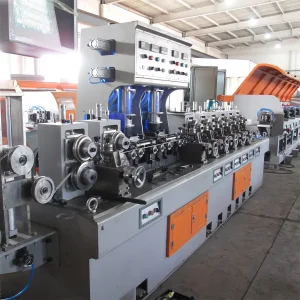
Explore our industrial-grade processing systems designed for high-capacity, precision flux-cored wire manufacturing.
A Comprehensive Study on Metallurgy, Manufacturing Technology, Global Market Trends, and Supply Chain Integration
The global manufacturing landscape has witnessed a rapid shift from solid welding wires to Flux-Cored Arc Welding (FCAW) technology. This transition is propelled by the need for higher deposition rates, superior bead aesthetics, and enhanced metal recovery factors. Flux-cored wires comprise a specialized hollow steel sheath enclosing core ingredients containing deoxidizers, slag formers, arc stabilizers, and micro-alloying elements.
In modern structural engineering, heavy fabrication, shipbuilding, and offshore platforms, choosing the right flux core wire types determines the structural integrity and toughness of weld deposits. Industry standards classify these consumables into gas-shielded flux-cored wires (utilizing CO2 or Argon/CO2 mixes to isolate the weld pool) and self-shielded flux-cored wires (utilizing core-powder ingredients that decompose under arc temperatures to form protective atmospheres).
As environmental regulations tighten and infrastructure environments grow harsher, manufacturers require advanced machinery that can dynamically adjust filling ratios, optimize mechanical reduction sequences, and prevent moisture absorption in core powders. Beijing Orient Pengsheng Tech Co., Ltd. addresses these demands with high-precision fabrication plants engineered for international specifications.
Rutile (T-1) Flux Core Wires: Outstanding weldability, fast-freezing slag, ideal for all-position welding in steel structures.
Basic (T-5) Flux Core Wires: High impact properties, lowest diffusible hydrogen levels, excellent crack resistance in thick-section steels.
Metal-Cored (T-15/T-11) Wires: Hybrid performance combining high efficiency of solid wire with metallurgical control of cored consumables.
Purchasing departments at multinational engineering and welding consumable supply chains face distinct logistical and technical hurdles. First, maintaining consistency in the filling ratio is critical. A variation of even 0.5% in flux powder fill density can lead to arc instability, excessive spatter, or weld porosity, failing rigorous radiographic evaluations.
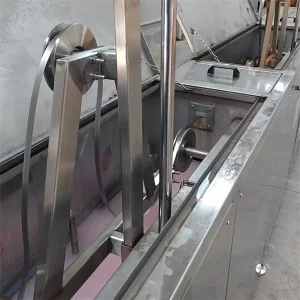
Furthermore, raw materials must undergo intensive pre-treatments. If steel strips are not thoroughly degreased, and if flux powders are not evenly dried, the moisture content inside the wire will increase. This leads to high diffusible hydrogen levels, making the welds susceptible to hydrogen-induced cracking (cold cracking). As a result, procurement teams prefer partners that deliver comprehensive process control—from low-carbon steel strip slitting to ultrasonic cleaning systems and powder preparation modules.
Operating out of Beijing, Orient Pengsheng embodies the transition toward Smart Factory Integration (Industry 4.0) in welding wire manufacturing machinery. Our systems are engineered to replace traditional, high-waste processing layouts with closed-loop computerized operations.
Our machinery utilizes active tension control and high-precision sensors to align forming rolls, ensuring the steel strip wraps smoothly into a perfect tubular shape (butt-seam or overlap types) while retaining the exact core powder fill. By matching advanced European mechanical designs with optimized domestic supply networks, our engineering solutions provide resilience against component shortages while offering competitive capital-expenditure ratios.
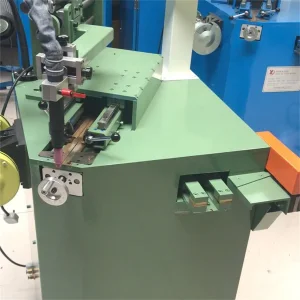
Custom-engineered forming roll passes prevent strip buckling, ensuring uniform cross-sections during steel strip folding processes.
Proprietary mixing systems avoid particle segregation, ensuring consistent element dispersion through every foot of the finished wire.
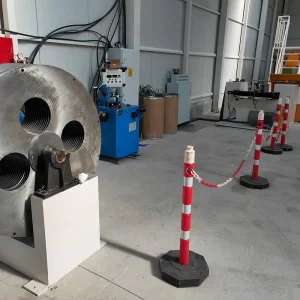
Layer rewinding systems execute layer-by-layer spooling with high accuracy, eliminating wire-tangling hazards on site.
Beijing Orient Pengsheng Tech. Co., Ltd. was established in 2011. However, we have more than 20 years experience with flux cored welding wire manufacturing machines. With our European technical cooperator support and our innovation, we already build our own technology & know-how, manufacturing facilities and management in this field. We dedicate to supply the FCW machines with the latest technology and the best quality.
Our dedication lies in providing global factories and weld-consumable manufacturers with the tools to engineer high-grade flux core wire types, meeting standards set by AWS, EN, and GB.
Providing high-precision hardware and dedicated customer service for maximum operational efficiency.
We use advanced manufacturing equipment, and core component designs are developed in collaboration with European technology experts. This ensures that every drawing machine, slitter, and forming cassette aligns with high international mechanical standards.
We have provided hundreds of machines or lines to the global market. Each equipment iteration integrates field feedback to ensure high uptime, safety compliance, and robust daily operations under heavy loads.
We operate a dedicated service department with university-educated engineers. Whether handling remote debugging, layout consulting, on-site commissioning, or local personnel training, our responsiveness helps minimize plant downtime.
We work closely with clients to capture user insights and upgrade our machinery. Recognizing that no two manufacturing lines are identical, we offer customized solutions for rolling cassettes, slitting widths, and line outputs.
Clear answers to technical queries from engineering, procurement, and production managers.
Explore auxiliary machines and specialized components that optimize processing lines from strip forming to final spooling.
 Orient PengSheng