Explore our foundational machinery designed to optimize drawing efficiency, preparation precision, and strip handling.
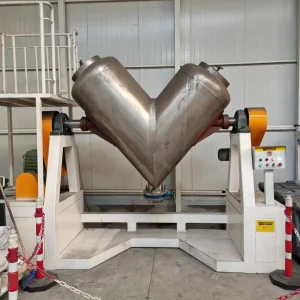
High-efficiency mechanical dispersion systems engineered to homogenize dry mineral-metallic formulations prior to sheath encapsulation.
View Details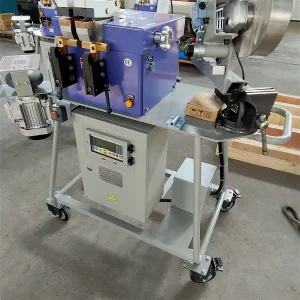
Pneumatically controlled high-precision resistance welding units for ensuring continuous wire drawing and strip feed processes.
View Details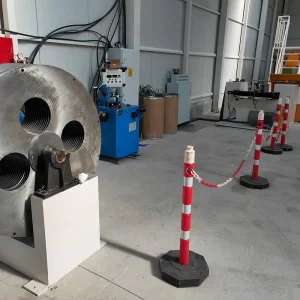
Engineered for high-volume precision slitting of wide steel coils down to consistent ribbons optimized for tube forming lines.
View Details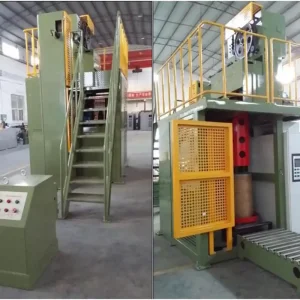
Automated vertical-pack drum pay-off systems designed to route bulk weld consumables into protective, transport-ready shipping containers.
View Details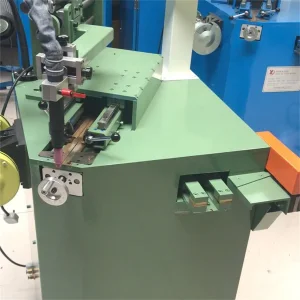
Enables continuous operation of the FCW forming mill by executing micro-tolerance joints on consecutive strip coils.
View Details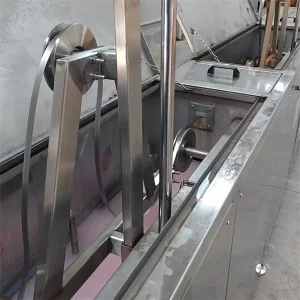
Multi-frequency cavitation technology designed to scrub surface oils and oxides, ensuring pristine interface bonding.
View Details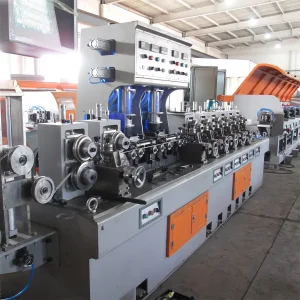
Advanced roll-forming system processing strip into U-profiles, metering flux powder, and closing seams with micro-tolerance alignment.
View Details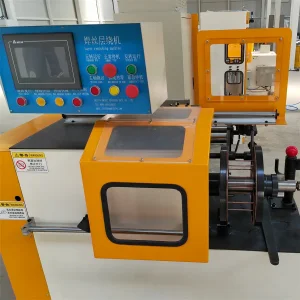
Intelligent tension-controlled spooling units providing defect-free layers for robotic and automated welding applications.
View DetailsEstablished in 2011, Beijing Orient Pengsheng Tech. Co., Ltd. leverages over two decades of technical evolution in flux cored welding wire (FCW) manufacturing technologies. Collaborating closely with European engineering partners, we have established advanced proprietary designs and integrated manufacturing systems in this specialized niche.
Our focus centers on rendering high-precision powder mixing, precise steel strip cold forming, high-efficiency cleaning, and continuous wire drawing lines that operate at peak velocity with zero-defect rates. We do not just build machines; we deliver turn-key manufacturing competence matching international standards.
An in-depth analysis of structural integrity, chemical dispersion, and mechanical alloying standards.
Within a flux-cored welding wire, the core matrix represents up to 15-30% of the total wire weight. It contains a complex recipe of iron powder, ferro-alloys, deoxidizers, arc stabilizers, slag-forming agents, and alloying elements. A variation of even 0.1% in dispersion density along the wire's length can cause arc instability, weld pool disruption, and significant weld spatter. Our Flux Powder Mixing Machine incorporates double-shaft paddles and shear-plow mechanisms to maintain a homogeneous blend across micro-volumes, securing a Coefficient of Variation (CV) below 3.5%.
Different materials (such as heavy ferro-titanium particles and light rutile minerals) tend to segregate during motion due to differences in size, shape, and density. Our mixing systems utilize high-shear paddle configurations that counteract gravity-induced segregation. By introducing synchronized speed controls, particles of diverse bulk densities (ranging from 0.8g/cm³ to 4.5g/cm³) are locked into a stable matrix, preventing mechanical stratification during transfer to the forming mill hopper.
The progression towards smart mixing plants, automated material handling, and real-time QA.
The transition from manual batching to automated multi-component gravimetric dosing systems. Our modern setups integrate load-cell weighing matrices directly with PLC controllers to ensure precision up to ±0.1% per batch, excluding operator error.
To eliminate moisture-induced porosity in high-tensile wire formulations (such as E81T1-W2 or extreme low-hydrogen variants), next-gen mixers execute blending cycles inside vacuum chambers sealed with nitrogen or argon purging. This maintains a total hydrogen level below 3ml/100g of weld metal.
Integrating NIR (Near-Infrared) sensors inside the mixing chamber allows real-time monitoring of blend uniformity. Machine learning models analyze spectral responses during operation, automatically shutting down or extending mixing cycles based on chemical distribution metrics.
How global industries apply Beijing Orient Pengsheng's specialized equipment across sectors.
Scenario: Generating high-nickel alloy FCW for North Sea wind turbines.
Solution: The chemical consistency provided by our mixers ensures minimal weld pool deformation under harsh offshore maritime conditions, minimizing structural cracking risks.
Scenario: Automated high-volume fabrication of chassis frames using robotic MIG/MAG setups.
Solution: High precision layer rewinding machines guarantee tangle-free spool payout up to 30 m/min, avoiding downtime on robotic assembly lines.
Scenario: Heavy duty strip forming for agricultural and earth-moving machinery.
Solution: Robust strip forming mills shape high-tensile steel bands with consistent fill rates, providing deep penetration in heavy structural joints.
As a leading manufacturer based in Beijing, Beijing Orient Pengsheng Tech Co., Ltd. integrates advanced design frameworks with local steel and component supply networks. This dual strategy allows us to deliver European-grade manufacturing technology at optimized cost points.
How shift dynamics in global welding consumables are steering the requirements for high-capacity machinery.
Modern global infrastructure projects require higher deposition rates and cleaner weld profiles than traditional solid wires can deliver. Driven by demands from global shipyards, structural steel fabricators, and high-strength pipeline contractors, the market share of flux-cored wire (FCW) is expanding rapidly. Because of this, manufacturing facilities require reliable powder mixing machinery and forming lines that can scale to meet rising demand.
Exporting to markets like Western Europe and North America requires strict adherence to regulatory standards. Every piece of equipment we build, from ultrasonic strip cleaning tanks to high-speed winding heads, complies with CE certification and EU machinery directives, ensuring smooth integration into modern, compliance-driven manufacturing plants.
Detailed answers regarding operations, engineering specs, compliance, and ordering processes.
Our prices are subject to raw material costs, the level of custom automation required, and current market factors. After receiving your specific requirements (such as strip dimensions, wire diameters, and expected output tonnages), we will provide our professional advice and send you an official quote. Requesting tailored components (such as specific PLC brands or customized drawing die designs) will adjust the final quotation accordingly.
Yes, we provide comprehensive documentation support. This includes Certificate of Conformity, CE Declarations, mechanical layout schematics, electrical wiring diagrams, pressure vessel test certificates (where applicable), cargo insurance certificates, certificates of origin, and custom export manifests required for clearance in Europe, North America, and elsewhere.
Our standard payment term is a 30% deposit in advance by wire transfer (T/T), with the remaining 70% balance payable by irrevocable Letter of Credit (L/C) at sight or T/T against the copy of the Bill of Lading (B/L) prior to final port discharge.
We provide a 12-month mechanical warranty from the date of initial commissioning at the client's site. This warranty covers manufacturing defects and material failures under normal operating conditions. It does not cover damage caused by operator error, unauthorized modifications, or standard wearing parts (such as drawing dies, slitting knives, and contact tips).
Pre-Sales: Engineering consultations, customized layout proposals, and factory visits to view operational reference setups.
After-Sales: Supervision of on-site installation, machine calibration, and training for local operators. We also offer remote diagnostics for PLC systems, allowing us to quickly troubleshoot and update software settings.
We use heavy-duty export packaging designed to withstand long ocean transits. Main structural frames are secured to steel skids, while electrical cabinets are wrapped in moisture-resistant vapor barriers with desiccant packs. Unpainted metallic surfaces are coated with rust-inhibiting oils to ensure they arrive at your facility in pristine condition.
Production cycles generally range between 2 to 3 months, depending on the complexity and scale of the configuration. Standalone units like wire drawing machines or layer rewinders are completed faster, while full-scale, customized lines involving forming mills and inline cleaning systems require the full 3-month cycle to allow for thorough factory testing before shipment.
A full range of auxiliary systems engineered to streamline wire preparation, drawing, and final spool packaging.
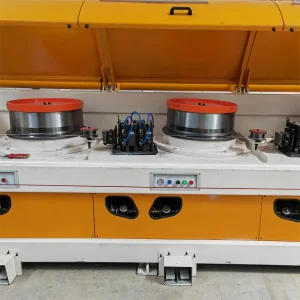
Straight-line, slip-free drawing systems designed to reduce flux-filled wires to their final target diameters without compromising core integrity.
View Details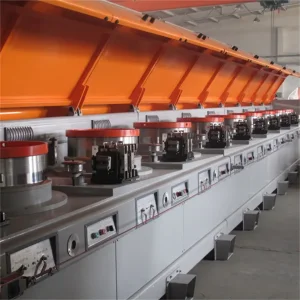
Precision-ground tungsten carbide dies and rolling cassettes engineered to maintain tight wire circularity and minimize surface friction.
View Details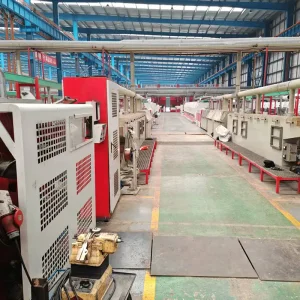
Complete production lines designed for copper-coating, drawing, and spooling solid carbon and low-alloy steel wire.
View Details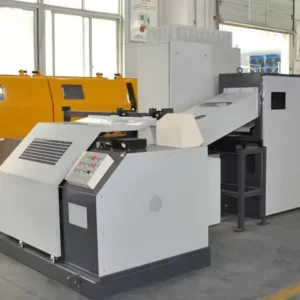
High-speed spool winding machinery designed to handle solid wires, maintaining consistent tension control throughout the spool build.
View Details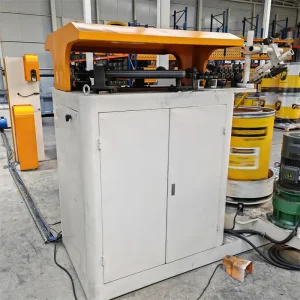
Heavy duty systems designed for continuous, high-speed routing of finished flux cored wires into bulk paperboard shipping drums.
View Details
High-capacity blending systems featuring double-shaft paddle configurations, optimized for uniform preparation of large batches.
View Details
Vertical payout equipment designed for automated filling of drums with solid or flux-cored wire at high throughput speeds.
View Details
High precision winding systems designed to load steel wires onto plastic or wire carrier spools with tight tension control.
View DetailsIf you have questions about equipment configurations, customized line designs, or factory installations, contact our technical team for detailed consultation and guidance.
Contact Our Engineering Team Orient PengSheng