Explore our industrial-grade processing machinery engineered for maximum efficiency, operational safety, and high-precision outputs.
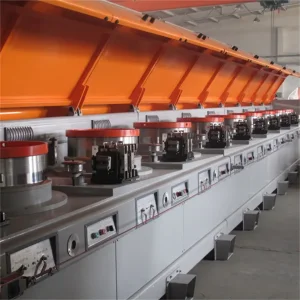
High-precision drawing dies and micro-cassettes optimized for seamless material reduction and robust service lifespan.
View Details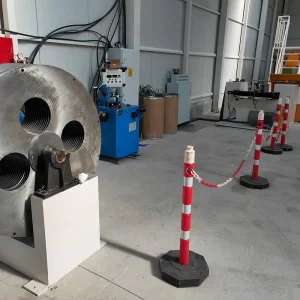
Advanced slitting systems designed to partition bulk width steel coils into uniform, narrow-width strips with minimal burrs.
View Details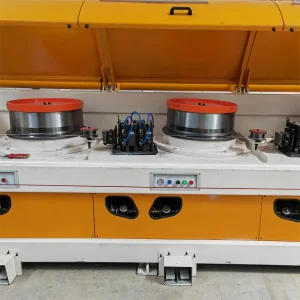
CE-certified straight line drawing machine providing stable slip-free elongation for high-tensile welding wires.
View Details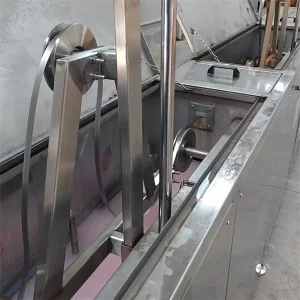
High-efficiency inline ultrasonic wash stations ensuring complete removal of grease, soap, and particulates prior to forming.
View Details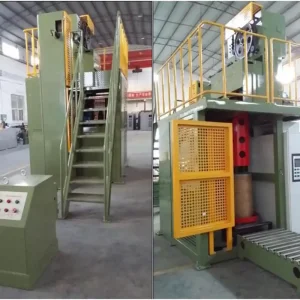
Industrial pay-off and filling stations designed for heavy-duty drum packaging of welding wires.
View Details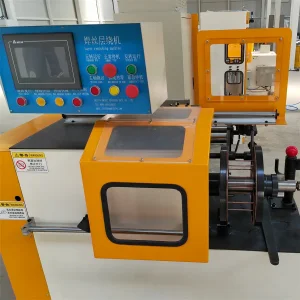
State-of-the-art layer rewinder for producing neat spools (spool type: plastic/basket) with exact pitch configuration.
View Details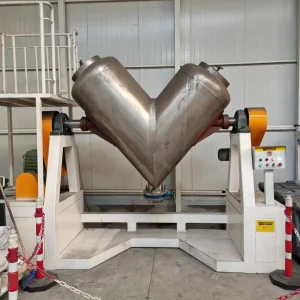
Homogeneous mixing system engineered to blend precise powder configurations for flux-cored wire manufacturing.
View Details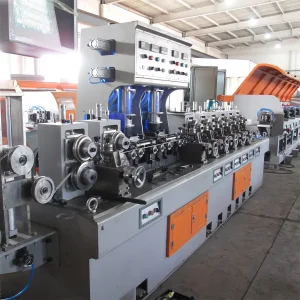
High-reliability profiling mill for seamless butt seam or overlap configurations in flux-cored wire production.
View DetailsUnderstanding the critical role of spooling geometry and tension control in advanced automated welding processes.
In the contemporary metallurgy and metal fabrication industries, the quality of welding wire spooling is no longer considered a cosmetic detail; it is a primary determinant of automated welding productivity. High-speed robotic gas metal arc welding (GMAW/MIG) and flux-cored arc welding (FCAW) systems demand zero-tangle feed rates to prevent catastrophic arc interruptions. This industry requirement is met only through the deployment of Precision Layer Winding Machines.
Globally, the shift toward smart factories and robotic assembly lines has forced manufacturers of solid steel wire, flux-cored wire, stainless steel alloys, and aluminum wire to upgrade their winding technology. A poorly wound spool—characterized by crossover turns, uneven side tension, or loose layers—induces inconsistent wire feeding resistance. This resistance fluctuations lead to wire slippage within the feed rolls, premature contact tip wear, arc micro-stoppages, and, in critical sectors like automotive body-in-white welding, complete automated line shutdowns.
A spool wound with high-precision layer technology ensures that the wire pay-off tension remains constant from the first layer (outermost diameter) down to the core barrel. By securing a perfectly parallel lay (pitch alignment matched down to the micrometer level), the mechanical cast and helix of the wire are preserved. This uniformity guarantees that the wire exits the welding torch liner straight, targeting the weld seam joint with sub-millimeter positioning accuracy.
As the international commercial landscape demands higher deposition rates and uninterrupted arc-on times, the global market for precision spooled wire (conforming to DIN 8559, BS 300, and K300 standards) is expanding rapidly. Leading welding consumable plants across North America, Western Europe, and East Asia are phasing out legacy winding machines in favor of dynamic, closed-loop servo-driven winding machinery capable of running continuously with minimal human supervision.
Established in 2011, Beijing Orient Pengsheng Tech. Co., Ltd. stands at the forefront of the wire processing equipment industry. Backed by more than 20 years of technical expertise specifically in flux-cored welding wire (FCW) manufacturing machinery, we have engineered comprehensive system packages that combine durability with modern digital controls.
Through robust technical cooperation with European design firms and continuous in-house R&D, we have established our own proprietary engineering know-how, state-of-the-art manufacturing facilities, and a strict quality control matrix. We remain dedicated to supplying global metal producers with cutting-edge wire drawing, cleaning, forming, and layer winding equipment that meets the strictest international manufacturing standards.
Inside the mechanics of tension balancing, dynamic traverses, and smart digital systems.
Precision layer winding requires managing multiple dynamic forces. A standard spool of welding wire contains hundreds of layers of wire placed side-by-side. The key parameters that determine the success of this winding process include the wire diameter, spool traverse width, turn-to-turn pitch, acceleration/deceleration ramp speeds, and target winding tension.
Tension control is critical to avoiding wire deformation. If the tension is too high, the wire stretches, leading to reduced cross-sectional areas and premature work-hardening. Under-tensioned winds, on the other hand, produce loose layers that can slip under mechanical load, causing wire cross-overs or loops. Our engineering team utilizes a double-servo closed-loop control system. A high-sensitivity dancer arm (or torque transducer) constantly measures the feedback tension. It modulates the spool drive's speed relative to the pay-off accumulator in microsecond intervals, maintaining stable tension during speed variations up to 30 m/s.
Traditional winding systems used mechanical traverse gearboxes that required manual intervention whenever wire diameters changed. The modern Beijing Orient Pengsheng system features an independent servo-motor connected to a high-precision ball screw shaft. Utilizing inputs from the operator PLC interface (where wire size is specified down to 0.001 mm), the traverse movement synchronizes precisely with the rotation of the spool. This prevents winding gaps or overlaps at the spool flanges, ensuring flat, uniform layers across the entire spool width.
The roadmap for our wire processing equipment includes integration with manufacturing execution systems (MES). By embedding IoT edge gateways, our layer winding machines log real-time data regarding average tension, winding speed, operating temperatures, and production volume per spool. This data enables remote diagnostics, predictive maintenance schedules for mechanical components, and batch traceability for high-spec wire producers.
| Technical Specification Parametrics | Standard Range (Solid Wire) | Premium Configuration (Flux-Cored Wire) |
|---|---|---|
| Wire Diameter Capacity (mm) | 0.8 mm – 1.6 mm | 1.2 mm – 3.2 mm |
| Maximum Winding Speed (m/s) | Up to 25 m/s | Up to 15 m/s (Dependent on fill ratios) |
| Tension Tolerance Accuracy | ± 0.2 N | ± 0.1 N |
| Spool Core Suitability | Plastic (D200, D300), Wire Basket (K300) | Heavy steel spools, fiber drums, custom spools |
| Control System Architecture | Siemens / Mitsubishi PLC + Touch Screen HMI | Multi-axis synchronized motion controller |
Tailoring advanced spooling solutions to meet unique regional and industrial requirements.
Automobile chassis fabrication demands continuous, high-speed welding. In North American and European automotive stamping and sub-assembly plants, even a brief wire feed halt can stop the entire assembly line. Our layer winding machinery guarantees zero-tangling, allowing robotic stations to run reliably across multi-shift schedules.
Shipyards require heavy-duty, high-performance flux-cored wires (often 1.6mm to 2.4mm diameters) capable of depositing deep structural welds in harsh environments. Spools must withstand moisture and physical transport. Our machines provide tight, high-tension layers that resist shifting during handling in marine shipyards.
Fabricating high-pressure boilers, gas tanks, and offshore wind turbines requires consistent, high-integrity welds. Submerged arc welding (SAW) wires are often wound on large-capacity spools (up to 25kg or 30kg). Our customized layer winders handle these heavy loads with precision traverse movements to ensure consistent feed rates.
Combining high-grade materials, advanced machining capabilities, and strategic logistics.
Operating a capital equipment manufacturing facility in China allows us to source raw materials, castings, precision shafts, and electrical control panels through an integrated supply chain. We procure structural steel plates and high-grade castings from regional foundries that maintain tight metallurgical tolerances. This proximity keeps transport costs and component lead times to a minimum.
Additionally, our factory utilizes CNC machining centers, grinding machines, and assembly cells. Because our primary manufacturing steps are handled in-house, we retain complete control over geometric alignments, axis concentricity, and quality control. This setup avoids reliance on third-party sub-contractors, protecting our assembly timeline from external delays.
Through our technical cooperation with European engineers, we match global equipment specifications while optimizing production costs. This approach provides a balance of high-performance components (including Siemens PLCs, Schneider switchgear, NSK bearings, and Festo pneumatics) combined with local structural fabrication and assembly. The resulting systems deliver performance matching high-end Western equivalents at a highly competitive total cost of ownership.
We use advanced manufacturing equipment, and core processing machinery is imported directly from European technology partners to guarantee precise mechanical tolerances.
With hundreds of machines and complete lines operating in the global market, our designs have been field-tested across diverse operating conditions.
Our specialized service department is staffed by highly educated technicians with practical industry backgrounds, providing prompt pre-sales consulting and on-site support.
We communicate with our customers to gather performance feedback and update our machines accordingly. We customize line configurations to match specific customer needs.
Providing global engineering services, on-site commissioning, and regulatory alignment.
International industrial operations require equipment that complies with local safety regulations. All machinery manufactured by Beijing Orient Pengsheng Tech Co., Ltd. is engineered and certified to meet relevant CE directives, low-voltage regulations, and electromagnetic compatibility parameters. Prior to dispatch, each layer winder undergoes factory acceptance testing (FAT) to verify traverse tolerances, structural integrity, and electronic safety systems under load conditions.
To support global facilities, we provide onsite installation, startup calibration, and training services. Our field service engineers assist with mechanical alignment, sensor configuration, and program commissioning to ensure your line starts up smoothly. We also offer secure remote telemetry options, allowing our Beijing-based control team to assist local operators with PLC programming, calibration, and troubleshooting via encrypted VPN connections.
Detailed engineering answers to common inquiries regarding our equipment and support.
From initial slitting and wire drawing to final spooling and packaging, we offer equipment for every stage of your production line.
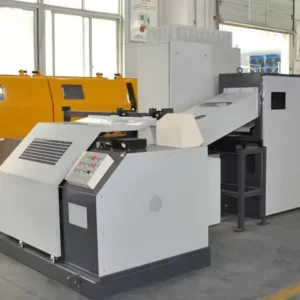
High-speed, automated spooling machines designed for solid steel MIG welding wires.
View Details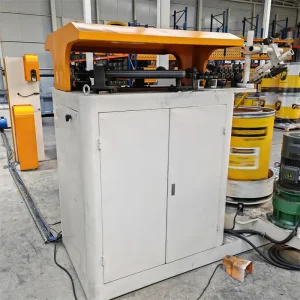
Reliable coiling machinery for packaging flux-cored wires into high-capacity drums.
View Details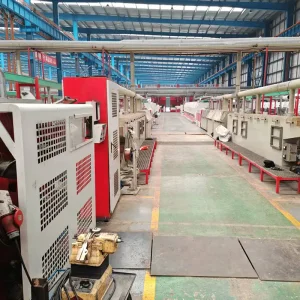
Turnkey production systems covering drawing, copper-coating, spooling, and final packaging.
View Details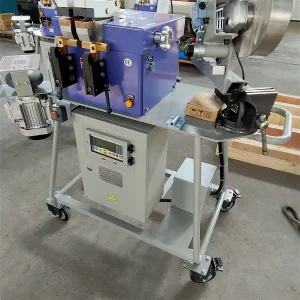
High-strength butt welding equipment designed to connect wire coils during continuous production.
View Details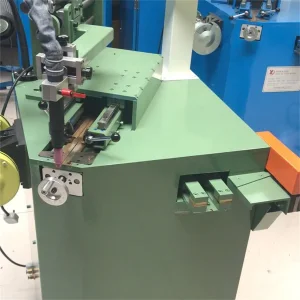
Precision shear and end welding systems designed for continuous steel strip forming lines.
View Details
Double-servo layer spooling machine configured for precision plastic or wire-basket spools.
View Details
Heavy-duty drum and pail filling systems built for industrial-scale welding wire packaging.
View Details
Straight-line wire drawing machinery featuring direct-drive motors and active sensor cooling.
View DetailsIf you are interested in any of our wire processing equipment or complete production lines, please contact us for technical details and inquiries. Send us your parameters and production requirements, and our engineering team will respond with a tailored configuration as soon as possible.
 Orient PengSheng