Explore our top-tier manufacturing machinery and auxiliary lines designed to optimize your metal processing workflow.
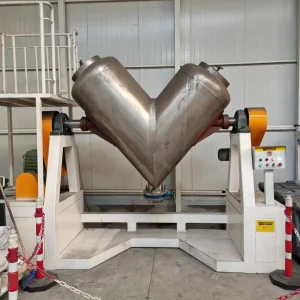
Advanced mixing solution designed to prepare core materials and fluxes with maximum uniformity before the wire-forming process.
View Details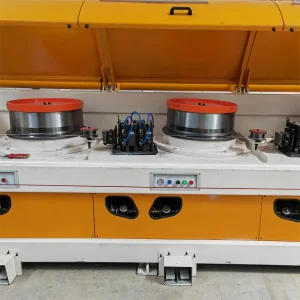
High-efficiency, straight-line drawing equipment designed to work in synergy with downstream coating and wrapping systems.
View Details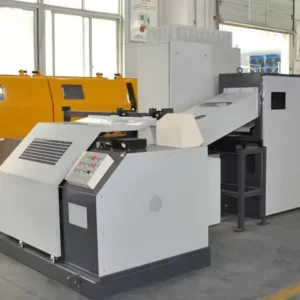
Precision-spooling systems featuring automatic layer alignment for solid steel, copper, and alloy conductors.
View Details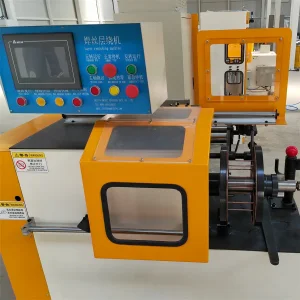
High-speed rewinding lines ensuring perfect tension control, avoiding structural micro-defects in high-conductivity materials.
View Details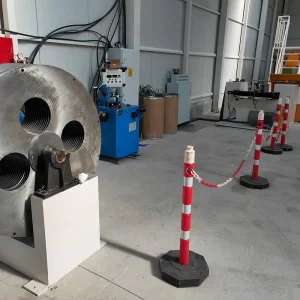
High-precision slitting line engineered to divide wide metal strips into multiple narrow bands with exceptionally clean margins.
View Details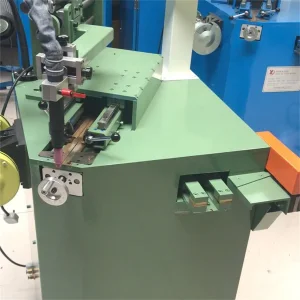
Provides robust joinery for uninterrupted production cycles in strip processing, cleaning, and profiling configurations.
View Details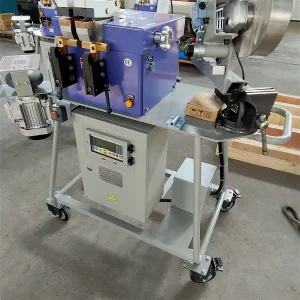
Designed for rapid, high-tensile connection of metallic lines, minimizing downstream breakage during drawing phases.
View Details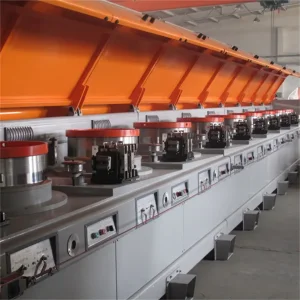
Premium tungsten carbide and diamond tooling accessories engineered for minimal wear and precise dimensional tolerances.
View DetailsIn the contemporary landscape of power electronics, high-voltage distribution systems, and clean energy storage, copper busbars serve as the arterial networks for electricity transmission. However, pure copper exposed to atmospheric environments is highly susceptible to oxidation and corrosion, which inevitably leads to increased contact resistance, local thermal hotspots, and power transmission inefficiencies.
To counteract this fundamental limitation, electro-tin plating has emerged as the global industry benchmark. Plating lines deposit a micro-thin, uniform layer of pure tin (typically ranging from 3 to 15 microns) onto the copper surface. This thin layer provides superb protection against ambient corrosion, facilitates reliable metal-to-metal contact, and supports robust solderability. The demand for tin-plated busbars is surging, driven primarily by three macroeconomic factors:
EV battery packs, battery management systems (BMS), and charging stations rely heavily on busbars to conduct high-amp currents safely.
Hyperscale cloud facilities demand high-density power paths where minimal voltage drops and maximum thermal control are critical.
Consequently, busbar manufacturers are moving away from outsourced, manual batch plating in favor of inline, fully automated tin plating systems. Integrating high-performance continuous plating equipment enables manufacturers to maintain strict geometric tolerances, reduce processing overheads, and comply with international manufacturing standards.
An overview of the precision components and electro-chemical processes that ensure uniform, defect-free tin deposition.
Proper adhesion requires a clean metallic substrate. The busbar passes through alkaline degreasing to remove residual manufacturing oils, followed by micro-etching and acid pickling to eliminate copper oxides. This creates a pristine surface at the atomic level, which prevents blister and peel defects.
Using a highly regulated tin-acid bath chemistry, stannous ions (Sn2+) are reduced and deposited onto the cathodic busbar. Modern systems leverage automated dosing pumps and precision anodes to maintain uniform distribution across flat surfaces and complex geometric profiles.
Following electroplating, the busbars are thoroughly rinsed to remove active chemistry. They are then treated with a specialized post-plating anti-tarnish dip. This final layer helps prevent yellowing during storage and high-temperature operating conditions, maintaining its solderability.
Technical Insight: Poor current density distribution in lower-grade systems often leads to excess plating on the edges of the busbar and insufficient coverage in the center. Our custom-designed electroplating tanks feature strategically positioned shields and auxiliary anodes. This design ensures uniform coating thickness even on wide, thick busbars.
Established in 2011, Beijing Orient Pengsheng Tech Co., Ltd. brings together over 20 years of experience in the design, engineering, and manufacture of advanced wire and strip processing machinery. Backed by European technical collaboration and a commitment to R&D, we design customized solutions for complex production requirements.
Our goal is to supply processing machinery that meets international quality standards. By combining advanced technology with robust engineering, we help metal processing facilities enhance throughput, reduce waste, and improve operational reliability.
We combine Western European mechanical design principles with high-efficiency component assembly.
Over 150 turnkey production systems shipped and operating in more than 10 countries.
Combining precision engineering, mature manufacturing lines, and reliable customer service to deliver reliable electroplating solutions.
We use advanced manufacturing equipment and import our core processing components directly from reliable European suppliers to guarantee high operational reliability.
We have manufactured and delivered hundreds of wire-drawing, cleaning, and electroplating lines to high-volume factories globally, ensuring reliable performance in demanding environments.
Our engineering support covers pre-sales project consulting, on-site installation, personnel training, and timely after-sales troubleshooting globally.
We work closely with clients to gather user feedback, continuously updating our machinery designs to support custom production requirements.
Industrial requirements for tin-plated copper busbars differ significantly across global regions, reflecting local energy policies, production costs, and compliance landscapes:
The transition toward electrification is driving several key technological trends in surface treatment systems:
Key quality and performance indicators for procurement managers evaluating busbar electroplating lines.
Procuring organizations must verify that electro-plated coatings meet ASTM B545 (Standard Specification for Electrodeposited Coatings of Tin) and ISO 2178. These standards govern surface thickness, adhesion quality, and finish consistency.
Beyond the initial capital expenditure, procurement teams evaluate long-term costs. High-efficiency rectifiers, automated dosing systems, and low-maintenance tanks reduce chemical waste and downtime, providing a faster return on investment.
High-quality manufacturers provide comprehensive technical documentation, including electrical schematics, chemical layout charts, operations manuals, and CE/UL certificates. This supports compliance reviews and smooth customs clearance.
Find answers to common technical, pricing, and logistical questions about our processing lines.
Explore our top-selling industrial lines and modular systems, built to meet demand for high productivity and yield.
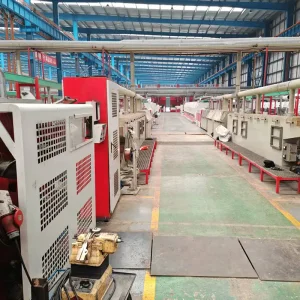
Integrated manufacturing solution designed for continuous high-speed drawing, clean chemical coating, and precise spool spooling.
View Details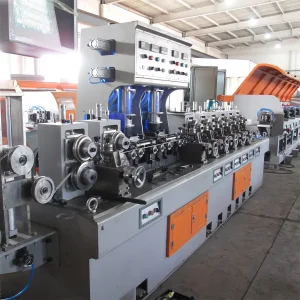
Roll-forming equipment configured to shape metal strips into profiles with precise joint seams and overlap lines.
View Details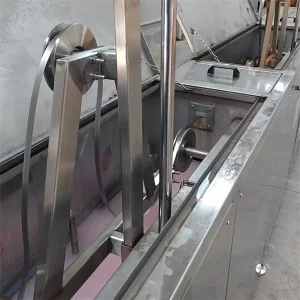
Advanced ultrasonic cleaning bath that strips grease, oxides, and micro-particles from metallic bands prior to thermal processing.
View Details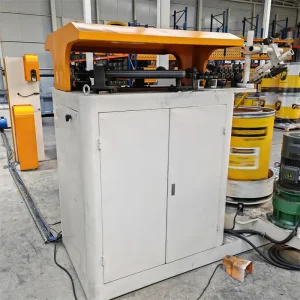
Automated industrial packing machinery engineered to wind flux-cored cables directly into drums for safe transit and storage.
View Details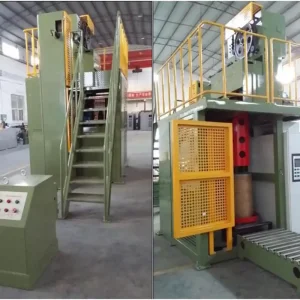
Provides precise spooling and automated loading of finished cables into protective pails, keeping wire structure intact.
View Details
Ensures consistent material density and moisture control, helping prevent voids during filling phases.
View Details
Ensures smooth wire feeding in downstream robotic systems, preventing tangling and feed-speed fluctuations.
View Details
Provides flat processing, high slitting tolerances, and minimal edge deformation for clean raw strip processing.
View Details Orient PengSheng